Three inputs on looming physician shortage. - 16 February 2026
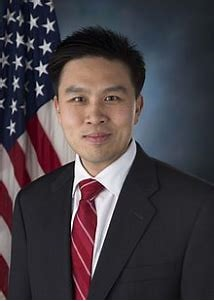
Lanhee Chen. David and Diane Steffy Fellow in American Public Policy Studies at the Hoover Institution. Image file copy. Speaker, Hoover Leadership Luncheon, Montage Hotel, Park City, UT. 12 February 2025.
I attended the above luncheon. Because of a coincidental "conjunction of the stars," e.g. two external inputs and Chen's comments on the looming doctor shortage occurring all on the same day, my blog note focuses on the emerging physician shortage. But, first, herewith, a quick and dirty outline of Chen's otherwise excellent full presentation:
US Healthcare
Impactful Changes last fifteen years.
1. Obamacare redefined federal role (as in augmented).
2. Big Beautiful Bill slowed Medicare growth.
3. IRA strengthens gov negotiating position on drug prices.
Three Challenges:
1. Fiscal Challenge. Costs grow faster than economy.
2. Patient Challenge. Patient affordability weakens.
3. Care Challenge. Not enough providers.
Other takeaways:
1. Single payer? Govt. would have to hire all the doctors.
2. Coming physician shortage.
Chen said he'd make his slides available. I'll attach them to this blog and reissue it when I receive them.
Comments on the looming physician shortage
My main learning on health care for the day came about due to a coincidental confluence of three inputs about a coming physician shortage in the US.
Input #1. Chen noted in his presentation that there are fewer bodies entering medical school today due to the perceived imbalance between the arduous educational rigor required to become an MD and the entrance into an increasingly bureaucratized, nine to five, unrewarding job. Most new MD jobs today are salaried positions working for hospital systems as opposed to the now diminishing MD owned family practices. Hence, we are looking at a shortage of doctors in the coming years.
Many would be medical students, per Chen, see other options, finance, engineering etc. as allowing for more creative effort and greater psychic and financial earnings down the road.
A more jaded rendering of the reduced interest in becoming an MD would be that today's young people are lazy. They just don't want to sign up for the hard work involved in becoming a doctor. I think there is something to this... a materializing cultural defect... another discussion for another blog.
Input #2. Not discussed by Chen was the potential harmful impact of sustained DEI practices at medical schools. Note this problem from a piece coincidentally appearing 12 February 2026 (same day as Chen presentation) in the Wall Street Journal. DEI Is a Threat to Americans’ Health - WSJ It would appear that not only is there a looming doctor shortage but also, an emerging doctor quality shortage. A double whammy?
Input #3. Also, coincidentally, following today's Chen presentation, I had an appointment to see my own GP to have an A1C score checked (I'm under the 7.0 threshold... Yea)! I was able to ask Dr. Menchaca about the looming physician shortage I had learned about earlier in the day.
My GP, Dr. John Thomas Menchaca is only a couple of years out of residency at Emory. He's only a GP one day a week. The rest of the time he is Assistant Professor in the Division of General Internal Medicine and Research Assistant Professor in the Department of Bioinformatics at the University of Utah. He was hired by the U to head a project to integrate AI into the diagnostic regimen of the University of Utah medical system. He has agreed to speak about this topic to our Park City ROMEO group, La Societe Deux Magots (LSDM). The ball is in my court to set up date.
After receiving good news on my A1C score, I asked Dr. Menchaca about the looming physician shortage I had heard about in Lanhee Chen's presentation earlier in the day. "The upcoming physician shortage is not a problem," Dr. Menchaca said. Paraphrasing Dr. Menchaca, "while there may be some transition bumps, most diagnostic procedures performed by doctors today will going forward benefit from enhanced technology and be performed by nurses, clinicians, and physician's assistants in future. There will be plenty of doctors around to operate in this new tech enhanced world." I didn't pursue the DEI matter with Dr. Menchaca, because I only came upon the WSJ article after my visit with him.
It would be good to have an opportunity to ask Lanhee Chen about these new inputs to the subject of emerging physician shortage: 1. Ongoing DEI impact. 2. Technology impact. To be continued.
Note: Dr. Menchaca is of Basque heritage. I asked him once if he had ever eaten at the US's top Basque restaurants: Wool Growers Restaurant, in Bakersfield, CA and The Star Hotel, in Elko, NV. He said that he hadn't and I encouraged the Texas raised doctor to be true to his heritage and eat at those famous and fabulous eateries.