"The Nvidia Way" by Tae Kim
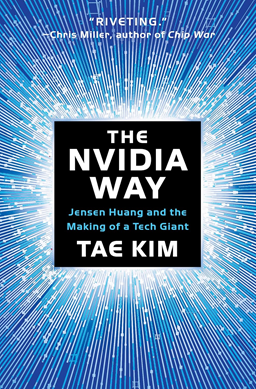
Above: "The Nvidia Way," by Tae Kim, 272 pages. I completed reading this book today, 04 February 2026.
What should I do? Spend an hour thumbing through my notes in the book and synthesizing the book's meaning and content by myself?... as I have done for all of my book reports up to this time. Or use the Grok summary which does a better job than I possibly could have done? I'm 80 years old. It doesn't matter for me. But, how, if at all, do AI large language models impact humans' ability to think analytically when the AI models can do the analytical thinking for you? To pursue this question, I've set up an LSDM open discussion on topic via Zoom. Any reader of this book review is welcome to join the discussion.
AI Open Discussion for LSDM ROMEOs will be speaking at La Société Deux Magots (LSDM), 11 March 2026, 0700 Mountain.
Via Web:
You can click HERE to be taken to the meeting, or
Open Zoom.
Meeting ID: 435 640 2222
Meeting Password:: 01012020
Now, to the Grok book review of "The Nvidia Way." PS. I have included some personal notes on my reading of the book after the Grok review.
GROK: The Nvidia Way is a deeply reported business history and biography of Nvidia, tracing its journey from a struggling 1993 startup focused on PC graphics chips to the world's most valuable company (surpassing $3 trillion market cap in 2024) and the key enabler of the AI revolution. Author Tae Kim, a senior tech writer for Barron’s, draws on over 100 interviews—including CEO Jensen Huang (often called "Jensen"), co-founders Curtis Priem and Chris Malachowsky, early investors, former employees, and current executives—to reveal how Nvidia's unique culture and long-term strategic vision drove its improbable success.
Key Themes and Structure
The book is structured chronologically, covering Nvidia's origins, near-death experiences, pivots, and triumphs:
Founding and Early Struggles (1993–1990s): Three co-founders with complementary skills (Huang from LSI Logic, Priem and Malachowsky from Sun Microsystems) met at a Denny’s to launch a graphics-chip company. Early chips like NV1 and NV2 flopped, nearly killing the company. Nvidia survived through grit, quick learning from mistakes, and pivots (e.g., to 3D graphics). Kim debunks myths about the founding and highlights how the team overcame near-fatal missteps that would have doomed most startups.
Growth and Pivots (2000s–2010s): Nvidia dominated gaming graphics (GPUs), survived competition, and made a visionary, long-term bet on CUDA (2006)—a software platform turning GPUs into general-purpose parallel processors. This costly decision, made over a decade before AI's mainstream boom, positioned Nvidia perfectly for deep learning and generative AI.
AI Dominance (2010s–Present): Nvidia outmaneuvered giants like Intel by repeatedly inventing new markets (gaming → professional visualization → AI/data centers). Huang's leadership emphasized playing "the longest of long games," avoiding complacency, and solving the "Innovator's Dilemma" by constantly reinventing the company.
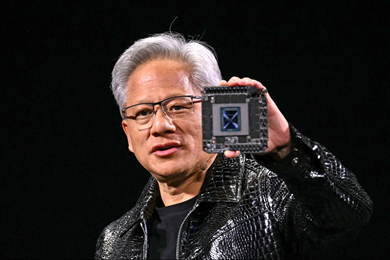
Above: Jensen Huang, CEO, Nvidia.
Core of "The Nvidia Way"
The book's central argument: Nvidia's success stems not from luck or raw technical genius alone, but from a distinct organizational culture and management philosophy under Jensen Huang (the longest-tenured tech CEO). Key elements include:
High standards + unusual employee independence — Demanding superhuman effort, mental resilience, speed, and accountability while granting freedom.
Anti-complacency mindset — Huang views complacency (not competitors) as the biggest threat; the company is structured to fight bureaucracy, hierarchy, and atrophy.
Mission over ego — "The mission is the boss"; focus on hard work, learning from mistakes, resilience, and future-oriented thinking.
CEO style — Huang prioritizes big-picture "CEO math" over false precision, obsesses over innovation, and fosters a culture of intense but purposeful effort.
Enduring Lessons
The book offers practical insights for entrepreneurs, managers, and employees: embrace long-term vision, reject complacency, learn aggressively from failures, bet boldly on future technologies, and build a culture that combines freedom with relentless standards.
In essence, The Nvidia Way is both a compelling corporate history of one of tech's greatest turnarounds and a guide to Huang's philosophy that turned a niche graphics company into the powerhouse behind modern AI. Praised as "the definitive look at the most remarkable business story of this era" (Morgan Housel), it's essential reading for understanding Nvidia's rise and leadership principles in high-stakes innovation.
SDT Personal notes.
Read "The Nvidia Way" as a complement to Isaacson's book, "Elon Musk." "Elon Musk" by Walter Isaacson | Stephen DeWitt Taylor
Read how both Musk and Huang set goals seemingly beyond the reach of their people and how employees exceeded original expectations of their own abilities. I had two bosses that put me in similar positions... eg. was I over my head in pursuing their expectations? Something inside me, including fear, pushed me to "overachieve." There are great lessons in management and goal setting in both of these books.
Lots of other questions are raised. For one, there is a good deal of discussion these days on feminism's emphasis on empathy. How, if at all, does the widespread increase of women filling high level jobs in our institutions today impact forward progress considering female tilt to empathy in dealing with interpersonal situations? Neither Huang nor Musk showed a lot of empathy in setting expectations for their subordinates.