"The Ghosts of Roebuck Bay" by Ian W Shaw
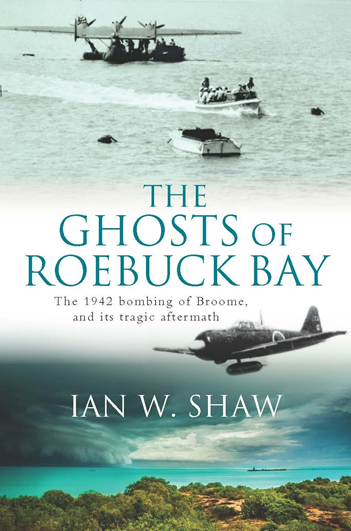
Above: The Ghosts of Roebuck Bay by Ian W. Shaw. 268 pages.
On March 3, 1942—just weeks after the more famous bombing of Darwin—nine Japanese Zero fighters launched a surprise strafing attack on the remote pearling town of Broome in Western Australia.
I completed reading this book today.
The Ghosts of Roebuck Bay: The 1942 Bombing of Broome and Its Tragic Aftermath" by Ian W. Shaw (2014) is a gripping work of narrative nonfiction that brings to light a largely forgotten episode from World War II in Australia.
My grandson Drums and I visited Broome, Australia, last month. While there, I was surprised to learn that the town had been the target of a successful Japanese air raid on 3 March 1942, carried out by nine Zero fighters. Until then, I had thought of Australia’s role in World War II mainly as a staging area where General MacArthur consolidated U.S. forces for the northward drive that began in mid-1942. Curious to learn more about the attack on Broome, I bought and read this book.
On March 3, 1942—just weeks after the more famous bombing of Darwin—nine Japanese Zero fighters launched a surprise strafing attack on the remote pearling town of Broome in Western Australia. Broome served as a key refueling stop and evacuation point for refugees and Allied forces fleeing the Japanese advance in the Dutch East Indies. In a roughly one-hour assault, the raiders destroyed nearly all Allied aircraft on the ground and in Roebuck Bay (including 11 flying boats), killed around 88 people (including civilians, refugees, and military personnel), and left the town in ruins. The book details the lead-up to the raid, the chaotic events of the attack itself, and the tragic aftermath, including survival stories, escapes, and controversies over leadership and mismanagement.
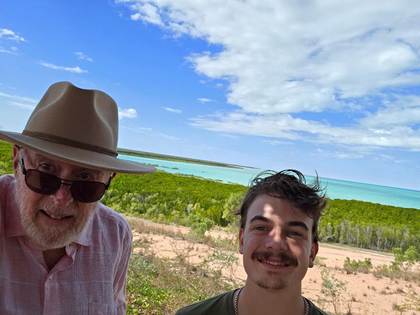
Above: Mwah (sic) and Drums. Broome, Western Australia. Roebuck Bay, where fourteen flying boats were destroyed and eighty-eight people lost their lives, on 03 March 1942.
Shaw highlights acts of heroism, such as Dutch pilot Lieutenant Gus Winckel, who fired back at the attackers with a machine gun from the ground and contributed to downing at least one Zero.
The book weaves together tales of refugees, soldiers, pilots, and townsfolk, exploring survival, loss, reputations made and ruined, and resilience.
The book is a great read. If you claim to be knowledgeable about WWII and haven't read about the Japanese attacks on northern Australia, this book is a good place to start. The book is a great contribution to military history. Highly recommended for those seeking stories of courage amid overlooked tragedies.