Picto Diary - 25 to 28 January 2026 - Mid-Winter Motorcycle Trip
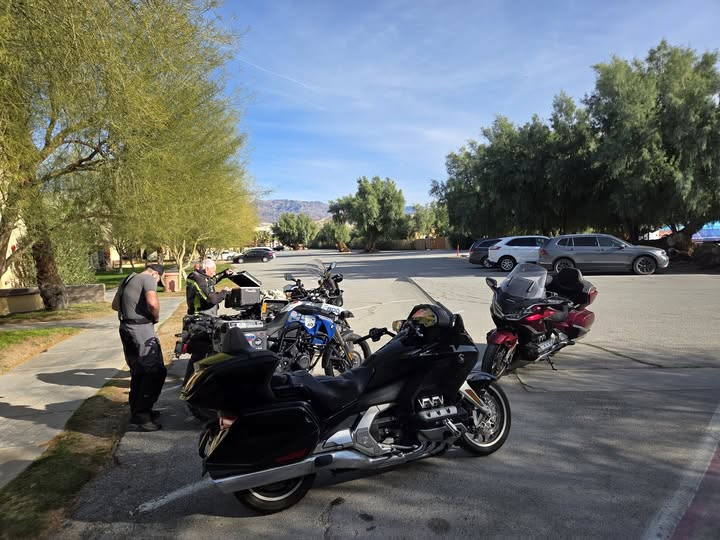
Above: Death Valley Ranch Hotel. Furnace Creek, California. 25 January 2025.
Image just post arrival on 243-mile-long ride to Death Valley, CA, via Las Vegas, NV, from Ivins, UT. John Galt's 2019 Goldwing motorcycle foreground left. My 2021 Goldwing motorcycle at far right. In the middle of the image is Wyatt Earp's 2012 BMW F800 GS motorcycle and beyond, minimally visible, Ahn Rhee's KTM 700 dual sport motorcycle. Most notable on this riding segment were the 31-degree temperatures at the top of the pass, early in the AM, riding from Ivins to Beaver Dam, AZ and I-15. Brrr.
In the first decade of the aughts I used to do an annual mid-winter motorcycle ride. Taking a break from skiing, with riding friends, I visited locations throughout the southwest in January or February. Tombstone, Bisbee, Yuma, Palm Desert, Julian, Rocky Point, Lake Havasu... stream of conscious recollections. We thought it would be fun to resume the mid-winter riding tradition starting from my home in Ivins, where four of us met on 24 January 2025 to enjoy a dinner of Veyo chicken pot pies precedent to getting on the motorcycles the next day.
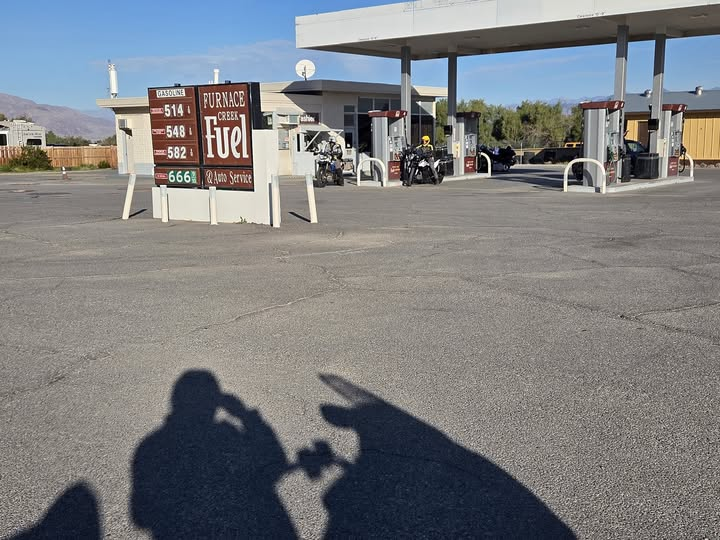
Above: Independent fuel station. Furnace Creek, California. 26 January 2025
Note the price of the diesel fuel. Is the symbolically potent price per gallon number a joke? a coincidence? "Selfie" image by Mwah (sic) astride my 2021 Honda Goldwing motorcycle.
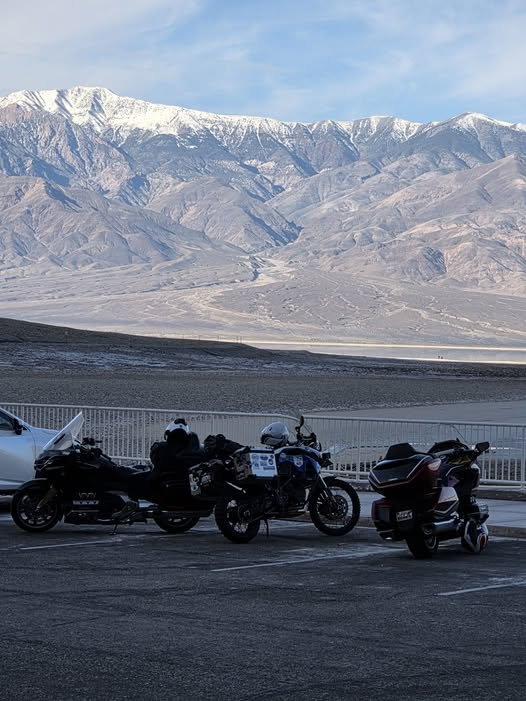
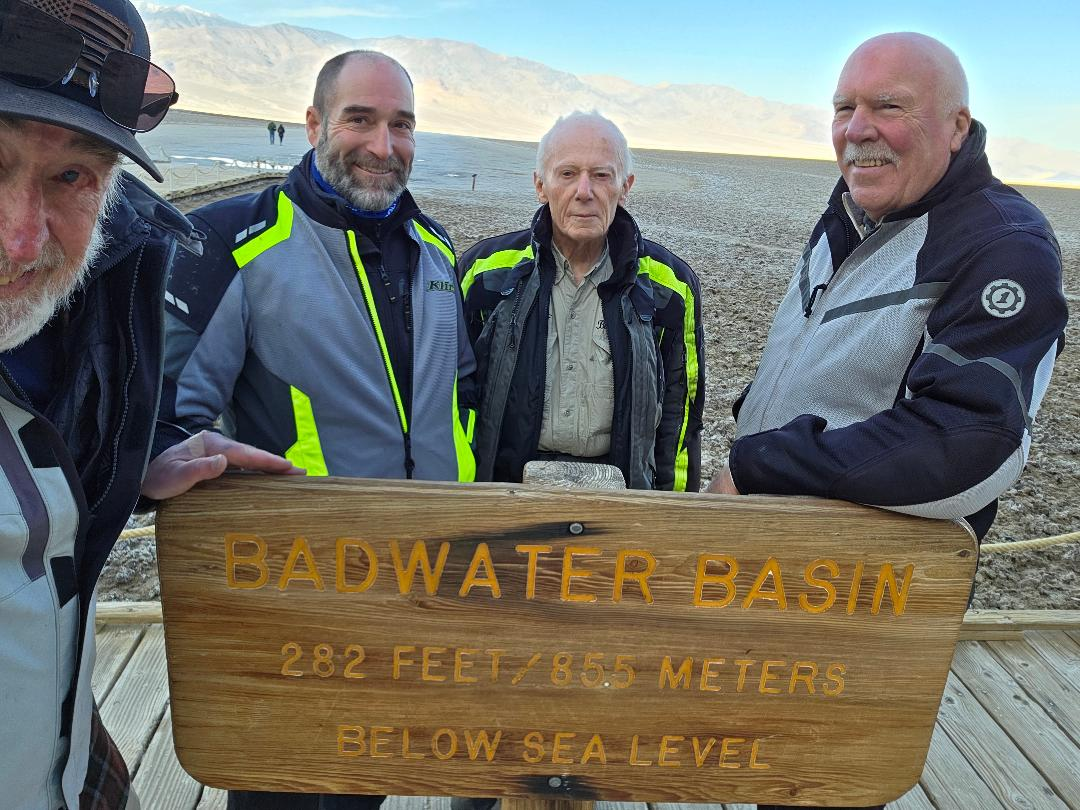
Above: Badwater Basin. Death Valley, California. 26 January 2025.
Image: Mid-Winter riders. Bishop, Wyatt Earp, Ahn Rhee, and John Galt. Ahn Rhee, riding a KTM 700 dual sport motorcycle, is 85 years old. He has ridden his motorcycle... well... everywhere. Start with circumnavigation of the Black Sea and throughout Iran. Too many other trips by Ahn Rhee to name. I have ridden with Ahn Rhee in Patagonia (also with Galt), Africa, and Mongolia.
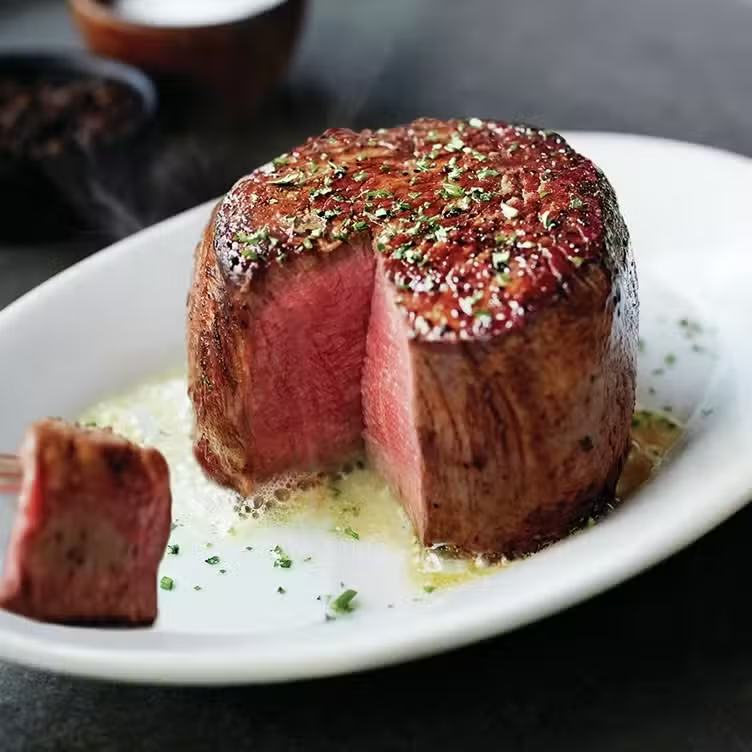
Above: Ruths Chris Steakhouse, Palm Desert, California. 26 January 2025.
Today's ride, from Death Valley to Palm Desert was about 340 miles, including forty miles from Furnace Creek to Badwater Basin and back to Furnace Creek. We rode from Furnace Creek across Mojave Desert terrain to Baker, California, further south to Kelso, California, Amboy, Twenty-Nine Palms, to Palm Desert. We saw the "two Californias." At an Amboy pitstop was a dilapidated, dirt surfaced, old Route 66 cafe relic that had been turned into a souvenir store. Bodily functions were performed in a dingy, blue porta potty outside. Later in the day, we celebrated "the other California" at Ruths Chris Steakhouse in Palm Desert.
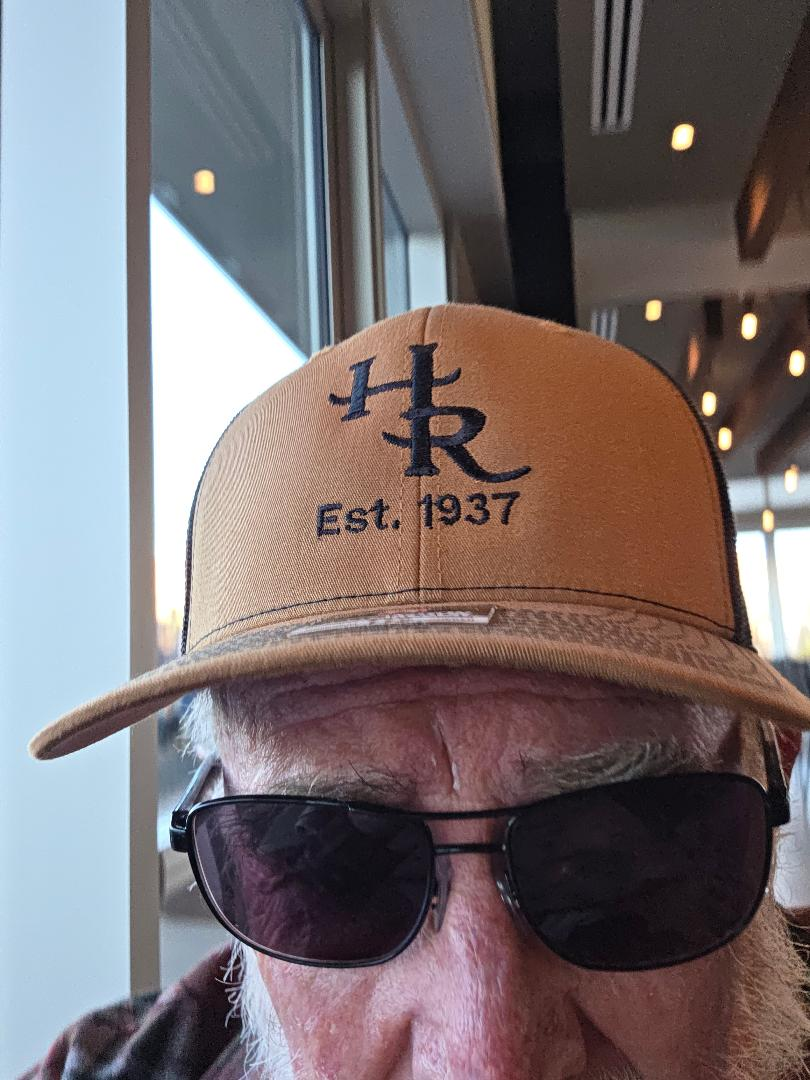
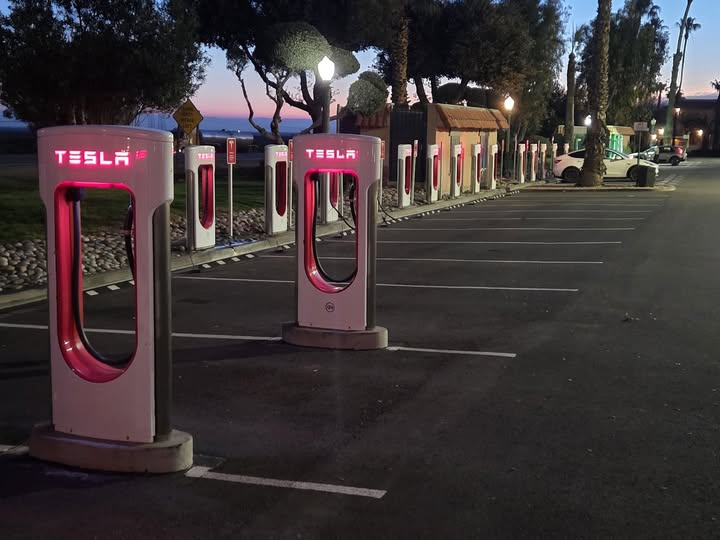
Above: Harris Ranch California. 28 January 2025.
California has rules on the books that call for the ramp up of electric vehicles.
Starting with model year 2026: 35% zero emission vehicle (ZEV) sales.
Increasing annually (e.g., 68% by 2030).
Reaching 100% ZEV sales by 2035.
As I observed the empty charging station here at Harris Ranch on my early AM walk, I wondered whether CA's ZEV goals made any sense. Tesla sales have been flat for the last year or so.
Tesla is discontinuing (or eliminating production of) its Model S sedan and Model X SUV.
This was announced by Elon Musk during Tesla's Q4 2025 earnings call on January 28/29, 2026. Production is expected to wind down next quarter (Q2 2026), effectively ending by mid-2026. The move frees up space at the Fremont factory to produce Optimus humanoid robots instead, as part of Tesla's shift toward autonomy, robotaxis, and robotics rather than traditional vehicles.
Furthermore, the stigma on fossil fuels seems to be abating as there is a growing need for increased electrical power for the age of AI and as drilling and exploration constraints are eliminated. Are California's expectations to go all ZEV at odds with current national and global trends?
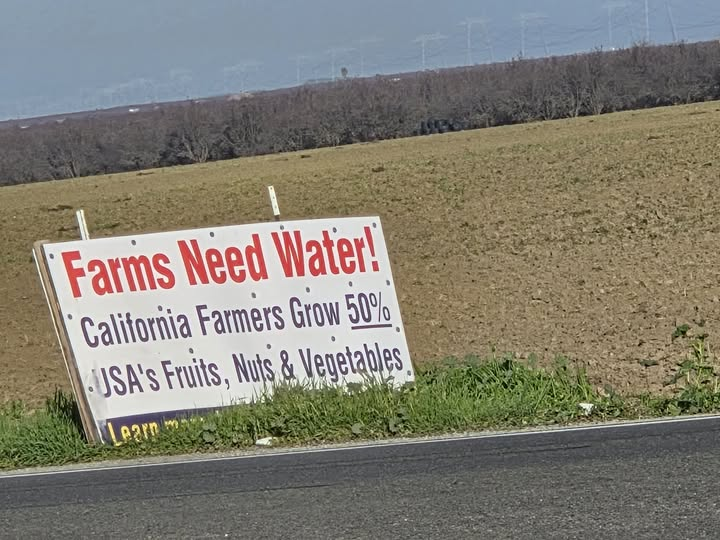
- Low water allocations — Even in years with good rainfall, full reservoirs, or above-average snowpack, South-of-Delta agricultural contractors (a major group in the Central Valley) often receive only a fraction of their contracted water. For example, in 2025, allocations were around 55% despite mostly full reservoirs, which farmers called "disappointing" and inadequate for planted crops.
- Environmental regulations and protections — Farmers argue that rules to protect endangered species (like Delta smelt or salmon) in the Sacramento-San Joaquin Delta divert too much water to the ocean or for fish flows, reducing what reaches farms. Common claims include that 80% (or more) of California's river water flows unused to the Pacific instead of to agriculture, with highway signs and protests highlighting this. They see this as prioritizing environmental mandates over farming needs.
- Chronic shortages and unpredictability — In drier or critically dry years, allocations can drop to zero or very low levels (as seen in multiple years like 2021–2022), forcing reliance on expensive groundwater pumping, fallowing land, buying water on the open market, or abandoning fields. This leads to higher costs, lost revenue, fallowed farmland, and economic strain on rural communities.
- Other related issues — Groundwater restrictions under California's Sustainable Groundwater Management Act (SGMA) limit pumping to address overdraft, adding pressure. There are also occasional complaints about poorly timed water releases (e.g., from dams) that farmers can't capture for irrigation.
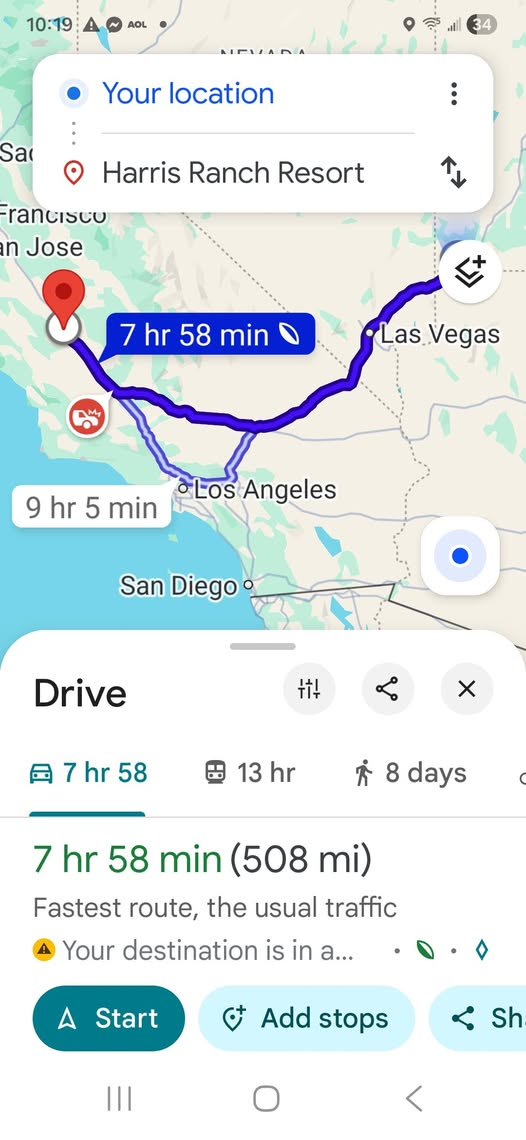
Above: Ride itinerary. 28 January 2025. The graph is back to front. My ride was eastbound from Harris Ranch to Ivins. Notable after Bakersfield were the green grass hills watered by the recent atmospheric river storm. I rode the final hour in the dark, from Beaver Dam, AZ to Ivins, UT, on old highway 91. After Barstow, the rest of this segmentt was "slabbing it" at freeway speeds on a moderately, not overly so, crowded I-15. I only saw one other motorcycle, another Goldwing and rider who overtook me, just before Baker, CA.
Wyatt Earp and John Galt, seeing favorable weather conditions for a direct two-day ride to their homes in Walla Wall, WA, headed north. Ahn Rhee rode directly home to Marin County yesterday. My ride today is described in the above graphic. 508 miles from Harris Ranch to Ivins, UT. My total riding distance for the four days of riding was 1411 miles. This trip was a good reintroduction of the annual mid-winter motorcycling trip. Challenging riding, good companionship, good food and new insights about the world in which we live.