Picto Diary - 25 October to 30 October 2026 - Aunt Charmian RIP
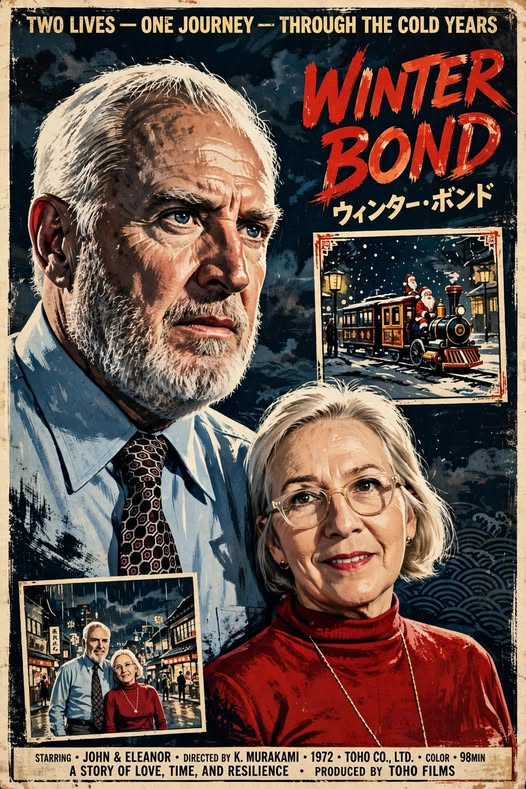
Above: Movie Poster. 25 October 2026. (Or, more accurately, the day the universe itself finally blinked, squinted, and muttered “oh for heaven’s sake, fine, make the damn movie.”)
We spent a lot of time thinking long and hard about the numerous requests over the years to have a movie made about our lives. Not “long and hard” in the sense of any particular anatomical commitment—though the phrase does have a certain stubborn, upright quality that refuses to sit down—but long in the calendar sense and hard in the “why does the sink keep leaking while destiny keeps knocking” sense.
The requests arrived like uninvited relatives: first a trickle of polite postcards (“Have you considered Hollywood?”), then a torrent of emails, carrier pigeons, skywriting, and one particularly aggressive balloon animal shaped like a clapperboard. We filed them under “Maybe Later,” which is the adult equivalent of stuffing them under the mattress and hoping the bedbugs write a better script.
We knew the demand to see the film would be overwhelming. Overwhelming in the way a tsunami is overwhelming if the tsunami has also purchased every available ticket in advance and is now politely asking if it can bring its entire extended family plus the ocean. Box-office projections suggested that opening weekend alone would require the temporary annexation of three neighboring countries just for parking. Mathematicians warned that the sheer volume of popcorn butter would create a localized climate event; climatologists replied that they already had that on their bingo card and were mostly concerned about the carbon footprint of the standing ovations.
We ran the numbers. The numbers ran away, screaming.But we just weren’t sure we wanted to spend the time dealing with all the aftermath… premier attendances, celebrations, awards ceremonies etc. The premieres, you understand, are not mere screenings; they are ritual sacrifices in which ordinary people are briefly transformed into walking red carpets and then, after the flashbulbs, returned to the wild with mild tinnitus and a lifelong suspicion of velvet ropes. Celebrations would involve cake. We like cake. We do not like the part where the cake is taller than the building and must be cut with a ceremonial chainsaw while a string quartet plays the theme from our grocery-list argument of 2019. Awards ceremonies are worse. Statues are heavy. Acceptance speeches require the speaker to thank people who, in the film, were played by actors who then thanked the real people who then had to thank the actors for thanking them, creating a recursive gratitude loop that physicists believe may be the true source of dark energy. And the “etc.”—dear God, the etc. The etc. includes the moment when a complete stranger on the subway recognizes you from the trailer and asks whether the scene with the lost car keys was “based on a true story or just, you know, art.” (It was both. It was also Tuesday.)
In the end, we decided that in the grand scheme of things, the impact of this film on the lives of others would be a good thing. The grand scheme, for the record, is less a scheme and more a vast, slightly damp cosmic spreadsheet in which every human joy is entered in one column and every stubbed toe is entered in the other, and somehow the columns are expected to balance. We ran a cost-benefit analysis. On the cost side: possible permanent damage to our privacy, the invention of three new forms of celebrity stalker, and the statistical certainty that someone will start a podcast entitled “What the Movie Got Wrong About Our Actual Microwave.” On the benefit side: the chance that a stranger, somewhere, will watch the quiet scene in which nothing much happens except two people remembering why they still like each other, and will feel, for ninety seconds, less alone. That seemed, in the grand scheme, like a net positive.
The spreadsheet agreed, though it did request a larger font. We hope you see the film, coming to theaters in December 2026. December, of course, is the month when the days grow short and the trailers grow long, when people enter the dark of the cinema carrying the year’s accumulated snow and leave carrying, if we have done our jobs, a slightly warmer coat of the heart.
The film itself is not a documentary so much as a highly caffeinated re-enactment in which the real events have been gently inflated until they fit the screen. The car-keys scene has been lengthened; the argument about whose turn it was to buy milk has been scored by a full orchestra; the moment one of us said “fine” and meant the opposite has been given its own slow-motion sequence and a title card. Reality, as usual, has been asked to step aside so that poetry can borrow its clothes.
Drop us a line about what you thought about it. A line is fine. A paragraph is better. A multi-page manifesto explaining precisely which supporting character you identify with and why the lighting in the kitchen scene reminded you of your childhood is also acceptable, provided you include your mailing address so we can send you the official “You Are Not Wrong, But Also Not Entirely Right” certificate. We will read every word, or at least every other word, depending on how many awards ceremonies we have survived by then. If the film makes you laugh, tell us where. If it makes you cry, tell us why, but please do so after the credits; we are still negotiating with the musicians about whether the final swell counts as “emotional manipulation” or simply “Tuesday, scored.”
And if you leave the theater thinking that your own life is, in its own un-filmed way, equally worthy of a poster and a release date, then the movie has done its quiet, stubborn work, and we will consider the overwhelming demand, the aftermath, the cake, the statues, and the etc. to have been, in the grand scheme of things, entirely worth it. (The poster, incidentally, features us looking slightly more photogenic than we are and slightly less surprised than we feel. The tagline is still under negotiation. Current frontrunner: “Based on a true story. Mostly. The milk was real.”).
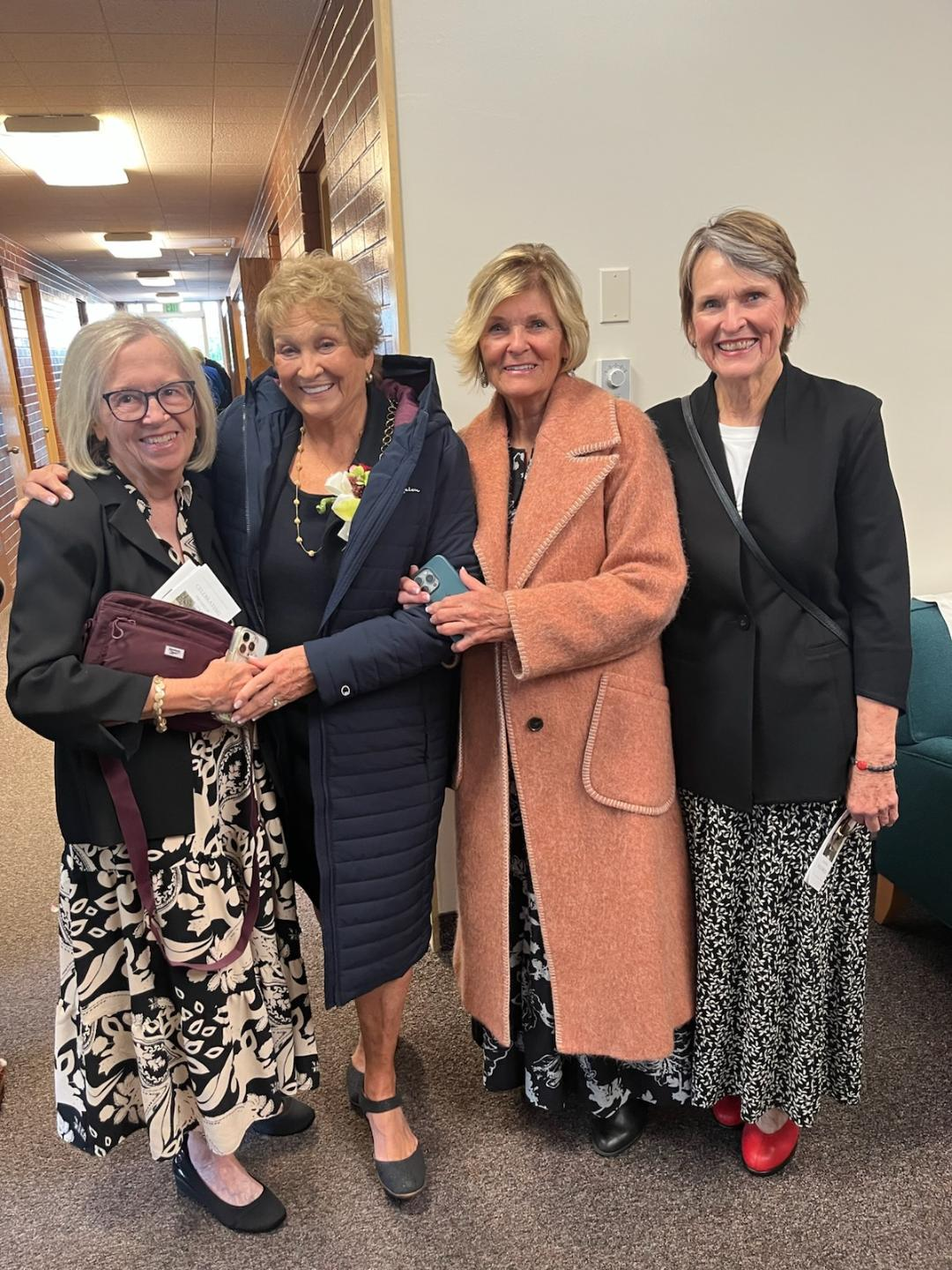
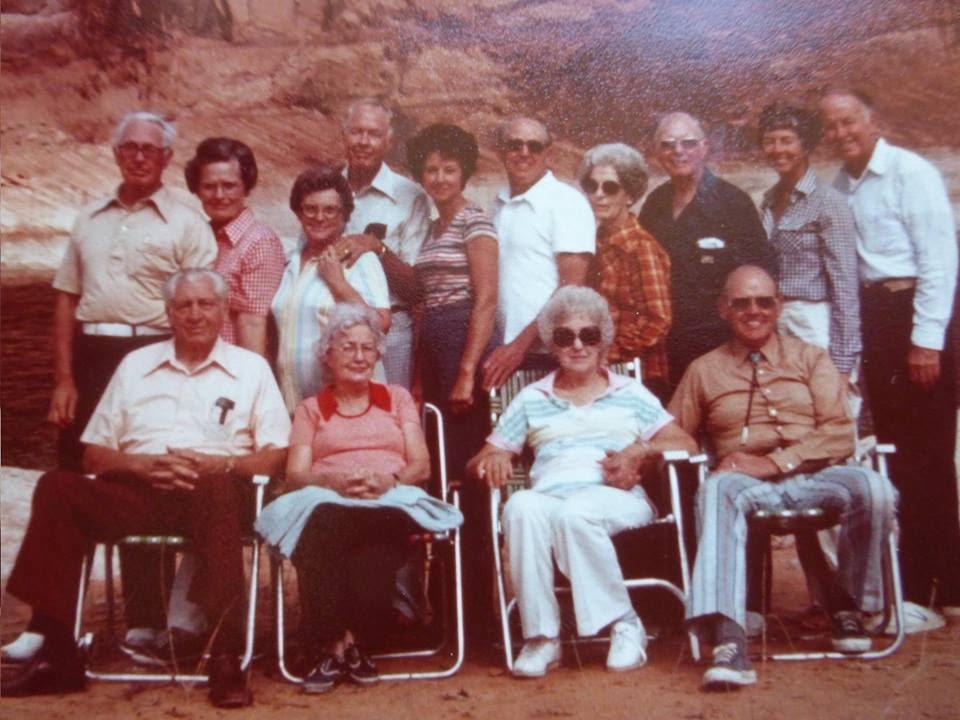
Above: Image from a recent periodic reunion of a group of my female high school classmates—Provo High School, class of 1963—sent to me by my high-school-days girlfriend, Trudy. 25 October 2026.
Trudy, TIMDT, and Mwah (sic) by chance ran into one another mid-October at a Black Bear Diner in Bountiful, UT. Here’s Trudy’s blurb, following a previous email exchange in which I had chronicled the usual inventory of geriatric aches, creaking joints, and ritual pilgrimages to the labyrinthine U of U medical complex.
Anne, Chris, Ann, and Karen. Carole Westover Clark left earlier. We all may be over 80, but we're still kinda cute even missing all the body parts we have given up or replaced 😀
Amazing we don't run into each other at the U hospital complex. I don't visit there as frequently since l sold my condo in Emigration Canyon.
Tell Margaret that Darrel had two more great grandchildren last week with others due in November and January. The Danielsons are taking over the world!
Trudy
The Trudy connection goes further, of course: TIMDT dated Trudy’s brother Darrel while both were at BYU, so the Venn diagram of our youthful entanglements is less a clean circle than a slightly lopsided pretzel.
Picture, if you will, the scene inside that Black Bear Diner: fluorescent lights humming like a mildly disappointed wasp, the air thick with the aroma of pancakes that have seen things, and three people of a certain vintage suddenly realizing that the universe has arranged a small, ironic reunion.
Trudy, the once-upon-a-time high-school sweetheart whose memory still carries the faint perfume of Aqua Net and teenage optimism; TIMDT, the woman who has shared the subsequent decades of mortgages, medical appointments, and mutual tolerance of each other’s increasingly baroque opinions; and Mwah, the sound one makes when one is trying to be charming while calculating how many seconds of small talk will suffice before the check arrives.
The chance encounter was less “meet-cute” than “meet-and-then-pretend-this-is-perfectly-normal-while-everyone-examines-the-menu-with-sudden-intensity.”Trudy, with the unflappable poise of someone who has survived both high-school algebra and several subsequent decades of life, apparently managed the introduction with equanimity. One imagines the conversational current briefly eddying around the twin reefs of “So, how long have you two been married?” and “Remember that time Darrel and I…?” before steering, with the skill of a river guide who has seen worse whitewater, toward safer channels: grandchildren, the surprising durability of certain high-school teachers’ lectures, and the mysterious way time compresses so that 1963 feels both impossibly distant and somehow still capable of producing a group photo in which everyone looks improbably well-preserved.
The aches-and-pains email from Trudy (above) now seems, in retrospect, a kind of preemptive self-deprecation—less a medical report than a gentle reminder that whatever romantic ghosts might briefly materialize in a Bountiful diner, they are thoroughly outranked by the practical realities of knee replacements and prescription refills.
There is a particular species of humor in these accidental collisions of past and present. Hyperbole suggests that the air crackled with enough unresolved teenage electricity to short-circuit the jukebox; irony notes that the only electricity actually present was the overhead lighting and the mild static of three people deciding, almost simultaneously, that the safest topic was the quality of the coffee.
Figures of speech proliferate: the past is a suitcase one never quite unpacks; memory is a slightly unreliable narrator who shows up uninvited at the counter; and an old girlfriend and a current wife sharing a booth is less a triangle than a temporary, good-natured truce mediated by pancakes. Obscure adjectives present themselves unbidden—the moment was at once antediluvian and contemporary, the conversation both analeptic and prosaic, the whole tableau faintly quixotic in its cheerful refusal to become dramatic.And yet the good feeling persists. Trudy sent the photo, after all.
The reunion of the Provo High women of 1963 continues to occur with the quiet regularity of a celestial event that no longer requires telescopes. Darrel is still, somewhere, the brother who once dated TIMDT. The Black Bear Diner remains open, fluorescent lights still humming, ready for the next improbable intersection of lives that once overlapped more closely and now simply nod, smile, and order the senior special. In the end, the aches are real, the medical complex is labyrinthine, and the decades between 1963 and the present are long enough to contain both an old girlfriend and a wife who, upon meeting, apparently found more to laugh about than to regret. That, one suspects, is the actual caption beneath the picture.
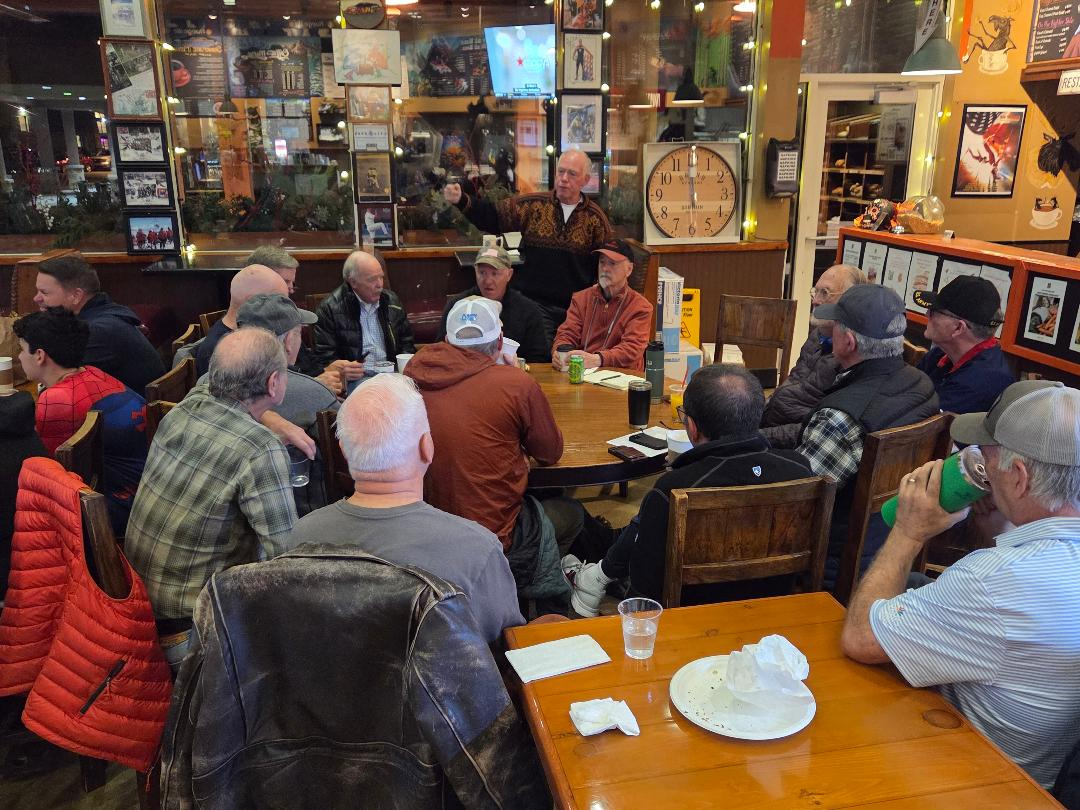
Above: Friday AM LSDM Colloquium. 30 October 2026. Wasatch Bagel, Park City, UT. Jarhead (Matt Bellini) and F16 (Jack Kelley) update on the Kyrgyzstan hunt.
Topics du jour:
Danny Valdez, Park City ski "character," has died per Mike Sonzini (Guzzi).
Recent Trips:
777 (Dell and Laine Fuller). Scotland
Fritz Edelstein. Italy.
Report on the successful Kyrgyzstan Ibex hunt. Jarhead (Matt Benneli) and F16 (Jack Kelley). "You are responsible for your own safety."
Amendment B and a broad discussion about home rule. Reminder of Dana Williams' declared intent to start a home rule initiative.
County Clerk race. Does a Park City councilperson's donation to county clerk candidate Malina Stevens represent a conflict of interest?
Canada. Why do Canada and the US seem to be at odds?
Daggett (Jack L. Rubin) Movie Recommendation: "You Can See Everything." Bing Videos
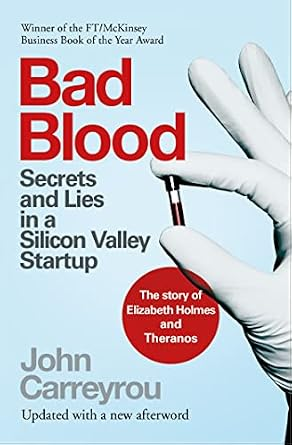
Elizabeth Holmes LSDM "connection." Elizabeth Holmes' husband, Billy Evans, was a business partner of LSDM acolyte, former speaker, and former speaker source, Henry Hancock.
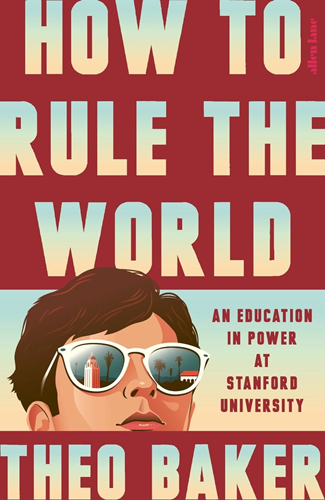
Book recommendations redux:
La Société Deux Magots (LSDM) is a non-partisan ROMEO (retired old men eating out) group which meets daily, at 7:00 AM at Wasatch Bagel in Park City, UT. LSDM members are the rightful intellectual heirs of a group of authors and artists (Hemingway, Joyce, Sartre, Picasso, Camus, de Beauvoir) who met daily at Cafe Deux Magots, in Paris, France in the 1930's.
http://www.LSDM-Parkcity.com