Picto Diary - 17 to 18 June 2026 - Broome
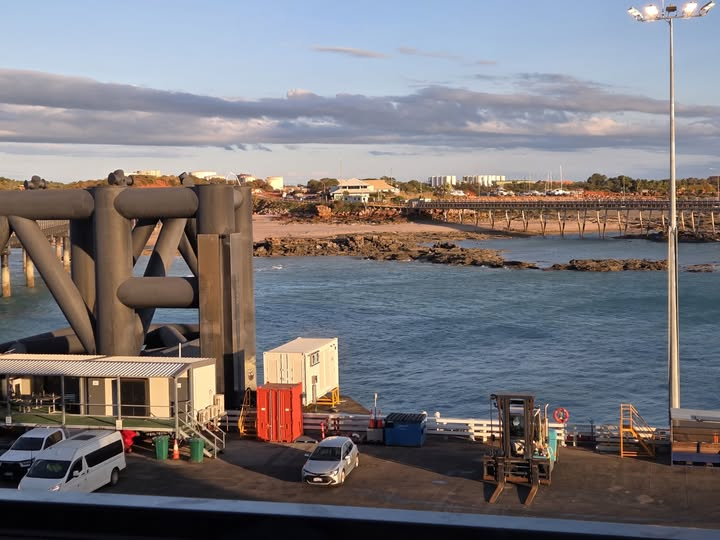
Above: Broome Port. Broome, Australia, 17 June 2026.
Seeking The Kimberley
Seabourn Pursuit.
Image is my first view of Broome as I pulled back the curtains of our suite. Ten days earlier, our cruise had begun in Darwin. Now we had reached Broome, the end of the line. We would spend the full day and evening here before flying to Sydney tomorrow on a four-and-a-half-hour flight.
Grok: Broome, Western Australia, is a vibrant tropical town and the largest in the Kimberley region, known as the "pearling capital of the world" and gateway to one of Earth's great wilderness areas. Nestled on a peninsula where red pindan soil meets the turquoise Indian Ocean, Broome blends rich multicultural history with stunning natural beauty. Founded in the 1880s as a pearling port, it drew divers and workers from Japan, China, Malaysia, Indonesia, Europe, and Aboriginal communities, creating a unique cultural mix that still defines the town today.
Me: During World War II, Broome became a haven for European refugees fleeing the Japanese invasion of the Dutch East Indies—present-day Indonesia. In March 1942, the town was attacked by Japanese Zero fighters. Fifteen PBY Catalina amphibious aircraft were destroyed on the water, and nearly one hundred lives were lost.
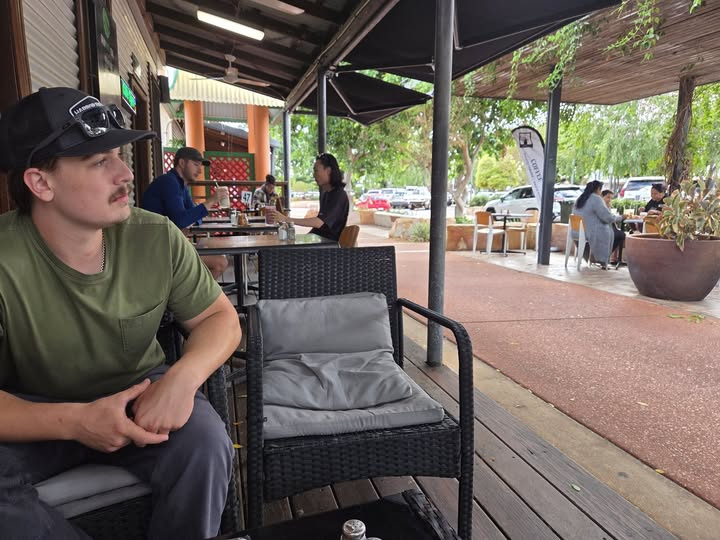
Above: Green Mango Cafe, Broome, Australia, 17 June 2026.
Seeking The Kimberley.
Seabourn Pursuit.
The quaint town is a five-minute walk from our hotel, The Mangrove. We stopped for coffee and a croissant here to get our bearings precedent to a walk around town.
Above: Broome, Australia, 17 June 2026.
Seeking The Kimberley
Seabourn Pursuit.
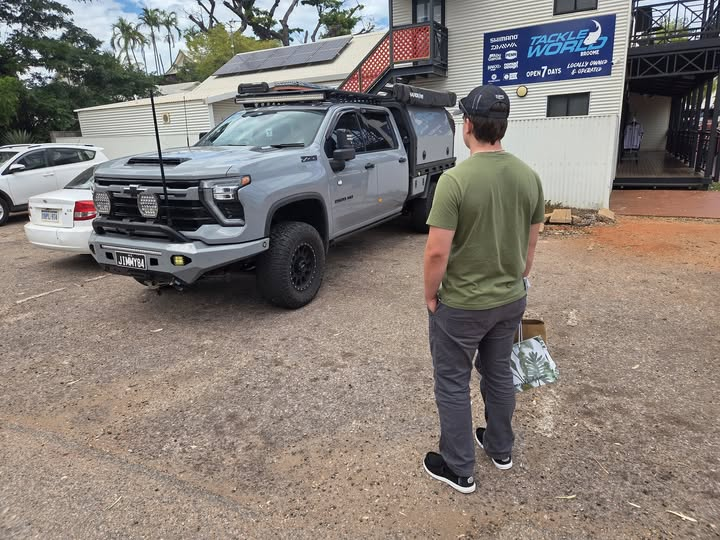
Image: Tricked out for off-road, Chevy 250 truck.
In Broome—one of the most remote places on Earth—it seemed that half the vehicles are modified for rugged back-country and off-road travel.
We approached a forty-something couple with two adolescent children as they climbed out of their tricked-out adventure RV. They were from Melbourne and had taken a year off to circumnavigate the Australian continent (Highway 1, "The Big Lap"), a journey spanning nine thousand miles.
Australians are renowned travelers. When I worked there in the 1970s, it was not uncommon for even senior executives to take a full year off to explore the world. By American standards, such a move would have put their careers at serious risk, but Australians clearly operated with different priorities.
Above: Broome, Australia, 17 June 2026.
Seeking The Kimberley
Seabourn Pursuit.
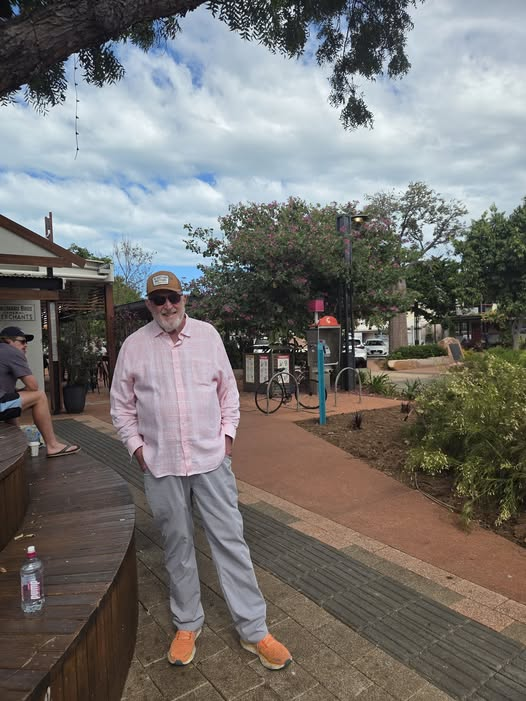
Me in my new Broome purchased Tommy Bahama shirt.
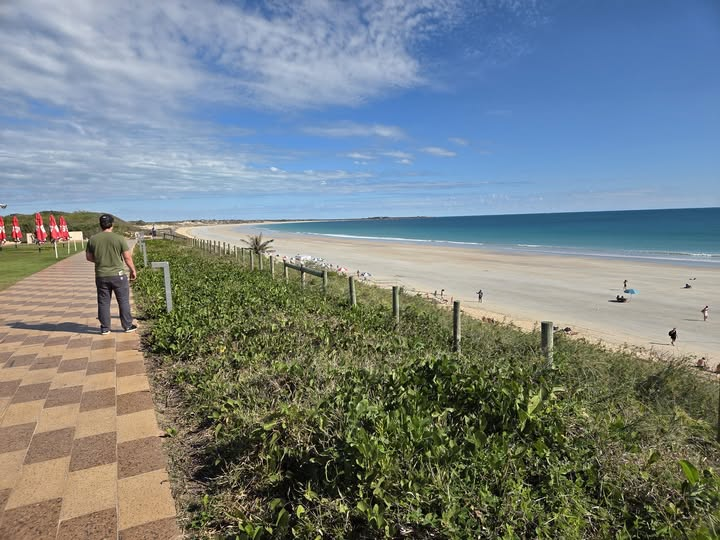
Above: Cabel Beach. Broome, Australia, 17 June 2026.
Seeking The Kimberley
Seabourn Pursuit.
After a walk around downtown, we took a city bus to Cable Beach.
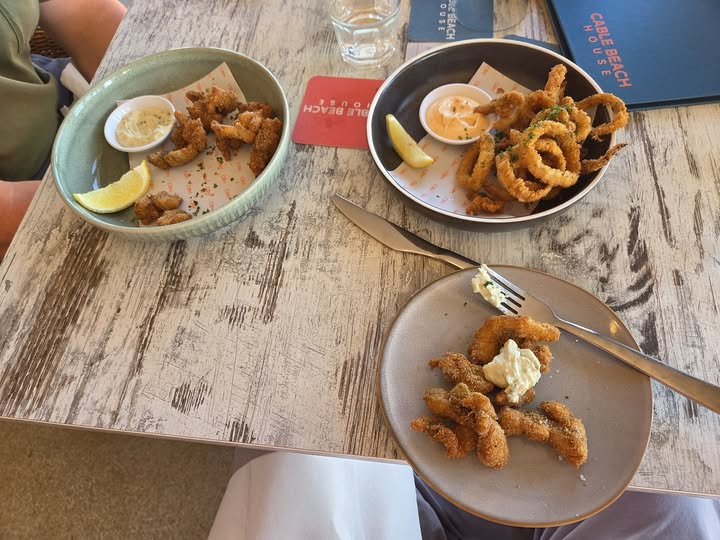
Above: Cable Beach House. Broome, Australia. 17 June 2026.
Seeking the Kimberly.
Seabourn Pursuit.
Calamari and deep-fried Barramundi.
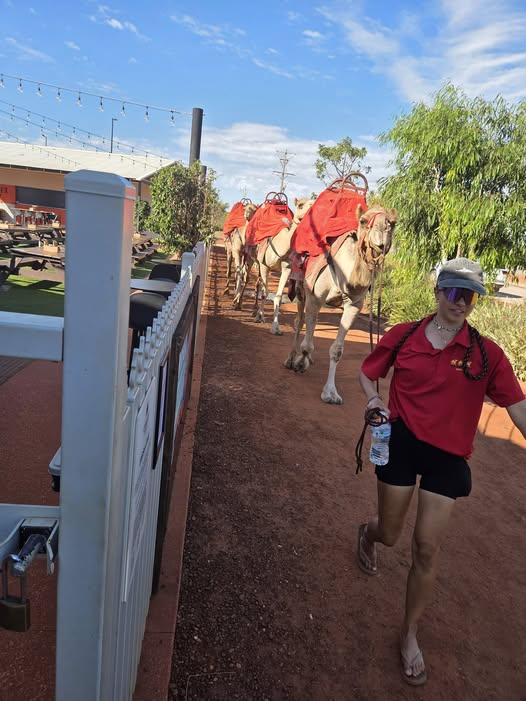
Above: Cable Beach. Broome, Australia, 17 June 2026.
Seeing The Kimberley
Seabourn Pursuit.
Camels. Pictured here, a camel ride tourist concession.
Grok: Camels in Australia are feral descendants of animals deliberately imported by European settlers in the 19th century. Australia’s arid interior (the Outback/Red Centre) proved extremely challenging for horses, which struggled with heat, lack of water, and rough terrain. Camels—tough, long-distance desert travelers that can go weeks without drinking—were the ideal solution for exploration, transport, and supply lines.
By the early 20th century (especially after the 1920s–1930s), motor vehicles and railways made camels obsolete. Many were released or escaped into the wild. With no natural predators, a suitable desert climate, and long lifespans (up to 50 years), their numbers exploded.
Today, Australia has the world’s largest feral camel population—estimates range from several hundred thousand to over a million—spread across ~37–40% of the mainland, especially central deserts. They are now considered a pest, competing with livestock and native animals for resources, damaging infrastructure (especially during droughts when they seek water), and impacting ecosystems.
Control efforts include culling, mustering for meat/export, and other management programs. The camels remain a striking reminder of Australia’s colonial history and the unintended consequences of introduced species.
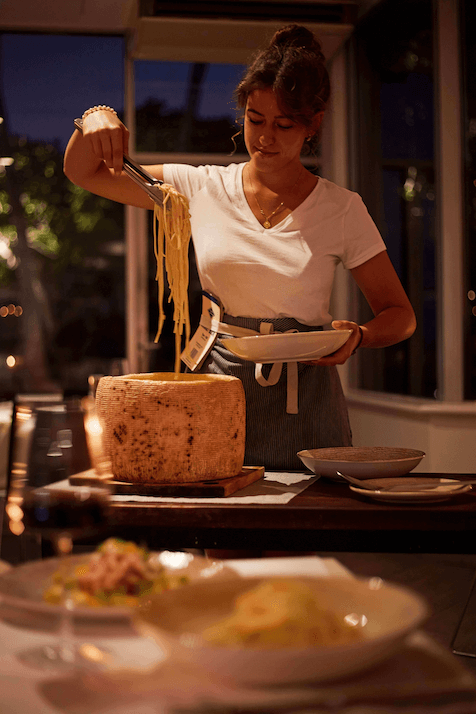
Above: Johnny Sausage Restaurant, Mangrove Hotel. Broome, Australia. 17 June 2026.
Seeing The Kimberley
Seabourn Pursuit.
The restaurant morphs into an excellent Italian restaurant for dinner. The Italian chef came over to say hello while we were eating.
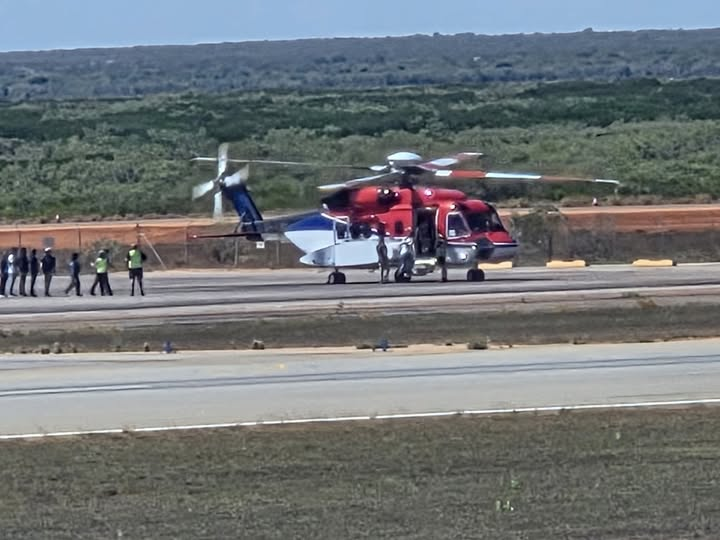
Above: Broome Airport. Broome, Australia, 18 June 2026.
Seeing The Kimberley
Seabourn Pursuit.
Tourists board chopper for excursion into The Kimberly... possible even to see the fantastic sites we saw in the last two days: Horizontal Falls and Montgomery Reef.
A note on shipboard lectures:
On "at sea" days and interspersed between zodiac excursions were excellent shipboard lectures by adventure staff on crocodiles, mangroves, birds, geology and more.
Addendum
Hi Steve - I thoroughly enjoyed following you and “Drums” on this trip. I’m sure it was an amazing experience for both of you. I hope to be a grandfather someday and look forward to sharing a similar experience. My daughter is getting married in September so maybe that is not too far away.
You’ve also inspired me to consider incorporating a cruise into my travel plans. I’ve purposely avoided them for years, only taking one Alaska cruise 25 years ago. The Seabourn line looks to be much smaller than those large, floating skyscrapers. I’d be interested in your thoughts on this.
See you soon!
Boston,
Park City, UT