Picto Diary - 14 June 2026 - Freshwater Cove/Montgomery Reef
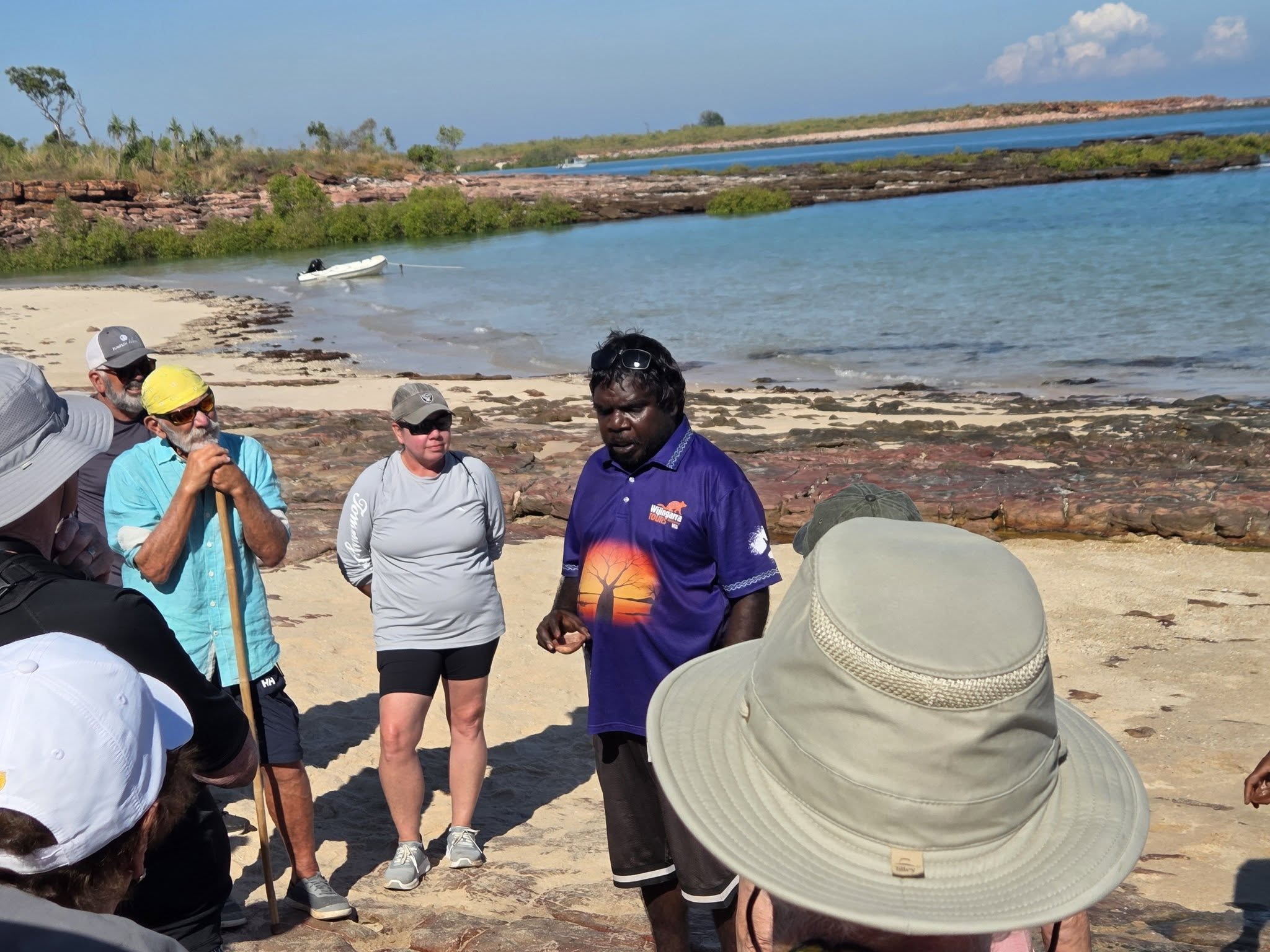
Above: Freshwater Cove. Kimberly, Australia. 14 June 2026.
Seeking The Kimberly.
Seabourn Pursuit
Image: Cruise goers receive introduction to rock art from local. Couple at left are travelling together. He is from Maui and she is from Las Vegas.
Freshwater Cove (also known as Wijingarra Bard Bard or Wiggingarra Butt Butt) is a remote, pristine natural cove on the Kimberley coast of Western Australia, located on the mainland adjacent to Montgomery Reef in Worrorra (Wunambal Gaambera) country.
Key Features
- Permanent freshwater spring: The cove is named for reliable freshwater that flows from the ground and a small waterfall/swimming hole a short walk upstream — a vital resource in the arid Kimberley landscape.
- Stunning scenery with red cliffs, white-sand beaches, turquoise waters, and dramatic tidal influences.
- Cultural significance: Traditional homeland of the Worrorra and Wunambal Gaambera peoples. Visitors often receive a Welcome to Country, learn about rock art, and experience Indigenous-guided tours.
- Rich in biodiversity and a popular stop for Kimberley expedition cruises, scenic flights, and eco-tourism. Activities include beach walks, swimming (with caution for marine life), fishing, and exploring ancient rock art.
It is part of the remote and spectacular northwest Kimberley wilderness, often visited in combination with Montgomery Reef.
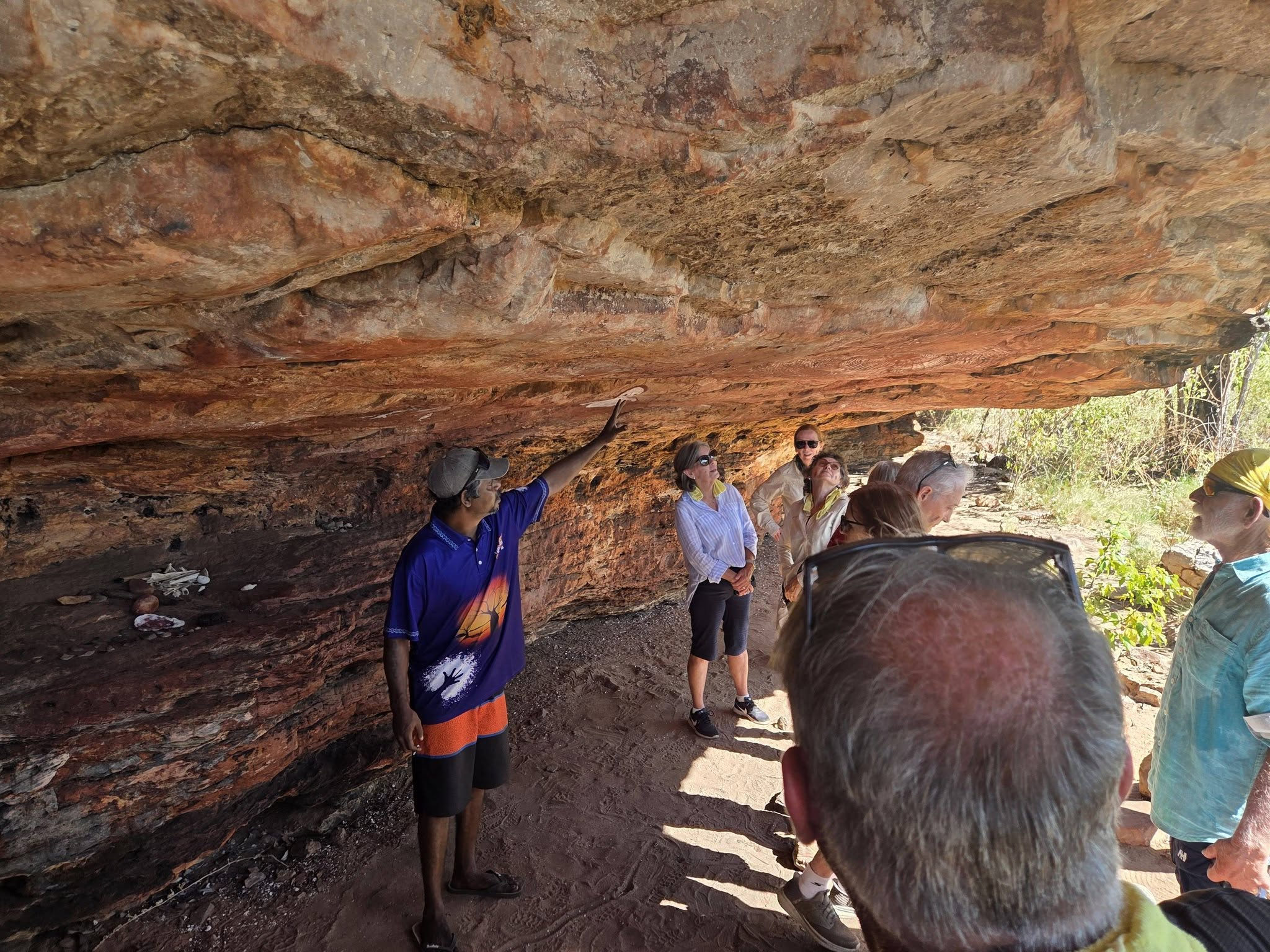
Above: Freshwater Cove. Kimberly, Australia. 14 June 2026.
Seeking The Kimberly.
Seabourn Pursuit.
Image: Viewing Wanjina rock art. Four thousand years old.
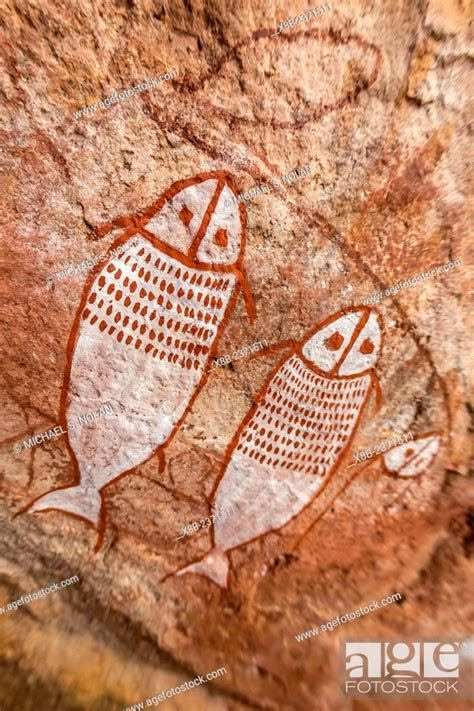
Above: Freshwater Cove. Kimberly, Australia. 14 June 2026.
Seeking The Kimberly.
Seabourn Pursuit.
Wanjina rock art, Freshwater Cove, file image. Current Traditional Landowners sometimes update the ancient art with new "paint." And, why not? They don't see it as some valuable archeological find, but rather religious iconography to be kept current, just as Christians would remodel or otherwise update a church property.
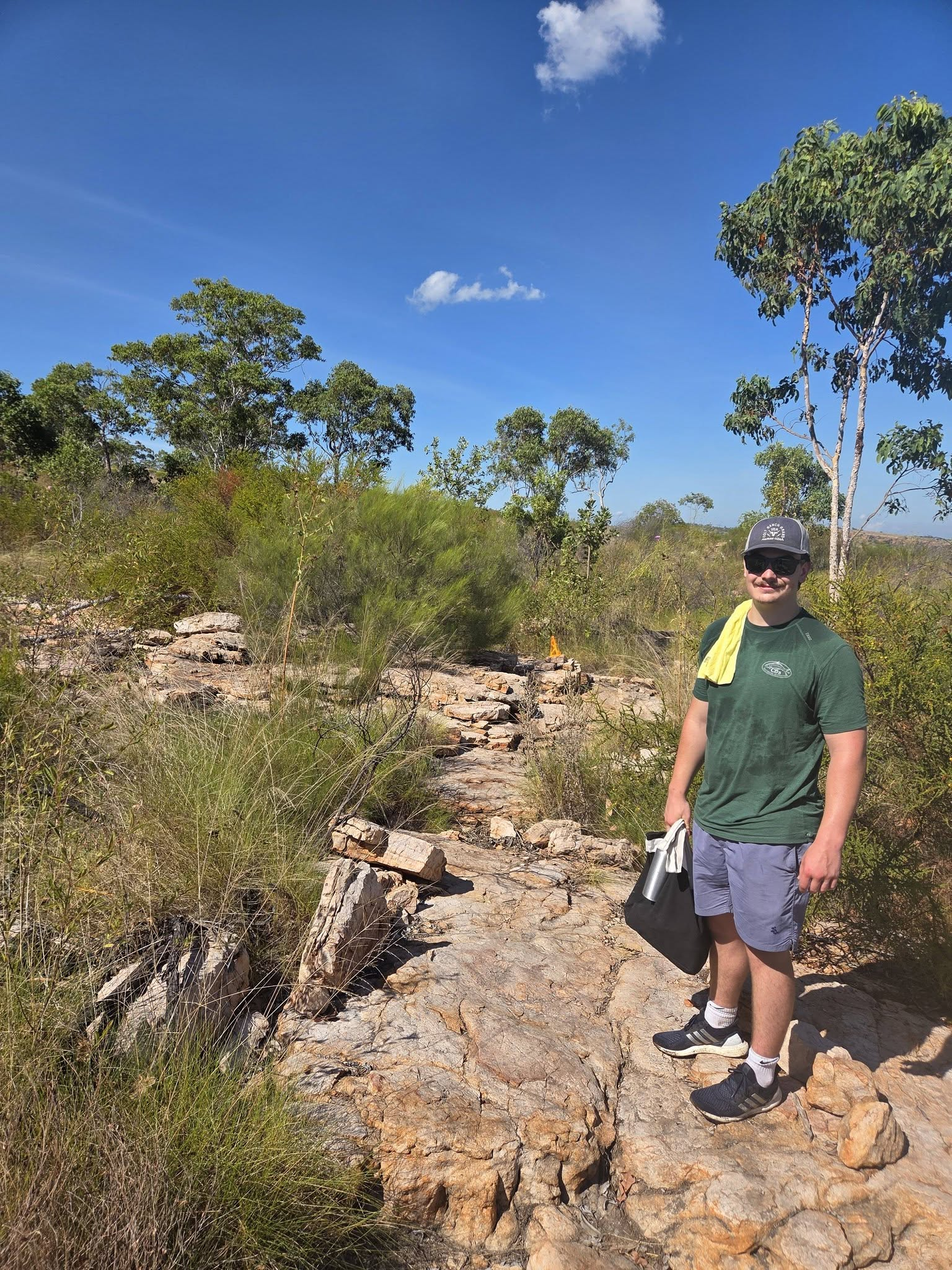
Above: Freshwater Cove. Kimberly, Australia. 14 June 2026.
Seeking The Kimberly.
Seabourn Pursuit.
Image. Route to and from zodiac dismount to rock art was about one mile. The trail at times was difficult requiring climbing up and down boulders with gaps betwixt and between. The adventure staff of the Seabourn Pursuit showed images of the trail prior to the hike and said that assistance along the way would not be available. I decided to go, but several other eighty somethings passed. There were some tricky spots on the trail, but I managed to accomplish it. Drums was nearby to provide me with tips on where to step.
Above: Freshwater Cove. Kimberly, Australia. 14 June 2026.
Seeking The Kimberly.
Seabourn Pursuit.
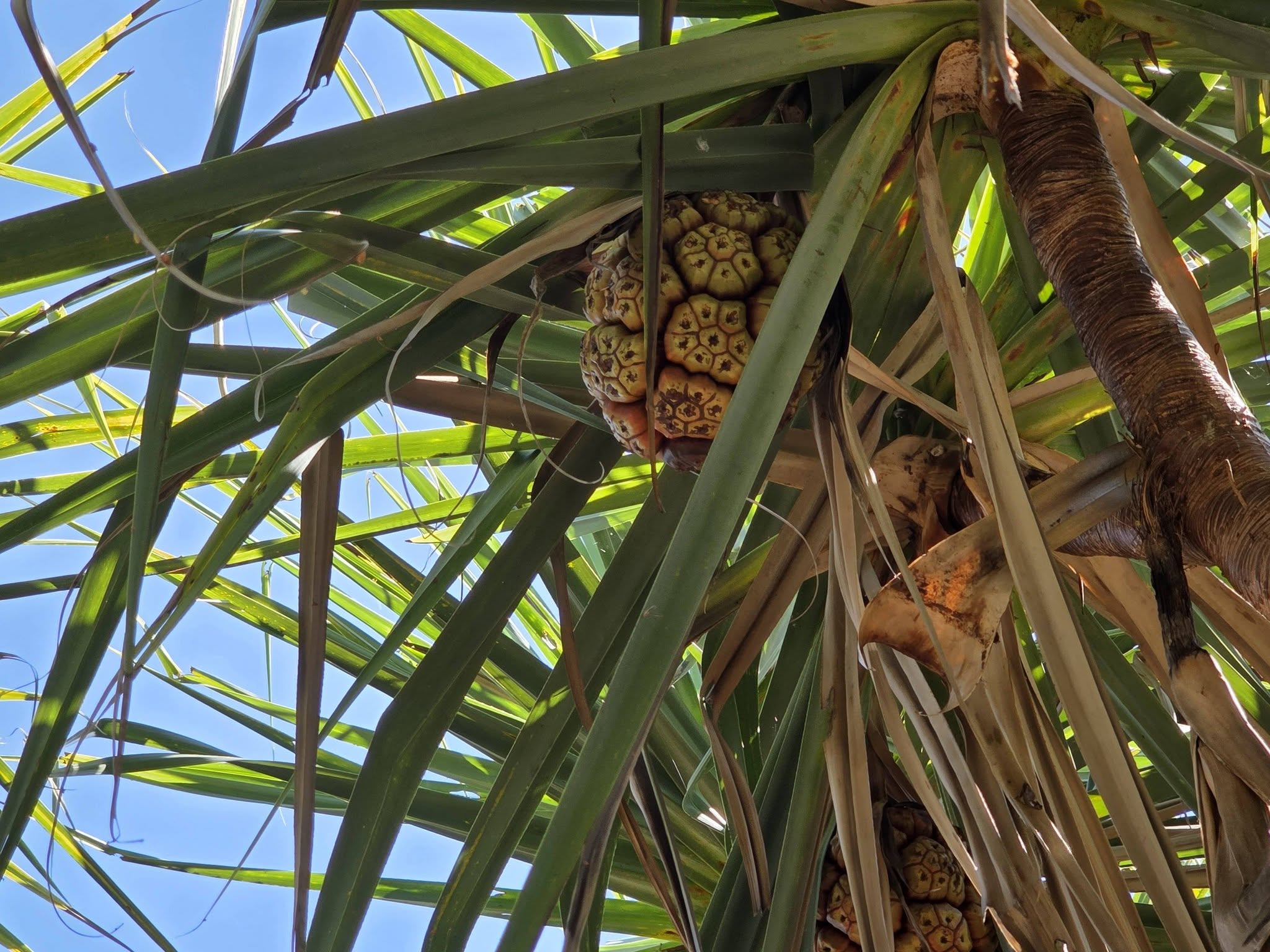
Screw Pine. Fruit is inedible.
Above: Freshwater Cove. Kimberly, Australia. 14 June 2026.
Seeking The Kimberly.
Seabourn Pursuit.
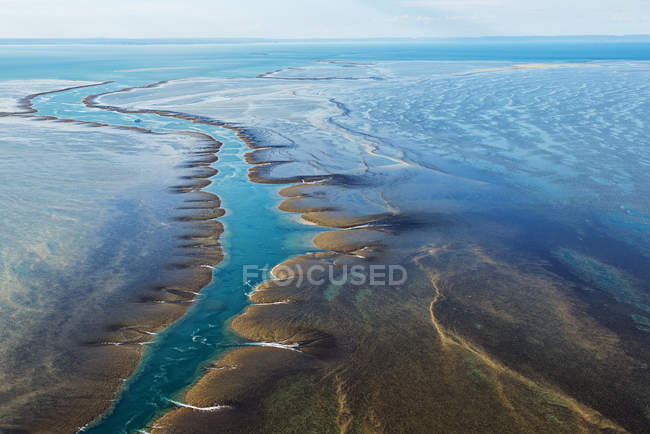
Montgomery Reef. What an amazing, one-of-a-kind sight! Top image shows water running off the reef at low tide. Lower file shot shows multiple points where water runs off the reef. This could be Oz's "Grand Canyon," yet it is accessible only to the few.
Montgomery Reef (also known as Yowjab or Yawajaba) is a vast inshore reef system off the Kimberley coast of Western Australia, located at the southwestern end of Camden Sound, surrounding Montgomery Island, and about 15–20 km offshore.
It covers around 400 km² (roughly 80 km long) and is recognized as the world's largest inshore reef.
Key Features
- Extreme tides (up to 10+ meters) cause the reef to dramatically emerge at low tide, rising up to 4 meters above the water and creating cascading waterfalls, channels, lagoons, and exposed flats. At high tide, it is largely submerged and invisible from the surface.
- It is an ancient geological feature (formed ~1.8 billion years ago from sandstone/dolomite) topped with rhodoliths (coralline algae), corals, and marine life, rather than a typical coral reef.
- Rich biodiversity: Home to turtles, dugongs, estuarine crocodiles, diverse fish, birds, and resilient corals. It lies within Lalang-garram Marine Park (a sanctuary zone).
- Culturally significant to the Dambimangari (Dambeemangarddee) people, featuring in their creation stories.
It is a major highlight of Kimberley cruises and scenic flights, often described as one of Australia's greatest natural wonders (praised by David Attenborough).
Addendum:
Steve
Thank you for sending those great photos. The closest I have come to that part of Australia is either Ayres Rock or Perth.
While growing up I did spend time in the middle of Nowhere. I spent summers on a sheep station which was 10 miles from the nearest town. I also visited my uncle's sheep station. They were 12 miles from their closest neighbor, 43 miles from the nearest store which was standalone, and 86 miles from the nearest store. That town was a 3 hour drive on a single lane dirt road. So when my aunt and uncle went to town they drove over on Saturday and returned on Sunday.
You mentioned that the swimmers were at a river with no crocodiles. While at the Victoria falls in Africa, I saw a sign 15 feet from where the river massively cascades over the ledge to become the waterfall. The sign stated " swimming is dangerous because of crocodiles ".
Have fun
The POPE
Eufala, Alabama
Dear Steve,
Thanks for sharing these photos.
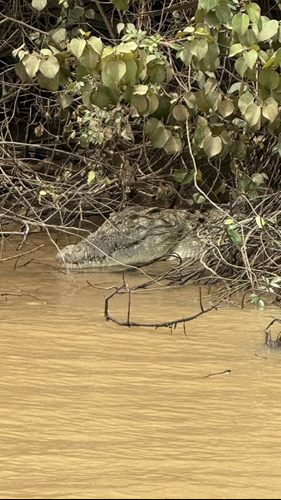
Reminds me of similar habitats in India in Sundarbans (Bengal) and Bhittarkanika in Orissa which are known for their mangrove habitats and the Salt Water Crocodiles also known as Estuarine Crocodiles.
Sharing a photo taken from my I-phone from a boat when I visited Bhittarkanika in Orissa. They are pretty big. You just see the head.
Mohan,
Gurgaon, Haryana
I looked up my previous question: Universal Cultural Meaning = not satisfied with this, the question is WHY? “In the image of God?”
Above the images are of fish in Australia and bison in Spain. Interesting, perhaps reflecting availability of each.
Cave drawings in Spain and Australia use the same red pigment—red ochre (iron oxide or hematite)—simply because it is one of the most abundant, durable, and easily accessible natural minerals on Earth. Early humans and Neanderthals did not communicate across continents; rather, they independently discovered and utilized the same natural resources. [1, 2, 3, 4, 5]
The shared use of this pigment is tied to a few key factors:
· Global Abundance: Iron oxides are found worldwide. Both continents had ready access to natural clay and rock rich in hematite, which yields a vibrant, lasting red color when ground into powder. [1, 2, 3, 4]
· Superior Durability: Unlike plant or animal-based dyes, earth pigments do not fade easily in the elements. They are non-reactive, heat-resistant, and physically stain rock surfaces, ensuring longevity. [1, 2, 3, 4, 5]
· Universal Cultural Meaning: The color red naturally evokes blood and fire, making it deeply symbolic for creation, spirituality, or marking territory among human populations worldwide. [1, 2, 3, 4, 5]
While the pigment itself is chemically identical due to geology, the art styles, ages, and exact methods of binding the paint (e.g., using plant sap, fat, or saliva as a medium) vary widely depending on the specific culture and era. [1, 2, 3, 4, 5]
If you're interested, I can provide details on:
· How these ancient artists prepared and applied their paints
· The specific age differences between Spanish and Australian rock art sites
Once again, good pics.
I also climbed Ayers Rock. On the way down, a Japanese man slid down because he did not want to walk as he was afraid of falling.
What a sight
We went to another a group rocks called the Devil Rocks. They are very scenic
Joe,
Gosford, NSW
TIMDT and Mwah (sic) climbed Ayers Rock circa 1992 and while up there a Japanese tourist fell to his death. We were last on the rock. Noone was up there but us. No rangers. Then a chopper flew overhead. We made our way off the rock and were told about the tourist death by the ranger at the bottom. We had taken the Ghan railway trip from Adelaide to get to Ayers Rock.
Very beautiful Steve.
Thanks
Joe,
Gosford, NSW
Steve,
Did you ever go to caves in Spain?
I did. “The earliest paintings were applied during the Upper Paleolithic, around 36,000 years ago.”
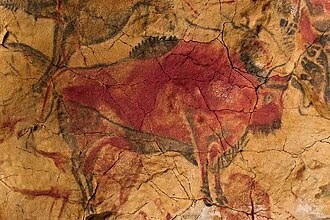
Interesting they used the same color and dated approximately the same time.
Why that pigment? Did the technology travel across the seas?
Dick
I have not seen the rock art in Spain.