Picto Diary - 14 June 2015 - Anzac Landing 25 April 1915
The night came on and found us fairly well dug in. During the night the Turks made determined efforts to drive us, as we had driven them in the morning but their efforts were useless for their nerve failed every time when they reached close quarters to that line of steel. Their wild rushes gave us our opportunity to revenge our heavy losses during the day. In the morning we had the satisfaction of seeing the result of our work, but among those dead Turks lay many of our own mates. The position now presented before us was that we were entrenched on one side of a gully and the Turks on the other at a distance of from 30 yards in some places, jp to 300 at others and along a front of over 1 1/2 miles with the gully in between full of dead Turks.
"Anzac Jack" Moore
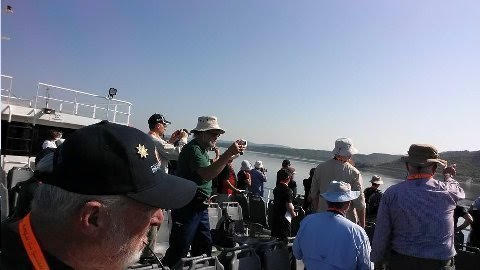
Above: Sappers (Royal Australian Engineers) and The Bishop at left wearing cap. Survey Anzac cove from the water. Aegean Sea, Gallipoli Peninsula Turkey. 14 June 2014.
Between 25 April 1915 and 01 May 1915 25 thousand Anzac troops landed on this beach. The story of the Anzacs and their participation in the Gallipoli campaign is one of the most heralded stories of World War I.
Objective? Assist in a multi force Allies effort headed by British General, Ian Hamilton, to take the Gallipoli peninsula from the Turks who were allied with the Central Powers (Germany, Austria/Hungary). Anzac occupation of the heights (Sari Bair range) two miles beyond the beach would enable (or so military strategists felt) troops to reach the other side of the 7 mile wide peninsula to take out Turkish forts and gun emplacements guarding the Dardanelles Narrows.
With the The Narrows neutralized, the allied fleet, which had failed on its own, five weeks previously, 19 March 1915, to "force the Narrows," could sail unimpeded through the Dardanelles and into the Sea of Mamara to "take" Constantinopole and the Bosphorus. Turkey would be "out of the war." Russia's warm water ports of Sevastapol and Odessa would be opened enabling reliable allied supply lines to Russia. A stronger Russia on the Eastern Front would help break the stalemate of killing along the Western Front.... or so the hypothesis went.
The effort ultimately failed. Eight months later, in December 1915, Anzacs (and other allied troops in other beach head locations on the peninsula, were evacuated. Anzacs suffered 28,150 casualties (8709 dead and 19,441 wounded). Total allied casualties were 141,029 (44,092 dead and 96,937 wounded. Turkish casualties were 251,309 (86,692 dead and 164,617 wounded).
Gallipoli became a defining moment for Australians and set the course for Australian self determination. Australia remained in the British Commonwealth... but decisions going forward as to the use of Australian troops would be made by Australians and not British. The diggers, (the name for Australian troops derived from their Gallipoli experience) went on to play a distinguished and important role in the trenches of the Western Front. A nation, with no history of warfare participation, came of age in WWI.
Gallipoli set up a whole set of "woulda, coulda, shoulda" introspections.
One:
After the March 18, 1915 sea battle fiasco at the Dardanelles five weeks before the landing, Churchill, First Lord of the Admiralty wanted to attack again, the next day. British Admiral on the spot, De Robeck, stung after having lost three capital ships, temporized. The War Council decided to hold... to amass an invasion force (including the 25,000 Anzac troops stationed in Egypt), and mount a joint sea land effort to force the Dardanelles in April, five weeks later
Only later, post war, did the Turks admit that they fully expected the Allies to succeed in their sea assault. The Turks had expended virtually all their ammunition and Constantinople had prepared to destroy assets that might be valuable to the Allies. Likely, had Churchill's advice to attack the second day been followed, Constantinople would have been in allied hands, and the misbegotten invasion would have never taken place.
And another:
The Anzacs landed two kilometers further north, on the difficult ground at Anzac Cove, rather than at the intended location of easier ground Gaba Tepe.
The Gallipoli invasion was the largest troop landing in war time. No one had ever attempted a landing on this scale. With little moonlight, young, inexperienced pinnace pilots, towing troop laden boats missed their objective.
Had the landing taken place on "easier ground" the likelihood of reaching high ground on the Sari Bair range would have increased, guaranteeing invasion success.... or so goes the second guessing.
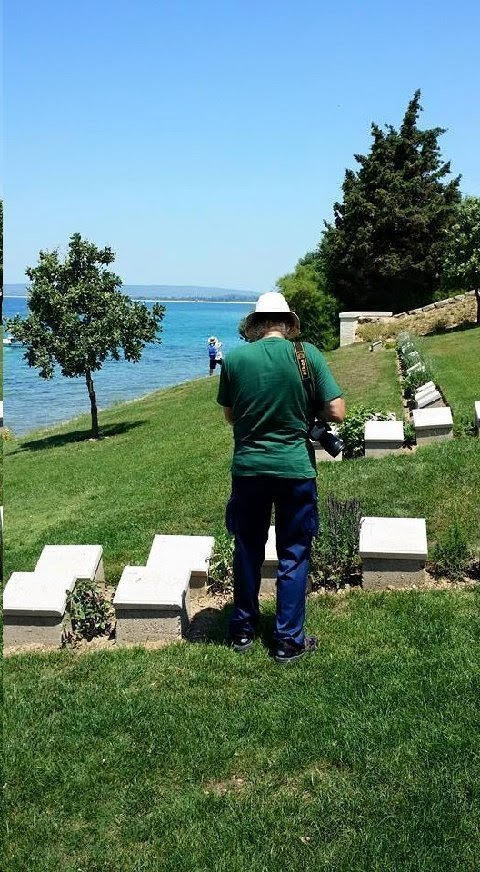
Above: Malcolm reflects at an Australian soldier grave stone. Beach Cemetery. Anzac Cove. Aegean Sea. Gallipoli peninsula. 14 June 2015.
Malcolm's grandfather, Anzac Jack, participated in the first landing at Anzac Cove. Anzac Jack, no doubt, knew many of the soldiers who lost their lives on the initial assault to the beach, some of whom are buried here.
There are a number of cemeteries around the Gallipoli peninsula. Post war authorities decided that the fallen soldiers should be buried near the battles and skirmishes where they actually died.
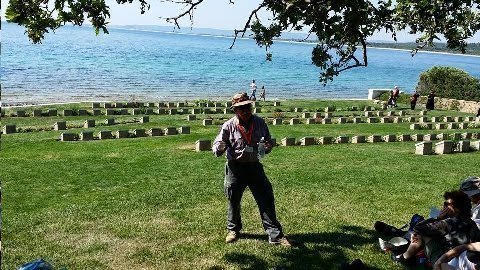
Above: Rod Margetts, battlefield guide. Ari Burnu Cemetery, Anzac Cove Aegean Sea. Gallipoli peninsula. Turkey. 14 June 2015.
Here Rod describes the misbegotten Anzac beach landing. Wrong beach and questionable decisions after the landing ultimately stymied the mission's success. Anzac and Turkish troops ended up facing off against one another in a trench war stalemate roughly a mile inland from the beach... half way to the Sari Bair high points needed to (or so it was felt) ultimately take the Dardanelles in a combined land and sea effort.
So far, our tour is an exceedingly well organized effort. Magetts is a 30 year, retired infantry Colonel, from the Australian Army. He served in Vietnam, commanded combat efforts in Iraq and Afghanistan, and spent three years at Centcom Tampa... obviously a highly regarded Australian military officer.
Margetts is an amateur historian... his knowledge of the Gallipoli Battlefield is prodigious. He has a stentorian, military voice... easy to hear... sense of humor, and he does not waste one word in his communication.
It is easy to see how, as a military leader himself, he can empathize with the young Anzacs, bringing their stories vividly to life as we stand here on the beach where they fought.
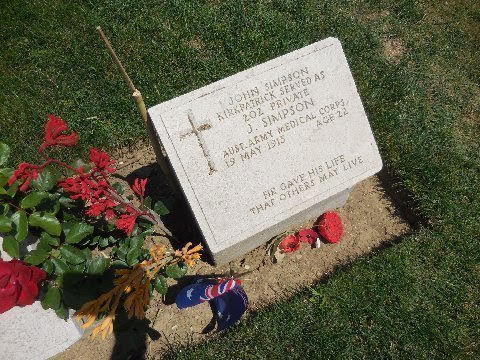
Above: Headstone of John Simpson Kirkpatrick. Ari Burnu Cemetary. Gallipoli, Turkey. 14 June 2015.
John Simpson, as he became known, is the reciprocal of Turkish Corporal Seyit. Both Seyit and Simpson enabled military and political leaders to buoy their home populations with uplifting and patriotic stories... "positive" war stories with which everyone could identify.
Simpson was a stretcher bearer with the Anzac corps. After landing at Anzac cove on 25 April 1915, Simpson began to use donkeys to provide first aid and carry wonded soldiers to the beach, for evacuation. Simpson and the donkeys continued this work for three and a half weeks, often under fire, until he was killed. Simpson and his donkey are a part of the Anzac legend.
Rod Margetts hastens to tell us that there were many, equally heroic stretcher bearers, many of whom performed their work for the entire eight months of the Gallipoli campaign.
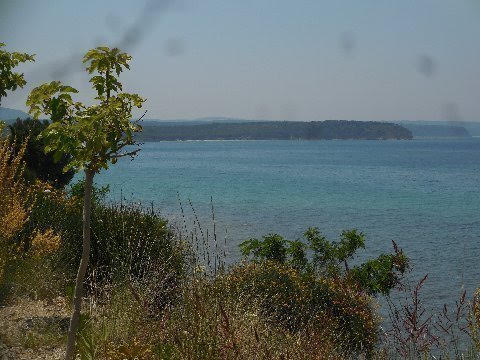
Above: Gaba Tepe peninsula, as seen from Ari Burnu, Anzac Cove. Gallipoli Peninsula, Turkey. 14 June 2015.
The beaches this side of the peninsula are about two kilometers away from where this image is being captured. These are the original intended beaches for the Anzac landing..., and the terrain opposite these beaches is not as difficult as the steep and gnarled, cliff and ravine terrain above Anzac Cove.
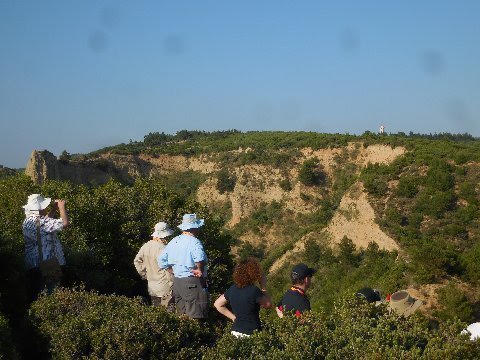
Above Sapper Tour members contemplate the gnarled ravines, cliffs and steeps that had to be negotiated by Anzacs. Gallipoli, Turkey. 14 June 2015.
Image is captured from Plugge's Plateau a key high point held for eight months by Anzac troops. In the distance is 2nd Ridge. The Lone Pine Cemetery monument can be seen atop the ridge. A large portion of the front line trenches were along 2nd ridge. It can be seen that the Anzacs made a good deal of progress inland, but a view from the top of 2nd ridge would show that the Anzacs were still a long way off from the objective high ground on Sari Bair.
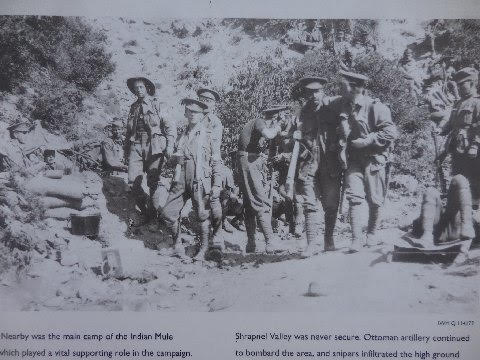
Above: Image of Anzac Troops on story board at Quinn's Post. Gallipoli, Turkey, 14 June 2015.
Quinn's post was a key trench position along the front line at 2nd ridge.

http://m.ba-bamail.com/View.aspx?emailid=16013&source=mobile_share
Aunt Joyce,
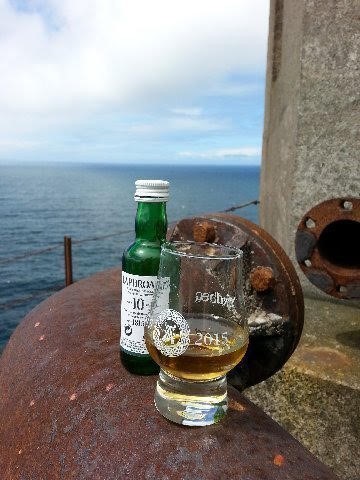
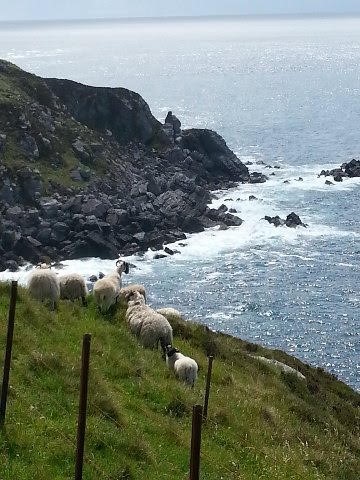
Havin' a wee dram and enjoying the sights, the sounds, the flora, the fauna, and the moment.
Keith, Somewhere in Scotland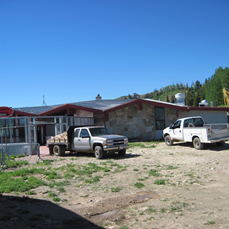
Summit House is getting an interior face lift.
Top of Mother Lode lift. Behind the Demo Shack is the top of the old King Con terminus, bull wheel, auxiliary motor. New tower footings at top are already in place.
View of bottom of Silver Lode lift taken from top of Prospector Face. It appears that the new Snow Hut will be large. Not in photo, but they have cut a swath of trees out for the Canyon Gondola. Work is also underway at the top of Pine Cone ridge for the Gondola, giving a clear indication where the lift will be located.
TWO3,
Park City, UT
I was on a motorcycle tour and just finished it last night to return to Istanbul. Steve, I am sorry I could not see you while you were in Istanbul. Sounds like you are on a wonderful tour even though your mode of transportation is not motorcycles.
Kaz, Istanbul, Turkey
Re the meaning of life, Steve, I think you figured it out a while ago. Seems you certainly are living it. Claire and I head for a three week tour (our first time there) of Turkey in September. We are doing this one with 'Road Scholar' - the folks who used to be known as Elderhostel. Nice to have the level of pre-input you are providing. Hope to talk to you before then about this part of the world. Thanks for the info and pix!
Len
Poughkeepsie, NY
"One gets the impression of vibrancy and progress in Turkey."
One's impressions can be misleading:
Who’s Going to Save Turkey’s Economy?
The Turkish economy is in dire straits. But its leadership is showing no interest in serious reform.http://foreignpolicy.com/2015/04/03/whos-going-to-save-turkeys-economy-erdogan-akp/
-- Fred