Picto Diary - 09 to 11 2026 - Northwest Motorcycle Tour (Part 2)
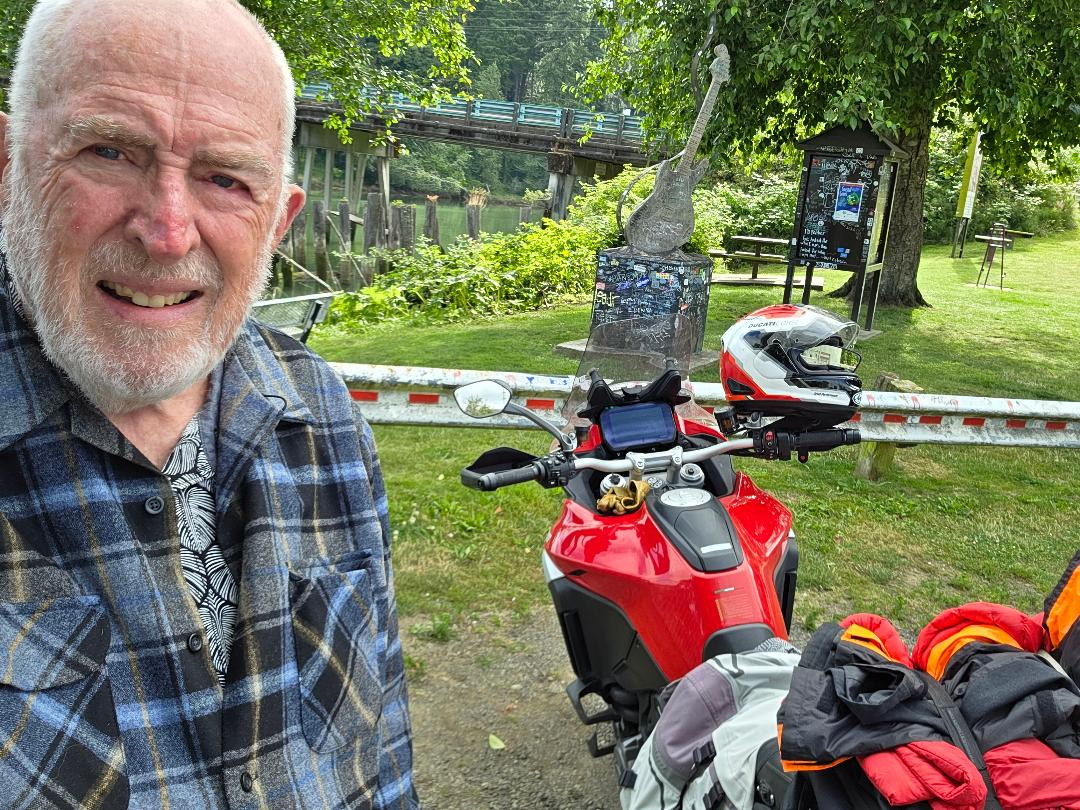
Above: Aberdeen, Washington. 09 July 2026.
Out and about on the Duc.
Kurt Cobain Memorial Park.
Aberdeen luminary Cobain hung out a lot under the bridge seen in the distance in image.
If we can channel Adam West in Walla Walla, WA, we can adulate Kurt Cobain in Aberdeen, WA
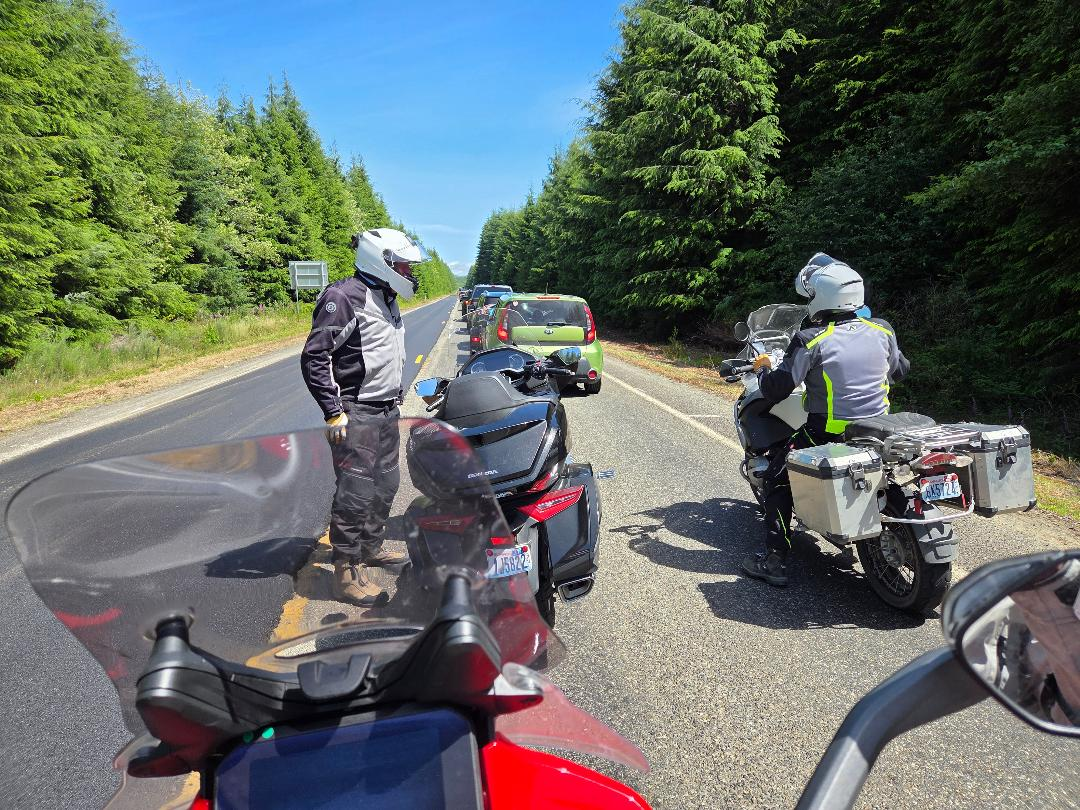
Above: US 101 southbound between Aberdeen, WA and Astoria, OR. 09 July 2026.
Out and about on the Duc.
Image: Construction stop. Galt at left on a 2019 Honda Goldwing and Earp at right on a 2015 BMW R1150 GS.
Leaving Aberdeen behind, US 101 unspools south through a lush corridor of evergreens and quiet coastal towns, the road rising and falling with the land as Willapa Bay flashes silver between the trees. The motorcycle settles into an easy rhythm—smooth pavement, gentle curves, and the clean salt air mixing with the scent of damp forest—while occasional ocean glimpses and the distant crash of waves keep the horizon alive.
Then the trees part and the Astoria-Megler Bridge appears, a long silver ribbon stretching across the wide Columbia. Crossing it feels like flying: the river far below, the Pacific opening to the west, and Astoria’s hills rising ahead. It’s the kind of ride that makes every mile feel purposeful—one of those perfect coastal runs where the machine, the road, and the landscape finally click into place.
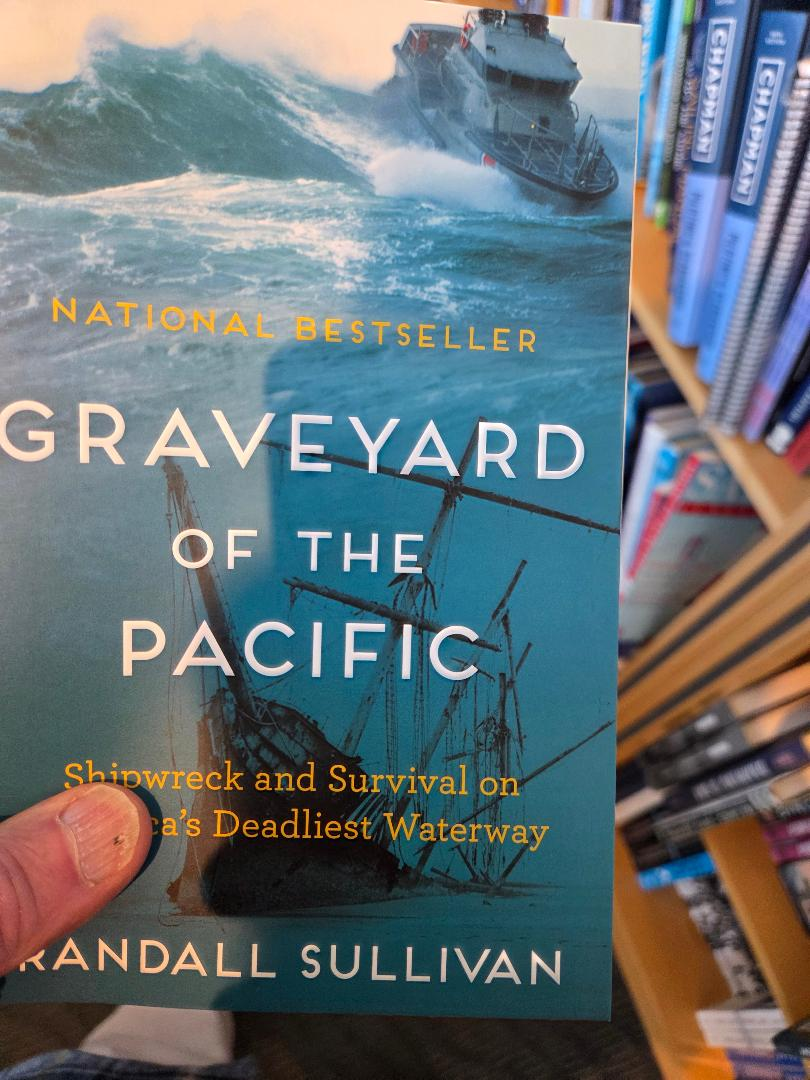
Above: "Graveyard of the Pacific." Astoria, Oregon. 09 July 2026.
Out and about on the Duc.
Columbia River Maritime Museum.
I bought the pictured book at the Columbia River Maritime Museum. It chronicles the history of one of the most infamous features at the mouth of the Columbia River: the Columbia Bar.
The Columbia Bar is a treacherous system of shifting sandbars where the river collides with the Pacific. Its unpredictable currents, violent waves, and shallow waters have claimed countless ships over the centuries.
I’d been through Astoria a couple of times before while motorcycling the Oregon coast. The last visit, about ten years ago, I spent an evening discovering Candy Crush for the first time. Exactly as the game designers intended, I got hooked. I got suckered. Too lazy to grind levels the free way, I ended up pouring roughly $1,700 over the next two years into climbing that endless candy-coated ladder. Looking back, I’d have been far better off spending that evening at the Maritime Museum instead. I could have learned then what I finally learned today: the real, unforgiving vagaries of the Columbia Bar—a far more consequential set of levels than any match-3 puzzle.
I look forward to reading the book.
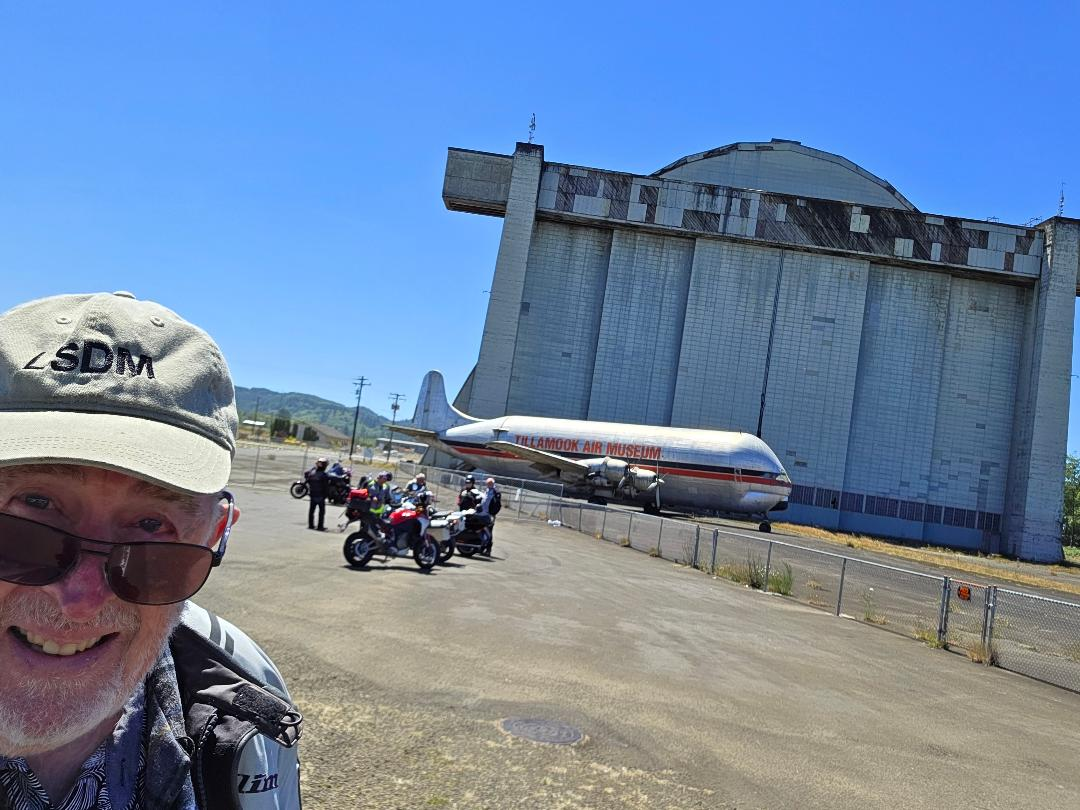
Above: Tillamook, Oregon. 09 July 2026.
Out and about on the Duc.
Tillamook Air Museum.
The museum is now closed indefinitely due to severe storm damage to its historic hangar. The original structure was built as a massive hangar to house Navy blimps that patrolled the Pacific coastline for enemy submarines during World War II. As I looked at the structure, I remembered my mom telling me about her experience in San Francisco after the Japanese bombed Pearl Harbor on December 7, 1941. She said that the day after the attack there was a blackout. Residents were instructed to lower their blinds at night and keep the lights dimmed.
Above: Oregon State University Logo. Corvallis, Oregon. 09 July 2026
Out and about on the
Duc.
Today was my first time in Corvallis, Oregon, home of Oregon State University.
The late afternoon air in Corvallis carried the soft perfume of river mist and hoppy ambition as we rolled into town for my first visit, the Ducati still humming like a contented dragon after the long run from Astoria down the Oregon coastline.
Oregon State University’s hometown unfolded like a living mood board for Pacific Northwest progressivism—earnest, eclectic, and unapologetically itself. We claimed an outdoor table at Block 15 Brew Pub, where the sidewalk buzzed like a friendly hive. My road dusted motorcycle crew, swapped stories with two locals, friends of one of my motorcycle buddies: a sharp-eyed PhD student dissecting energy system with the calm precision of a brain surgeon, and her boyfriend, who manages a scooter rental concession like a laid-back fleet admiral.
Over craft ales that tasted of pine forests and mild rebellion, the conversation flowed freer than the Willamette nearby. Laughter ricocheted between tales of torque curves and carbon footprints, proving that gearheads and academics can share a table without a single awkward silence.
After dinner, we strolled the river path like modern pilgrims seeking digestion and revelation. The Willamette glided past, dark and patient, reflecting the images of a town that feels perpetually in motion yet never in a hurry. Bicycle riders ghosted by on silent wheels, tattooed waitresses waved from café windows like living canvases, and—yes—a pair of furries in partial regalia padded along with the casual confidence of tenured professors.
It was a scene so vividly “liberal college town” it could have been staged by a satirical playwright: bicycles outnumbering pickup trucks, ideas outnumbering ideologies, and a gentle undercurrent of earnest optimism that made the AM ocean's stark vastness feel like another planet.
We capped the night with scoops at Sugar J’s Ice Cream Workshop, where flavors danced like experimental theses—lavender honey, stout chocolate, something called “Beaver Tracks.” Sitting on at the ice-cream parlor's table with melting cones in hand, my buddies and I traded glances. This was not MAGA ville. Not even close. Corvallis felt like a cheerful counterpoint: a place where sustainability lectures and scooter rentals coexist without irony, where the dominant flag is the university’s orange and black, and where a Ducati rider can break bread with energy scholars and still feel right at home. A brief, delicious collision of worlds on a warm Oregon evening—proof that the road sometimes delivers you not just miles, but perfect little pockets of unexpected harmony.
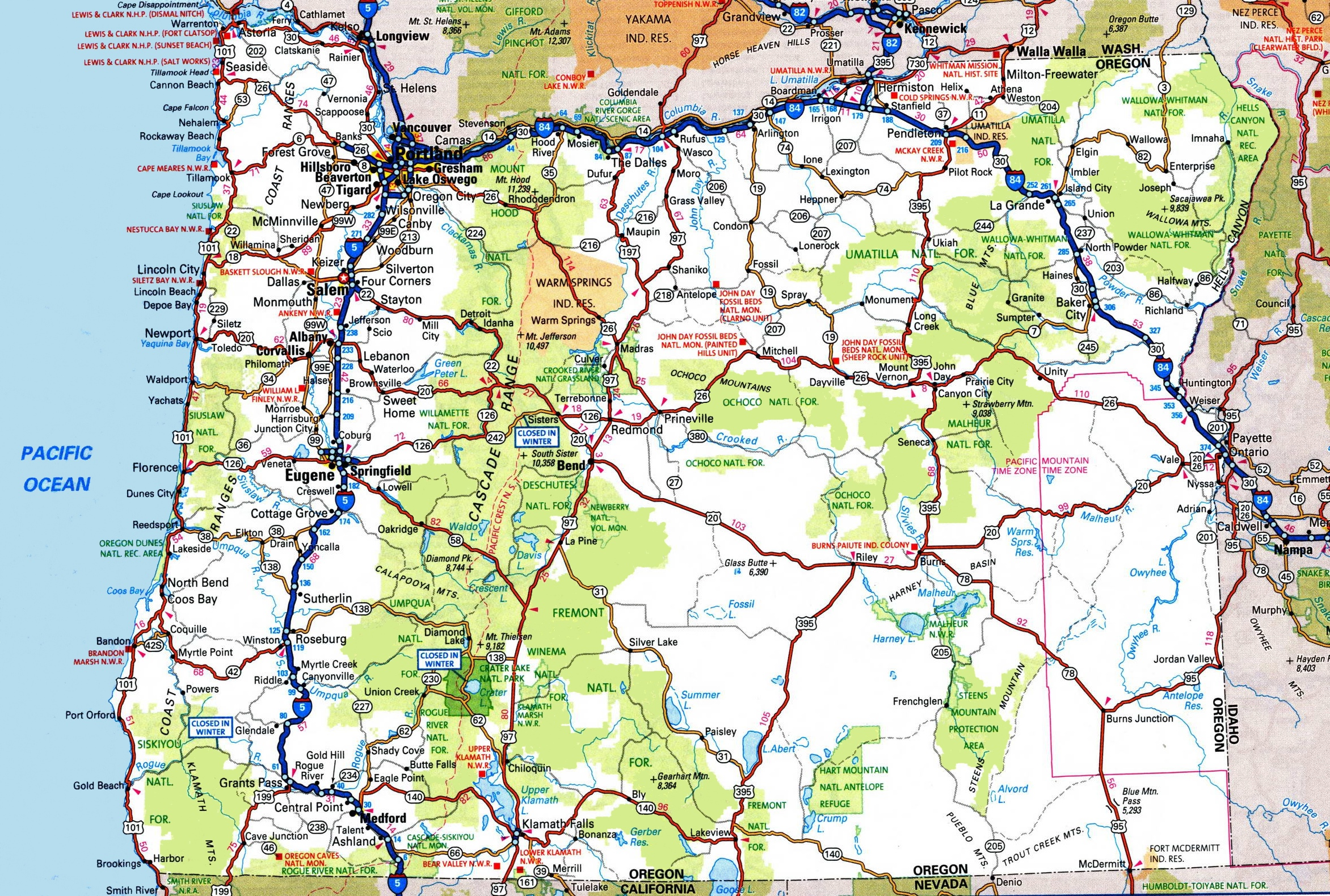
Above: Oregon State Road Map. 10 July 2026.
Out and about on the Duc.
Leaving Corvallis just after sunrise, we three riders of the John Galt Riders persuasion, rolled east on US 20 just as the post dawn ski began to take on blue hues. The Willamette Valley was quiet, the traffic unexpectedly low. The first real light was a hard, low blade of gold sitting right on the eastern horizon. Every time the road straightened, that sun drove straight into our faces. You tip your head, squint through the tint, and ride the edge of the lane just to keep a clean sightline past the glare.
The climb over the Cascades begins after Sweet Home. The highway tightened and rose through the deep green of the Cascades, switchbacks and long sweeps taking us higher while the sun stayed stubbornly low and bright. On the open stretches it painted the asphalt white-hot; in the shaded cuts it left sudden black tunnels that forced us to trust the road more than our eyes. The air thinned and chills set in as we neared Santiam Pass. We leaned into the cooling air, worked the throttle through the last climbing curves, and kept fighting that eastern light until the summit finally leveled out and the high country opened toward Sisters—sun still in our face, but the hardest of the climb behind us.
At Sisters, Oregon, the John Galt Riders split. Galt and Earp took US 26 eastbound toward John Day, Oregon. My destination that day was Winnemucca, Nevada, where I planned to stay overnight before mounting my assault on Park City—home—the next day. Leaving my friends, I continued from Sisters on US 20 to Burns, Oregon. From there I would ride Oregon State Route 78 southeast for 80 miles to join US 95 southbound, then ride another 100 miles to Winnemucca.
Twenty-seven years ago I rode a motorcycle south on US 95 from Nampa, Idaho, toward Winnemucca, Nevada. At the lonely intersection of Oregon SR 78 and US 95—Burns Junction—I pulled into a gas station and convenience store and stopped at the pump. In those days Oregon law still required an attendant to fill your tank. I glanced toward the building and read the sign: Margaret’s Place. A moment later an old woman emerged, walking with a cane. She looked well past eighty—what an earlier age might have called a crone. When she reached the bike I asked, “Are you Margaret?” Even now, at eighty myself, I hear her answer as clearly as if she were standing beside me: “I sure as hell am!”
That was the moment that stuck. Out here in the middle of nowhere, a fierce little woman with a cane and a tongue like a nail file had come out to pump my gas. It felt almost mythic—like the desert had decided to send its own guardian spirit, complete with attitude. Today I rode through Burns Junction, though riding on OR 78 this time coming from Burns, I passed through the intersection again. Today, twenty-seven years later, Burns Junction was empty. A handful of buildings still stand, leaning into various stages of collapse, as if the desert is slowly reclaiming them one board at a time. I didn’t stop, and I didn’t see a Margaret’s Place sign, though I didn’t look hard. Just an old woman from a time already half-erased, a memory fading the way the buildings were fading. Does anyone else still remember Margaret?
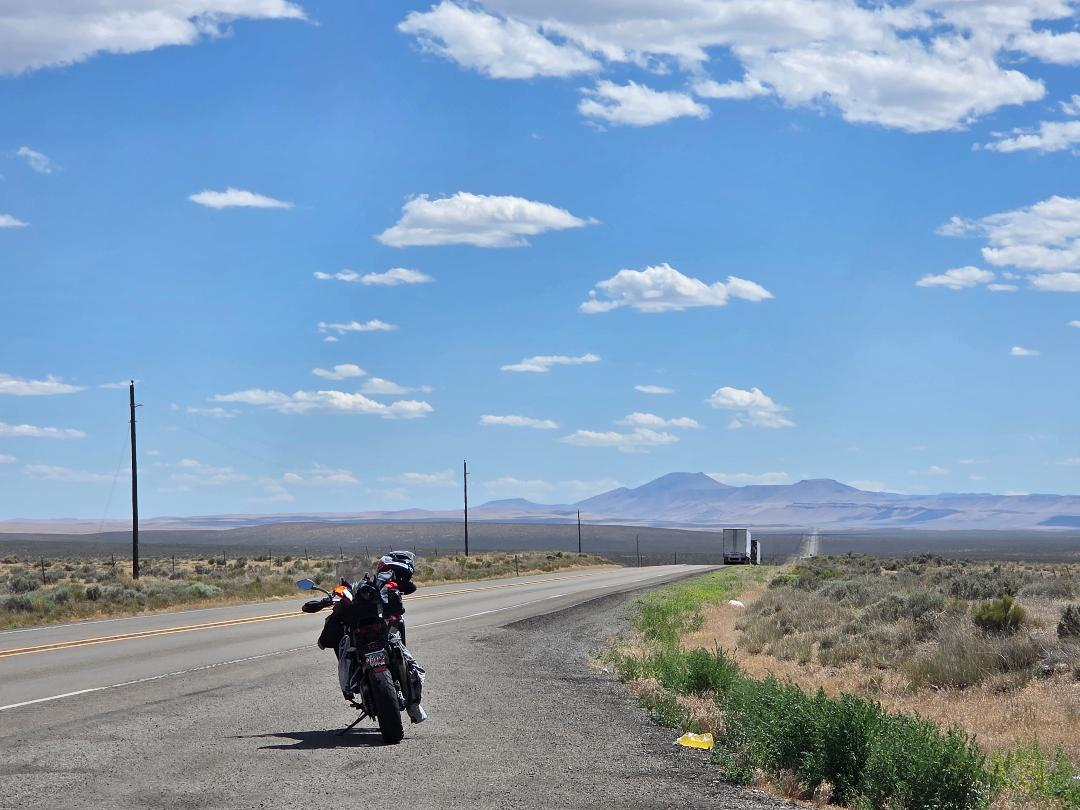
Above: 10 August 2026. 220 miles of this. Steens Highway. OR SR 78 southbound. Direction Burns Junction and US 95.
Out and about on the Duc.
The 1:00 p.m. sun blazed high above the high desert as I rolled out of Burns, Oregon. Beneath me, the 2021 Ducati Multistrada V4 stirred to life, its deep, resonant exhaust note rising like the awakening heartbeat of an ancient, untamed god—thunder rolling across forgotten plains. Though the thermometer hovered at 95 degrees, the adrenaline-charged rush of oncoming wind sliced through the heat, carrying it away like a desert spirit on the wing.
Two hundred twenty miles of mostly nothing stretched ahead toward Winnemucca, Nevada, a ribbon of asphalt unspooling across a canvas of sublime desolation. Headwinds rose like invisible adversaries, pressing against the fairing and my chest with the insistent shove of an old rival testing resolve. Yet the Multistrada leaned into them, its V4 symphony rising in pitch as I held a steady 75 mph on roads engineered with such precision they felt less like highways and more like the smooth, deliberate strokes of a sculptor's chisel carving order from chaos.
The bike devoured the miles with predatory grace; a steel stallion bred for horizons. Above, cumulus clouds drifted across an infinite blue sky like scattered thoughts of giants—fluffy, white galleons adrift in a sea of perfect clarity. Visibility stretched ten by ten, as far as the eye could dare, revealing a world laid bare: mountains cloaked in sagebrush, their flanks a mottled tapestry of green and brown, alive yet austere, whispering of resilience in the arid vastness. Later in the ride, the oblique afternoon light, golden and slanting, etched dramatic shadows into every ridge and ravine, transforming the ranges into living sculptures—each fold and contour deepened, as if the desert itself were posing for eternity's portrait.
Here, solitude reigned supreme. No towns, no distractions, only the endless dialogue between machine and man, wind and will. The drone of the Ducati became a mantra, harmonizing with the sigh of tires on pavement and the occasional abnormal gusts of wind rushing through my helmet. In that emptiness, time dilated; every mile a meditation on motion, every shadow a reminder that even in nothingness, beauty casts its long, elegant form. By the time Winnemucca's outskirts appeared on the horizon, the ride had etched itself into memory—not as mere travel, but as a communion with the open road's raw poetry.
Two hundred twenty miles of mostly nothing, yet somehow, everything.
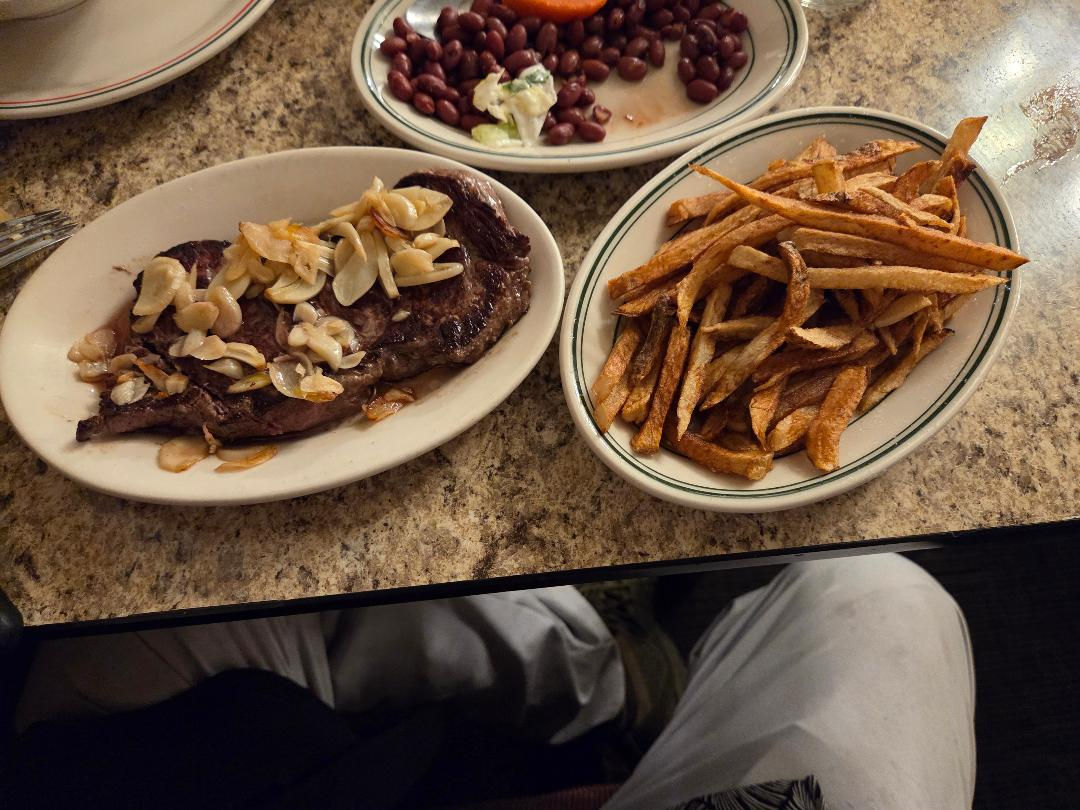
Above: Star Hotel Basque Restaurant. Elko, NV. 11 July 2026.
Out and about on the Duc.
Lunch. A not to miss stop. Pictured here a six-ounce steak sandwich (hold the bread) smothered in garlic. Best Basque restaurant west of Wool Growers in Bakersfield, California.
260 miles to go to Park City.
Above: Maverick. West Wendover, Nevada. 11 July 2026.
Out and about on the Duc.
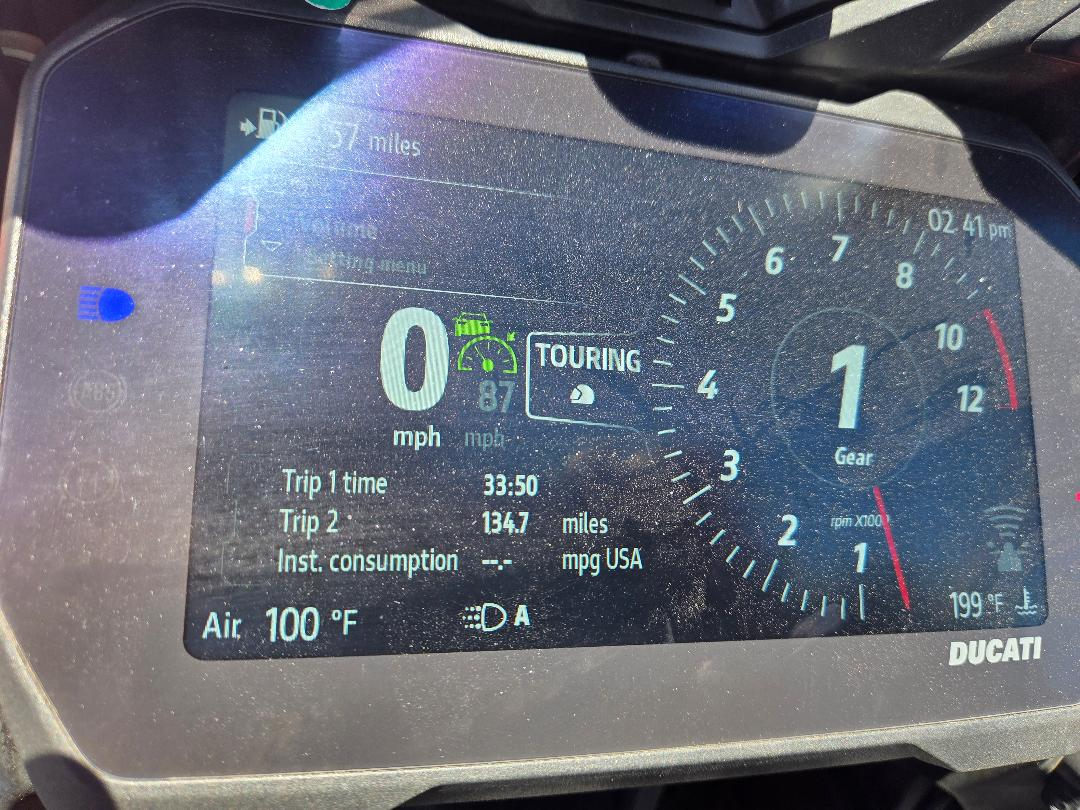
Image: Duc instrumentation showing 100 degrees.
Halfway across the Great Salt Lake Desert on I-80, the temperature climbed to a blistering 104° and held that mark like a grudge until, an hour and a half later, I began the ascent through Parleys Canyon. Notwithstanding the outdoor-oven conditions, for recreation I’d still rather be touring on a bike than doing just about anything else. Well… maybe skiing. But that’s a winter sport.