"Graveyard of the Pacific" by Randall Sullivan
SDT Personal Notes.
On July 9, 2026, I rolled into Astoria, Oregon, on two wheels with two friends. I had been there two or three times before—also by motorcycle—but those visits barely registered beyond a meal, a bed, and, once, an unplanned Candy Crush binge. This time we had a destination: the Columbia River Maritime Museum.
I left the museum with a newly purchased book and a yearning to know more about the area. There I had encountered the Columbia Bar—a maritime minefield of history and hazard that has swallowed ships and helped shape the coast—and seen that Astoria is no mere waypoint on a motorcycle itinerary. The town helped write the story of the American Northwest.
Columbia Bar
Where the Columbia River finally meets the Pacific, there is no gentle delta—only a narrow, fire-hose mouth that slams millions of cubic feet of silt-laden fresh water every second into oncoming ocean swells born thousands of miles away. That collision, over a constantly shifting kidney of submerged sandbars six miles long and three miles wide, builds standing waves that can rear 30 or 40 feet, stack steep and close together on a strong ebb, and change from glass-calm to lethal in minutes as wind, tide, and current wrestle. Clatsop Spit and Peacock Spit reach like jaws from either shore; between them a dredged channel no wider than many ships are long and only a few feet deeper than their keels threads the chaos, while hidden speedbumps of sand rise and migrate beneath the white water. Since Captain Gray first crossed in 1792, some two thousand vessels and more than seven hundred lives have been claimed here, earning the bar its grim title, Graveyard of the Pacific; even now, with jetties and constant dredging, bar pilots still board by helicopter or leaping from pitching boats to thread the same roaring, fog-shrouded, ever-rewritten passage that early sailors called one of the most fearful sights a mariner could behold.
Astoria, Oregon
Astoria, Oregon, the state’s oldest city and the first permanent American settlement west of the Rockies, sits on the south bank of the Columbia just inland from the Pacific, a place whose history and character are inseparable from the river’s mouth. Long before John Jacob Astor’s Pacific Fur Company raised Fort Astoria in 1811, Clatsop and Chinook peoples had built a maritime trading world here; Lewis and Clark wintered nearby at Fort Clatsop, and the post that followed—trappers, voyageurs, sailors, and Native traders exchanging beaver and sea-otter pelts—became a claim in the Oregon boundary dispute even after it was sold to the British in the War of 1812. That same rough waterfront later drew salmon canneries, Scandinavian fishermen, Chinese cannery workers, lumber schooners, and the Columbia River Bar Pilots who still guide ships across the Graveyard of the Pacific. The town that grew from it remains unpolished and river-facing: Victorian houses climb the hills above a working port, the Astoria Column watches over the confluence, and the character is still that of a salty, weather-beaten outpost—proud of its firsts, shaped by wrecks and tides, and more interested in authenticity than in being a postcard beach town.
The Astoria–Megler Bridge dominates Astoria. A steel cantilever through-truss, it carries U.S. Route 101 across the lower Columbia from Astoria, Oregon, to Point Ellice near Megler, Washington, some fourteen miles from the Pacific. Opened to traffic on July 29, 1966, and dedicated a month later, it stretches 21,474 feet—just over four miles—with a 1,233-foot main span and 196 feet of clearance at high tide. It is the longest continuous truss bridge in North America; its two narrow lanes carry about 7,000 vehicles a day.
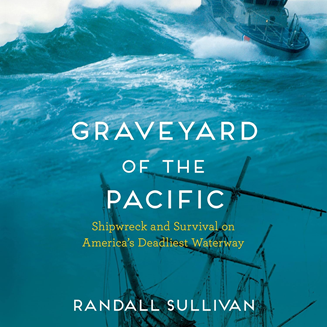
In "Graveyard of the Pacific," magazine veteran Randall Sullivan—Rolling Stone, Esquire—turns research into propulsive narrative. He reconstructs wrecks and rescues minute by minute, detail sharp enough that the deck lifts and the spray hits, then opens into lyrical geology (“the great river of the west was born from violence, from fire, and from ice”). Memoir overlays it all: an abusive seafaring father, a lifelong friendship, and his late-life attempt to cross the bar, the water a metaphor for masculinity, courage, and breaking a cycle of violence. History, adventure reportage, and personal essay braid together vivid when ships and river take the page, more interior when he turns to himself.