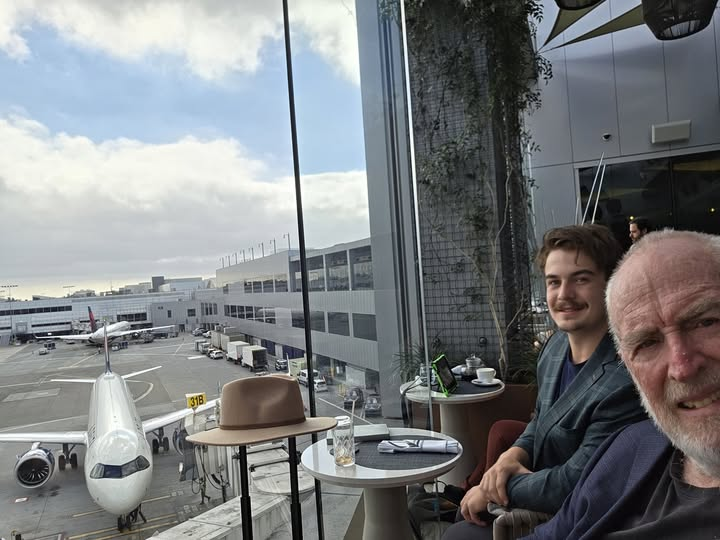
2026 - Seeking the Kimberly
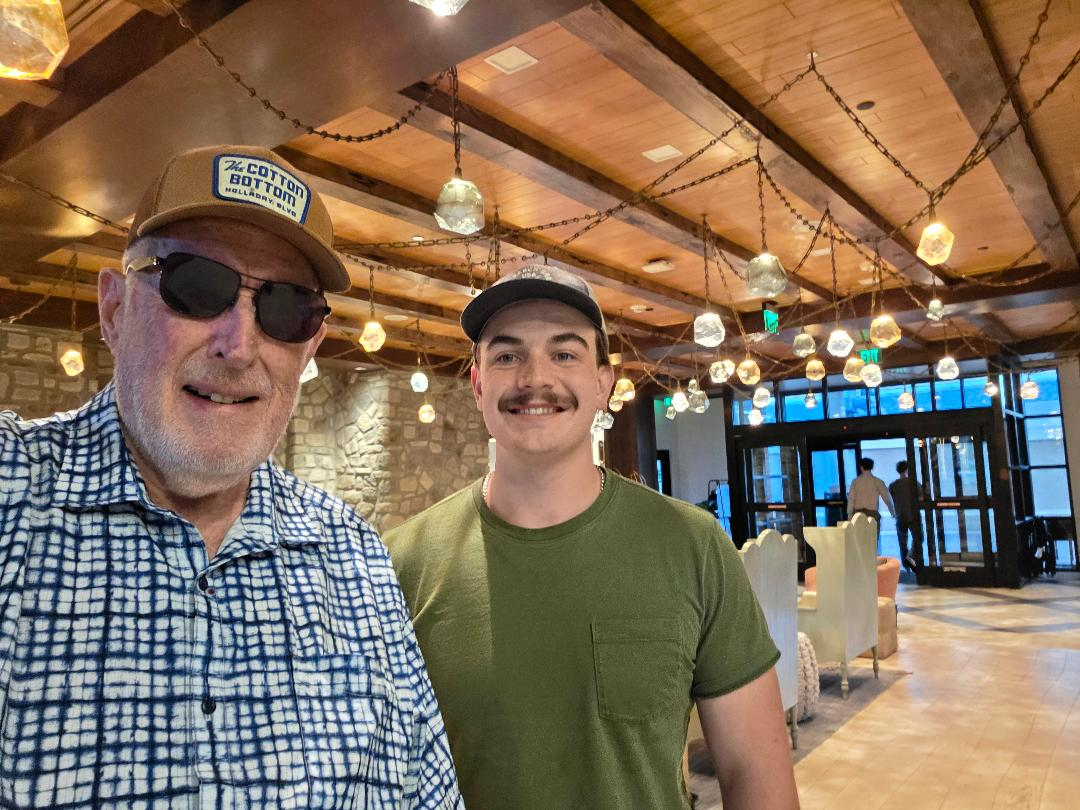
Above: Wood, Ash, Rye (WAR) restaurant. St. George, UT. 03 June 2026.
Bishop and Drums post dinner after driving three hundred fifty miles to St. George from Park City. Precedent to Seabourn adventure cruse along Australia's Kimberly.
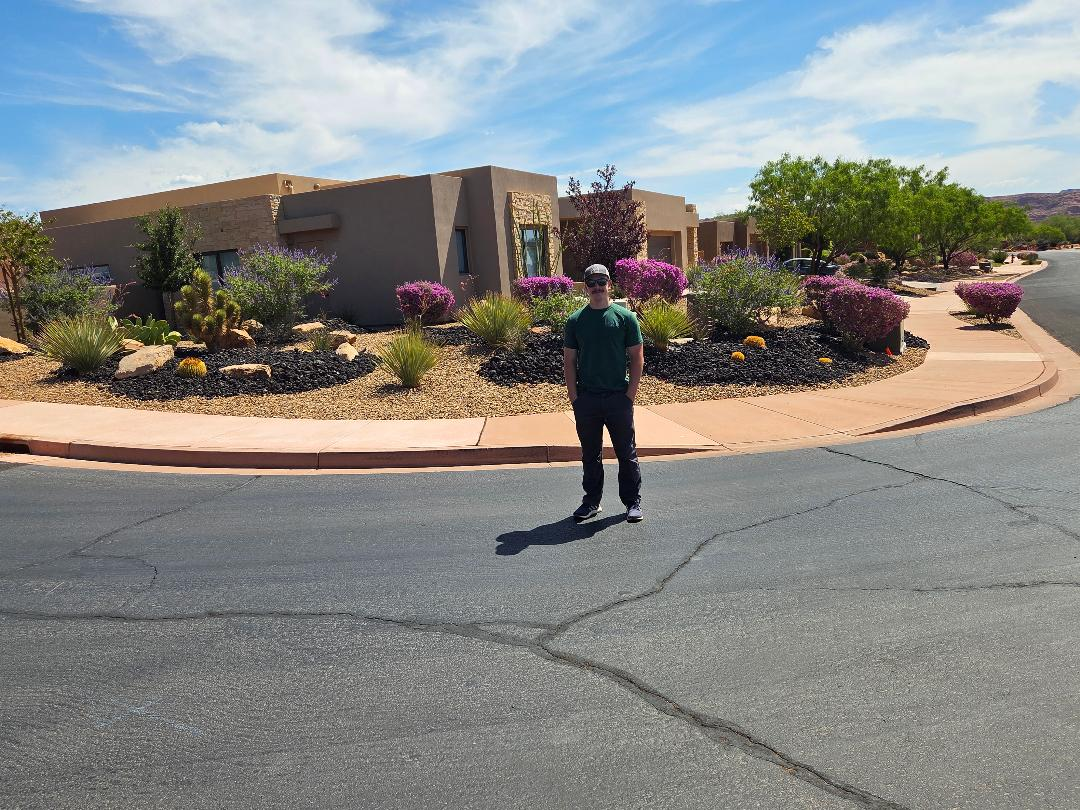
Above. Ivins, UT. 04 June 2026.
AM Walk. 6K steps.
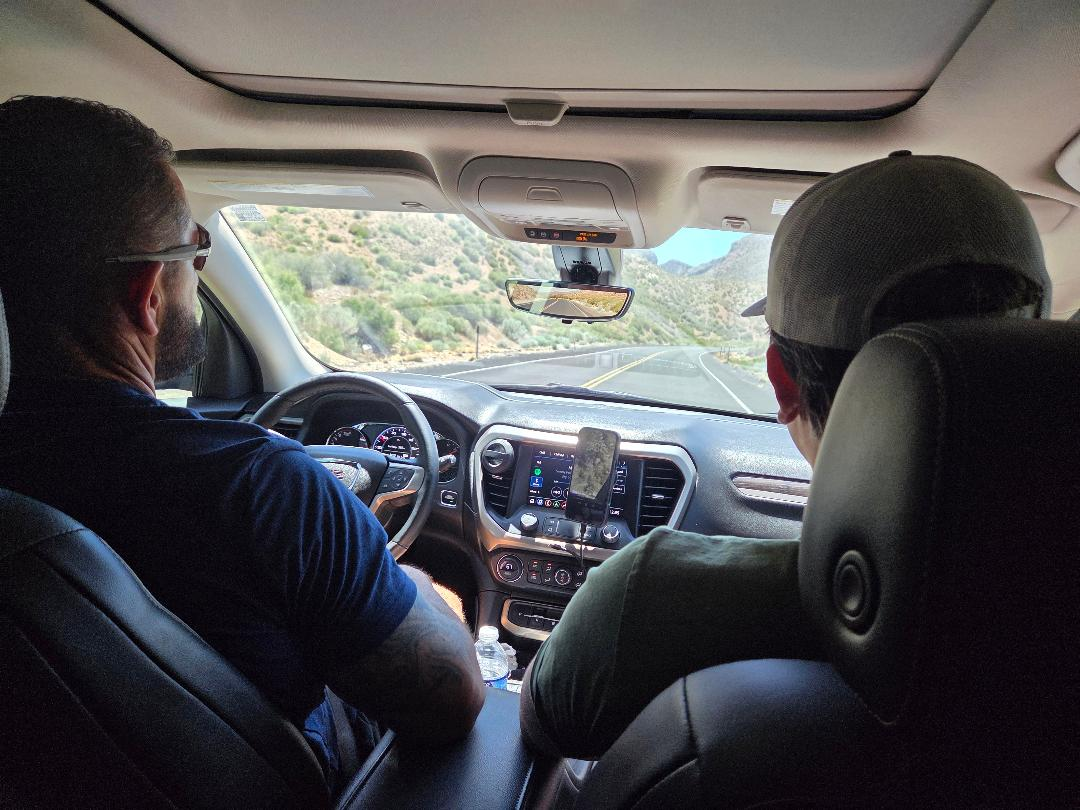
Above: Mesquite, NV. 04 August 2026.
With driver Lou en route to Las Vegas Airport.
Las Vegas departure on Delta a quantum amount less expensive than a departure from SLC. Go figure. Granny a champion at getting the best deals.
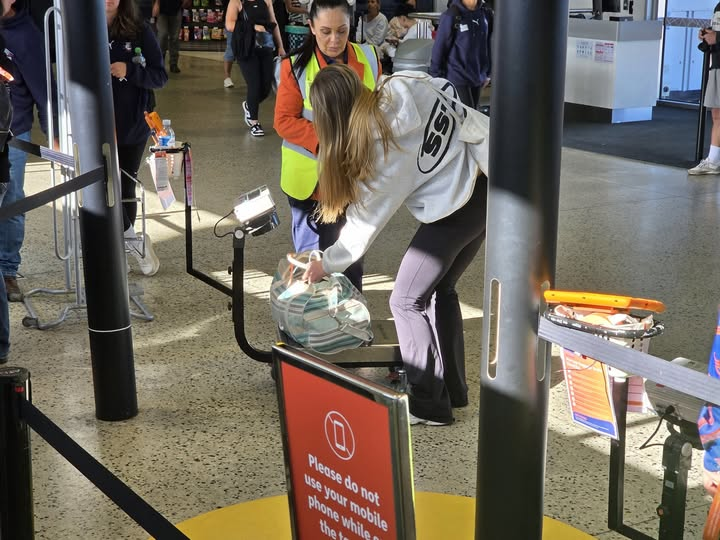
Above: Melbourne Airport. 05 June 2026. Post 16-hour flight from LA.
Jetstar Airlines. Budget strategy. Like US carriers Allegiant and Breeze. All carry-ons are weighed and must not exceed 8 KG. On to Darwin, 4.5 hours flight time.
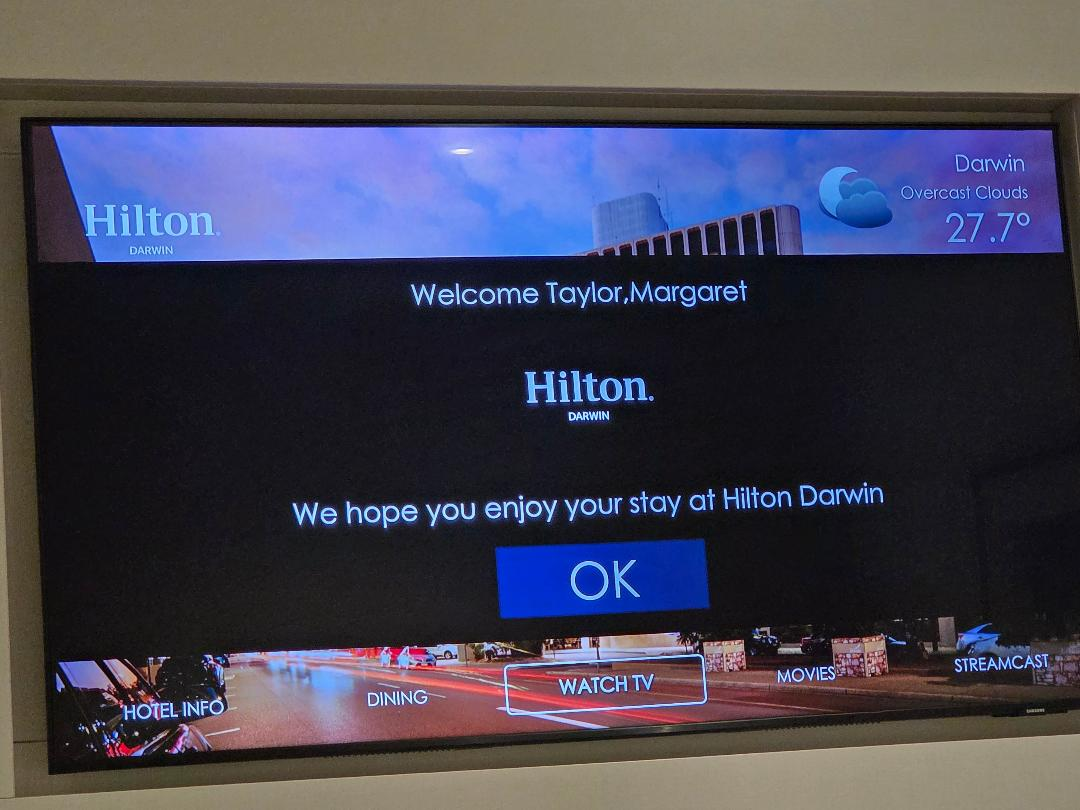
Above: Hilton Hotel, Darwin, New Territories, Australia. 05 June 2026.
Seeking The Kimberly.
Seabourn Pursuit.
Welcome who? She organized the whole trip, but she's not here!
Email message from Granny:
"Have fun. Keep your things organized and don’t rely on [Drums] to do everything for you like I do. TIMDT"
I know. TIMDT doesn't trust me not to over rely on Drums. I'm sure she is spending lottsa time wondering if my shirt buttons are buttoned and whether or not there are stains on my shirt. Truth be told, her worries are essential to me being presentable. She is right most of the time and I am a better man for it.
OZ seems more digital prone than the US. I haven't seen any currency exchanged anywhere yet. For anything... cab, bottle of water, of course restaurant bills, just tap your card or your phone.
Restaurants and bars along Mitchell Street, Darwin's main drag, are mainly order and pay via QR code. Some of the establishments do fast casual. Go up and order your drink and food, tap your card. Pick up your drink. Go to the numbered table and wait for your food order to be delivered. No tipping.
Drums is great with all the tech/robot order process. Jetstar Airlines offered virtually no human help checking in for the Jetstar flight from Melbourne to Darwin. Drums got me processed with aplomb. Bording pass, luggage checked yada. Ozes, as a generalization, seem more attuned than Americans to non-human service processes.
In the US, I avoid stores where I am required to check-out sans clerk assistance. Walmart, in St. George, tried to steer most of its customers to self-check-out a couple of years ago. I stopped going there. Of course, the marketing managers are just waiting for my generation to die off, knowing that the younger people seem to have no problem with robotic service processes.
Much appreciation to TIMDT for setting all this up. I'm finding grandson Drums to be a great travel companion. Helpful, but not intrusively so, as I understand kids and grands these days are often wont to ramp up oversight as parents/grandparents morph into geezers.
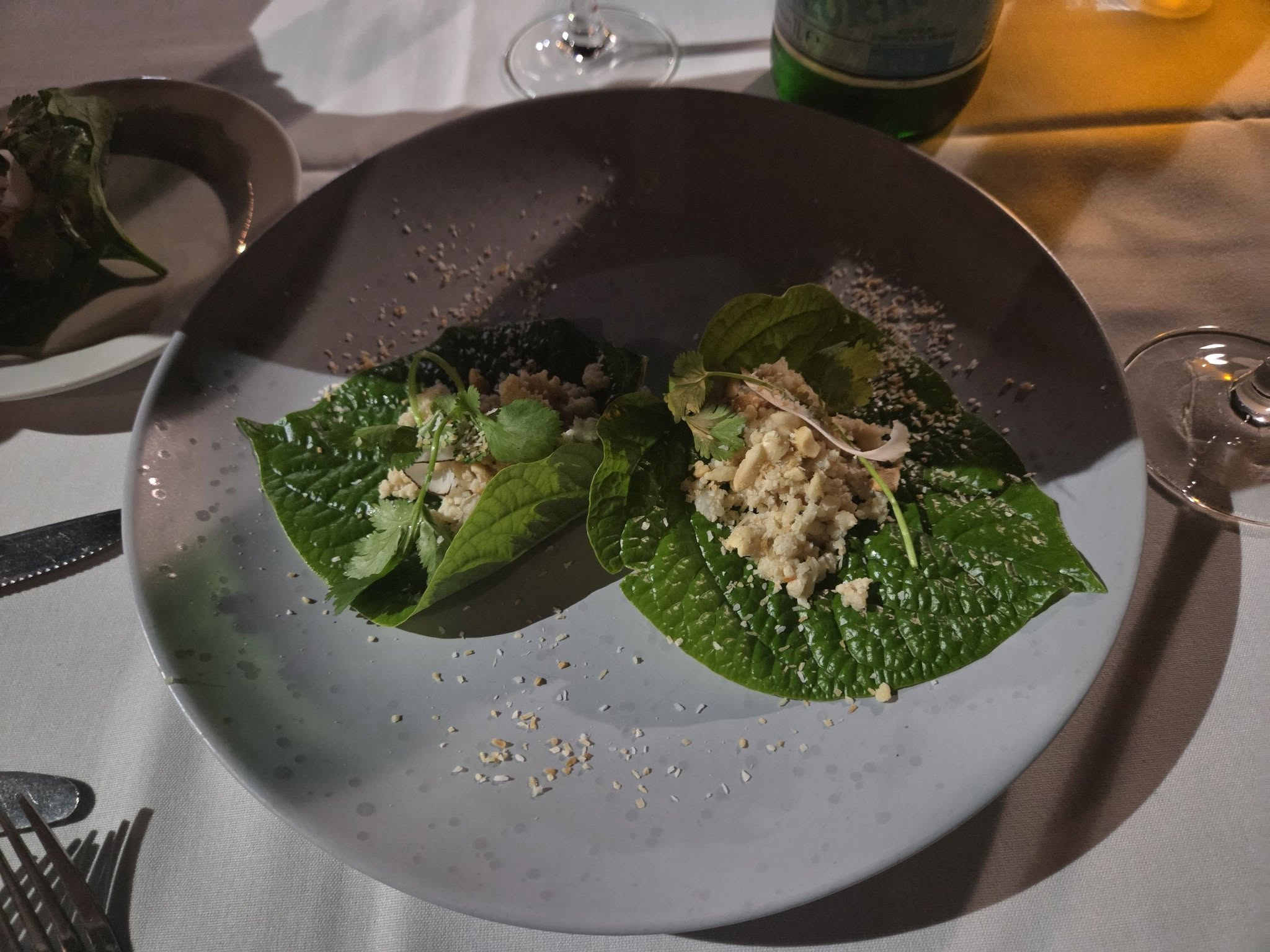
Above: Pee Wee's restaurant, Darwin, NT, Australia.
Seeking The Kimberly.
Seabourn Pursuit.
Image: Crocodile. Tastes like chicken.
I asked Drums to do a search for the best fine dining restaurant in Darwin. We could not get in to Pee Wee's until 8:30 PM, but on the positive side, that would force us to stay awake during the jet lag of flying just shy of halfway around the world.
After the crocodile appetizer, both Drums and Mwah (sic) ordered barramundi. Timor Sea waters teem with barramundi. Ours was fresh... excellent.
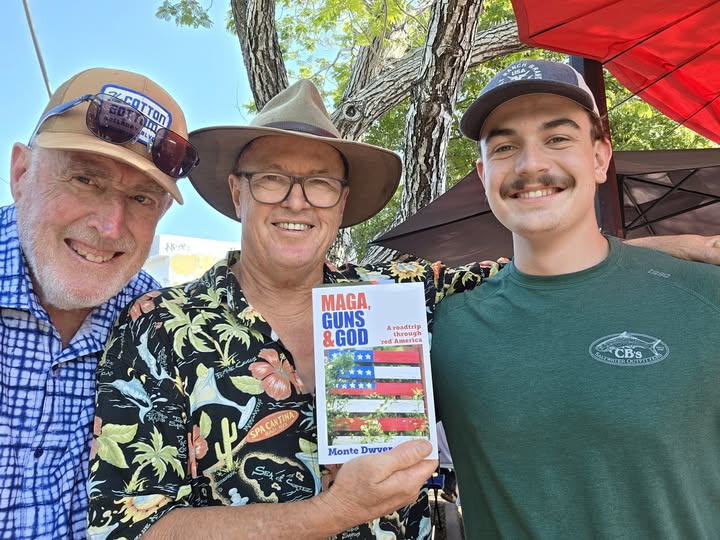
Above: Parap Market, Darwin, New Territories, Australia. 06 June 2026.
Bishop 'n Drums with Monte Dwyer. Oz TDS author Monte Dwyer, from Central Coast NSW, toured America to understand the DJT phenomenon. Hawking his findings in his self-published book.
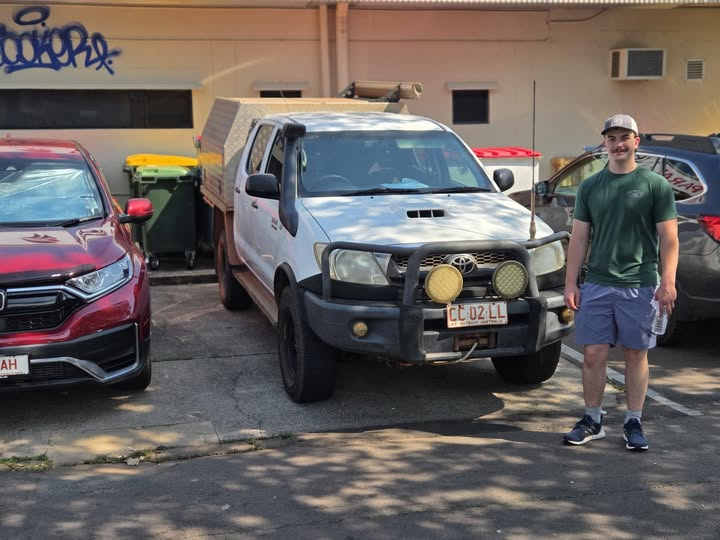
Above: Parap Saturday Market, Darwin, NT, Australia. 06 June 2026.
Seeking The Kimberly.
Seabourn Pursuit.
For back country off road driving in US, go to Moab. In Oz, go to off roader base camp Darwin.
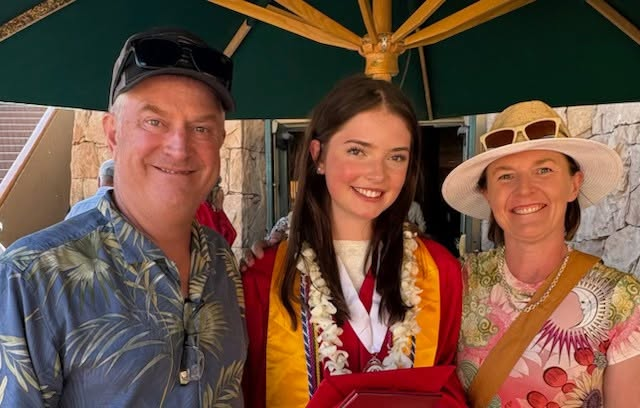
Above: Park City High School. Park City UT. 06 June 2026.
B1b, Mynduveroan, and FeeBee at Mynduveroan High School graduation ceremonies.
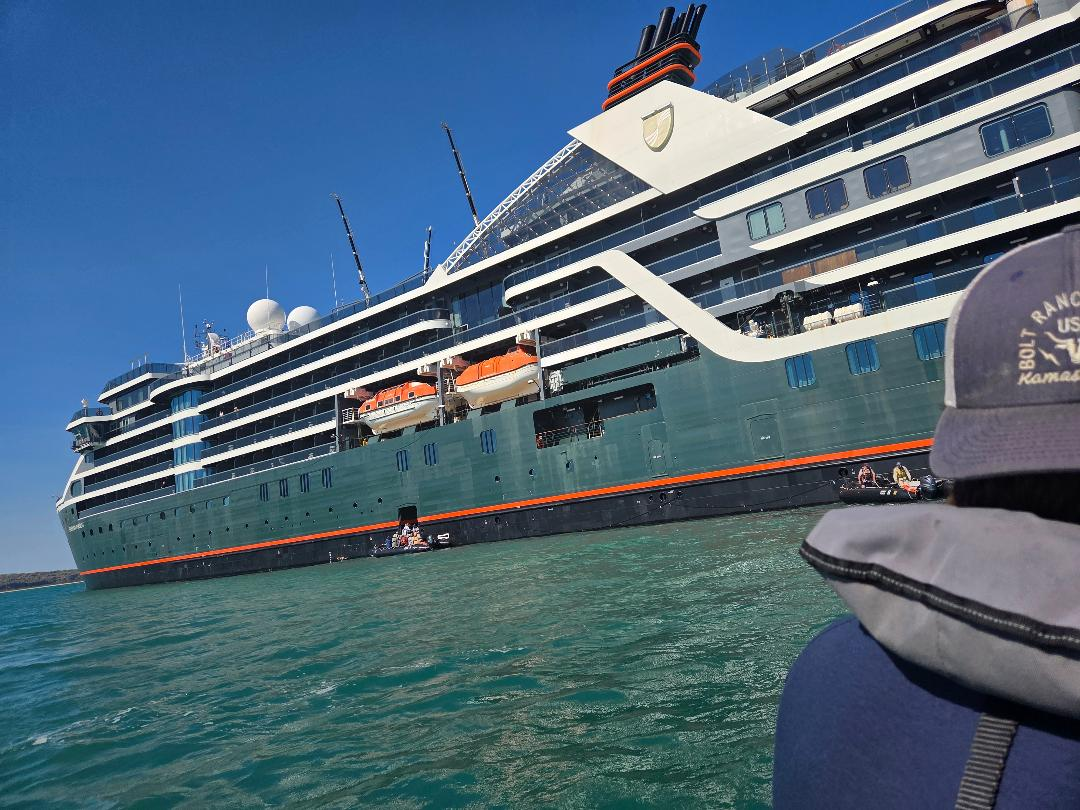
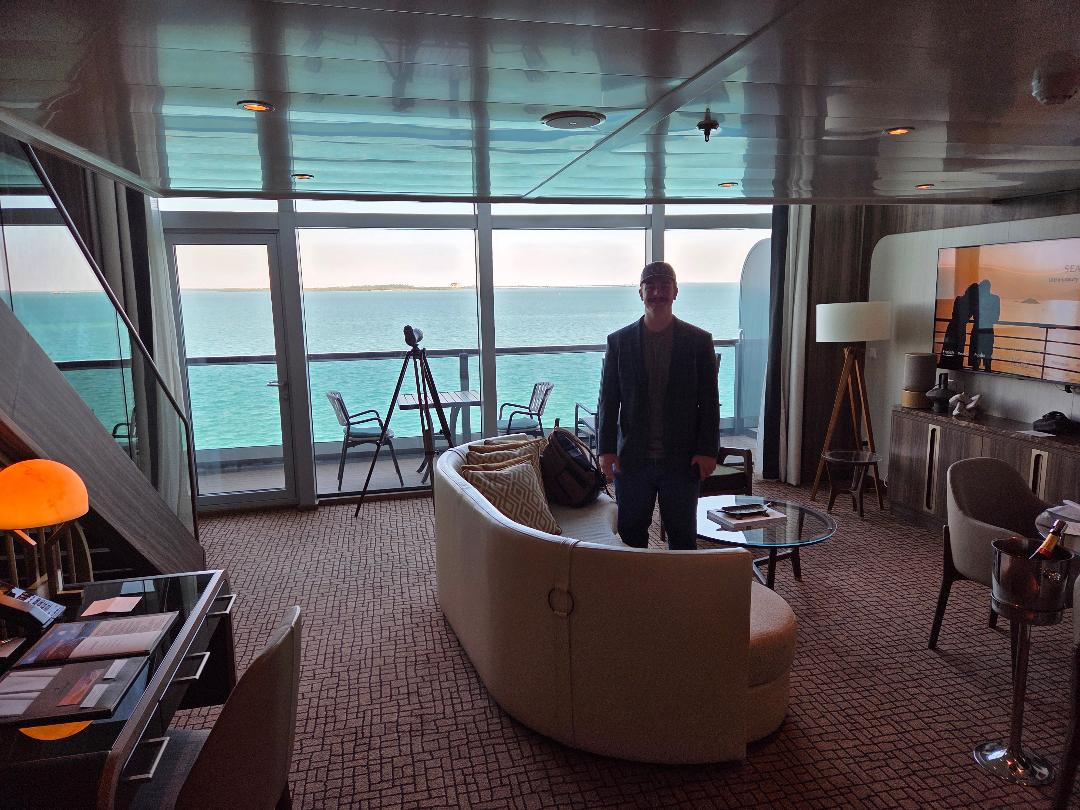
bove: Seabourn Pursuit. 07 June 2026.
Thru a bit of luck and Granny finagling, we end up with one of the best suites on the ship.
Addendum:
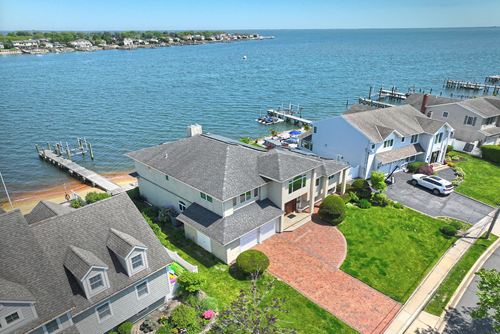
Above: Massapequa, NY. 04 June. 2026.
Below are some amazing photos of my home that were taken by a RE photographer yesterday using a drone. I think my home will start to be publicly advertised for sale this weekend. My RE agent has agreed to our terms that there will be no yard signs, no open house viewings, and anybody who wants to see the inside of the house has to prove in advance to our agent that they have the financial wherewithal to complete the purchase. I'm sad to leave Massapequa, but it is time to be closer to our daughter and grandson in Viera Florida.
Above from Fred who is relocating to Orlando, FL. What a great home to give up!
Good looking kids. Wish them well
Ed,
Highland, NC.
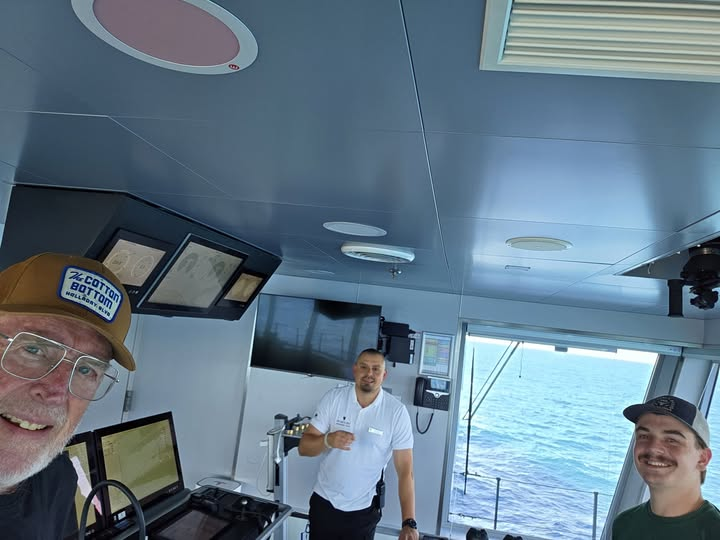
Above: Seabourn Pursuit, Timor Sea. 08 June 2026.
Seeking the Kimberly
Bridge.
Spotless. Ship shape.
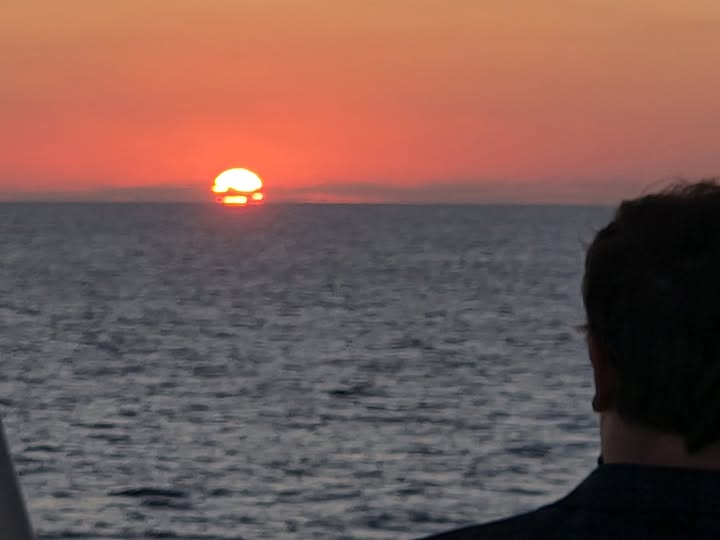
Above: Timor Sea, 08 June 2026.
Seeking the Kimberly.
Seabourn Pursuit.
Sunset.
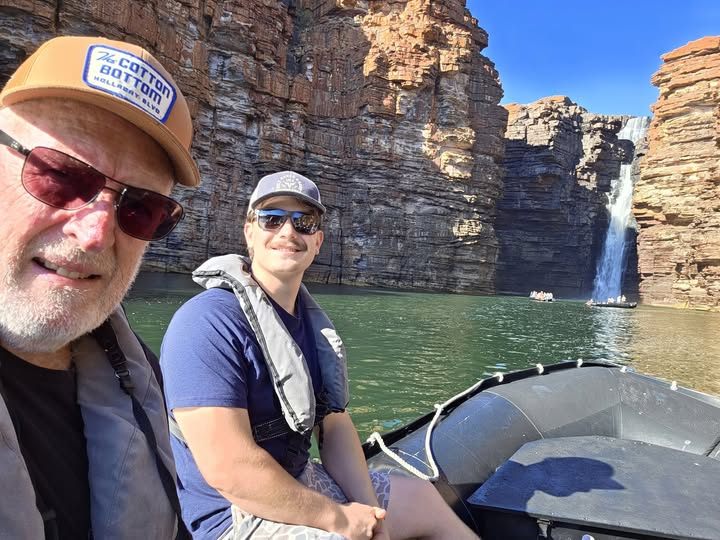
Above: King George Falls, 09 June 2026
Seeking The Kimberly.
Seabourn Pursuit.
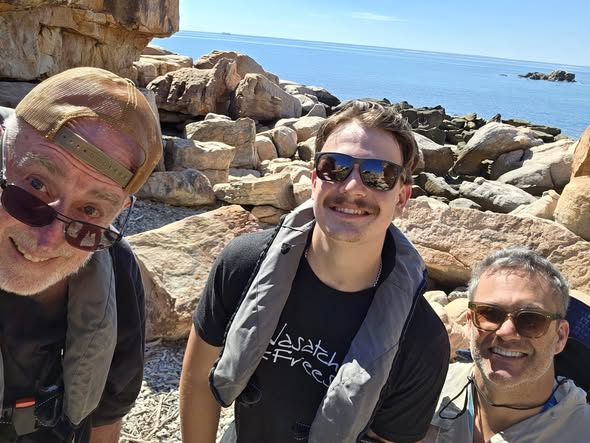
Above: Vansittart Bay. 10 June 2026.
Seeking the Kimberley.
Seabourn Pursuit.
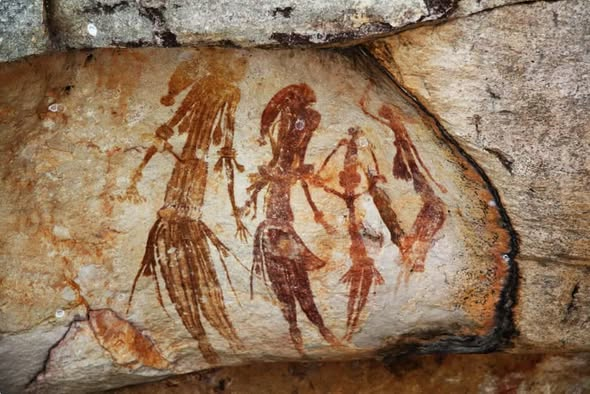
Above: Vansittart Bay, The Kimberley, Australia. 10 June 2026.
Seeking The Kimberly.
Jar Island hike. Guion Guion rock art. 12K years old. (file image).
Bishop, Drums, and Nick.
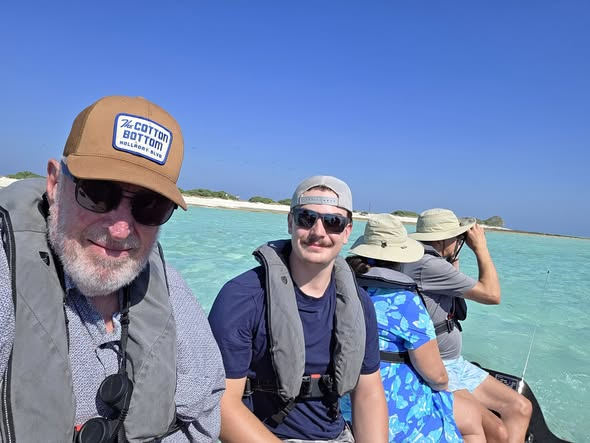
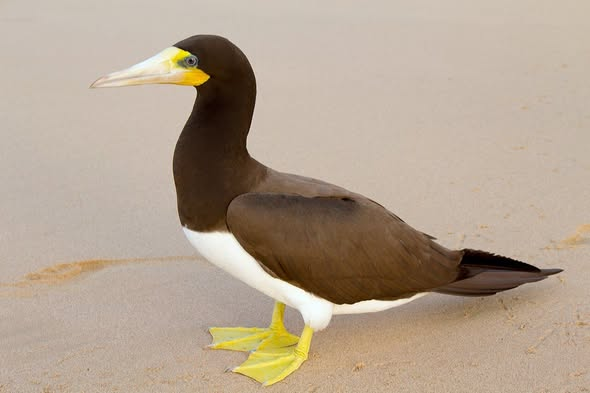
Above: Ashmore, Reef. Timor Sea, 11 June 2026.
Seeking the Kimberly.
Seabourn Pursuit.
Snorkeling was cancelled due to heavy seas. Instead, a Zodiac trip to Ashmore Island where some Brown Boobies were spotted.
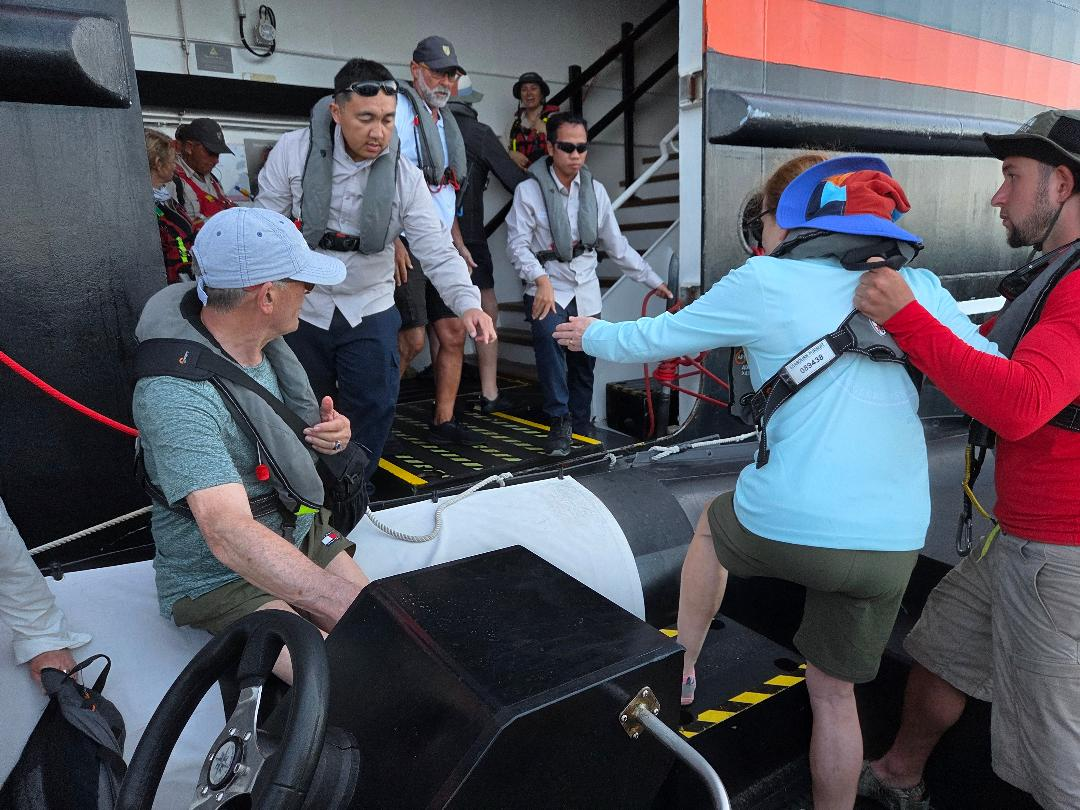
Above: Ashmore, Reef. Timor Sea, 11 June 2026.
Seeking the Kimberly.
Seabourn Pursuit.
Getting off the zodiac.
We have a friend whose leg was permanently damaged in a zodiac dismount. Most of the time, the procedure is benign. During heavier seas, the bouncing zodiac can render the dismount a bit tricky.
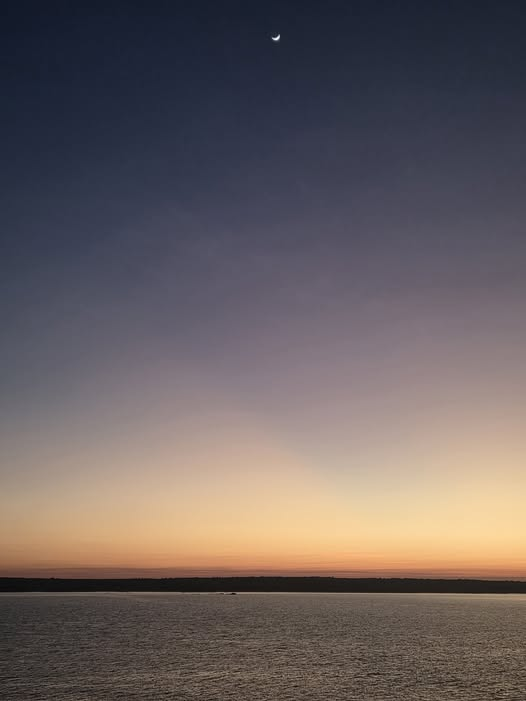
Above: Ashmore, Reef. Timor Sea, 11 June 2026.
Seeking the Kimberly.
Seabourn Pursuit.
Moon above.
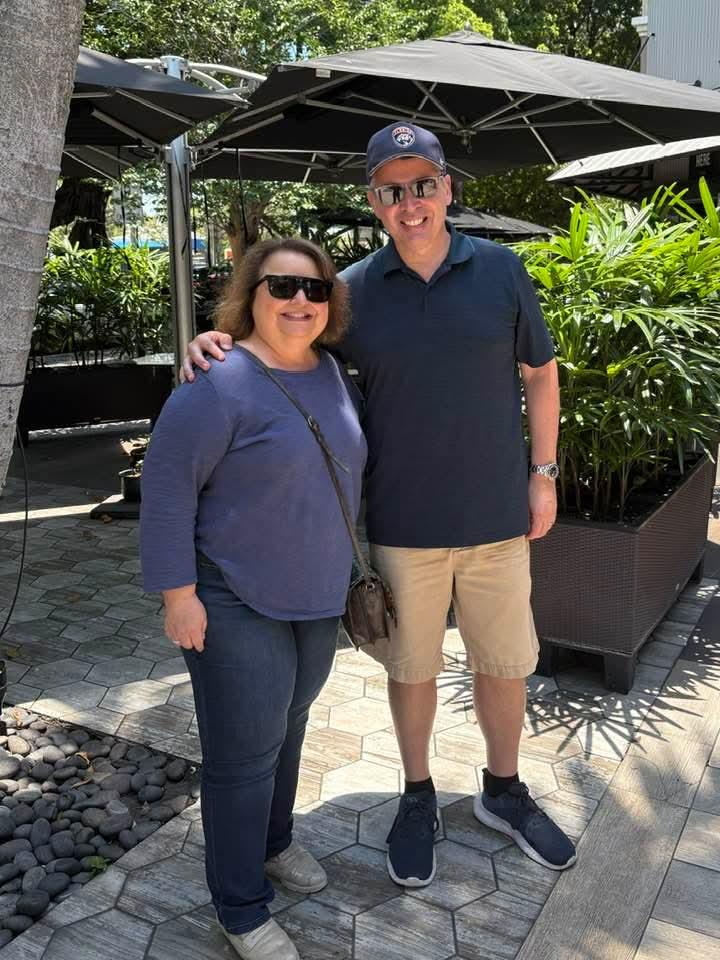
Above: Miami, FL. 11 June 2026.
Miami super lawyer Rocky Rodriguez with Koessler, who is in Miami to make a court appearance on behalf of a client.
Addendum:
Dear Steve and Margaret! Ken and I are so happy for you - and we love the photos you have sent of your adventures and especially of your wonderful family. Aren’t we all just happy to be alive as we progress rapidly into old age?!
Love,
Kate and Ken - your very old friends
Salt Lake City, UT
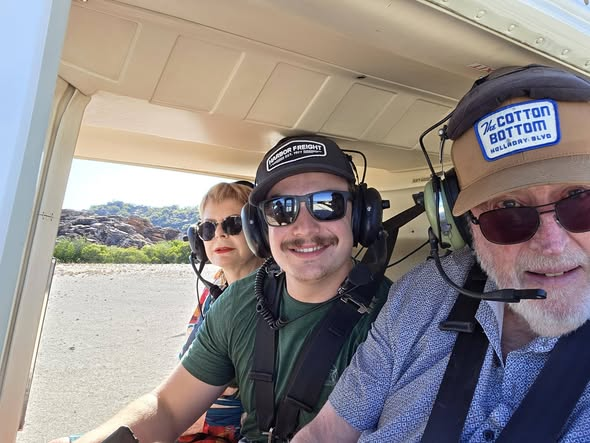
Above: Swift Bay, Kimberly, Australia. 12 June 2026.
Seeking the Kimberly.
Seabourn Pursuit.
Helo to Mitchell Falls.
Mitchell Falls. A dramatic four-tiered waterfall cascading over towering, layered red sandstone cliffs, amidst lush pockets of vegetation, into deep rock pools. It holds deep cultural and spiritual significance for the Traditional Owners, the Wunambal people.
Our Seabourn adventure staff in describing our land forays, always pay obeisance to Traditional Owners (aborigines). This same phenomenon also exists in Canada where the indigenous peoples who preceded Western colonization are called First Nations. In Canada this virtue signaling obeisance occurs to a fault where in radically liberal areas, land owned by descendants of immigrant Canadians are sequestered by the government and turned over to "First Nations tribes. In Australia, "Traditional Owners" have great sway over use of historical lands. For example, they have banned tourists from climbing Uluru (formerly Ayer's Rock" which TIMDT and Mwah (sic) climbed in 1992. The US is not immune to virtue signaling to its own indigenous peoples. Navajo Mountain, on the Navajo Reservation in southern Utah is off limits to gringos. Reminds of this controversy: Mt. McKinley or Denali?
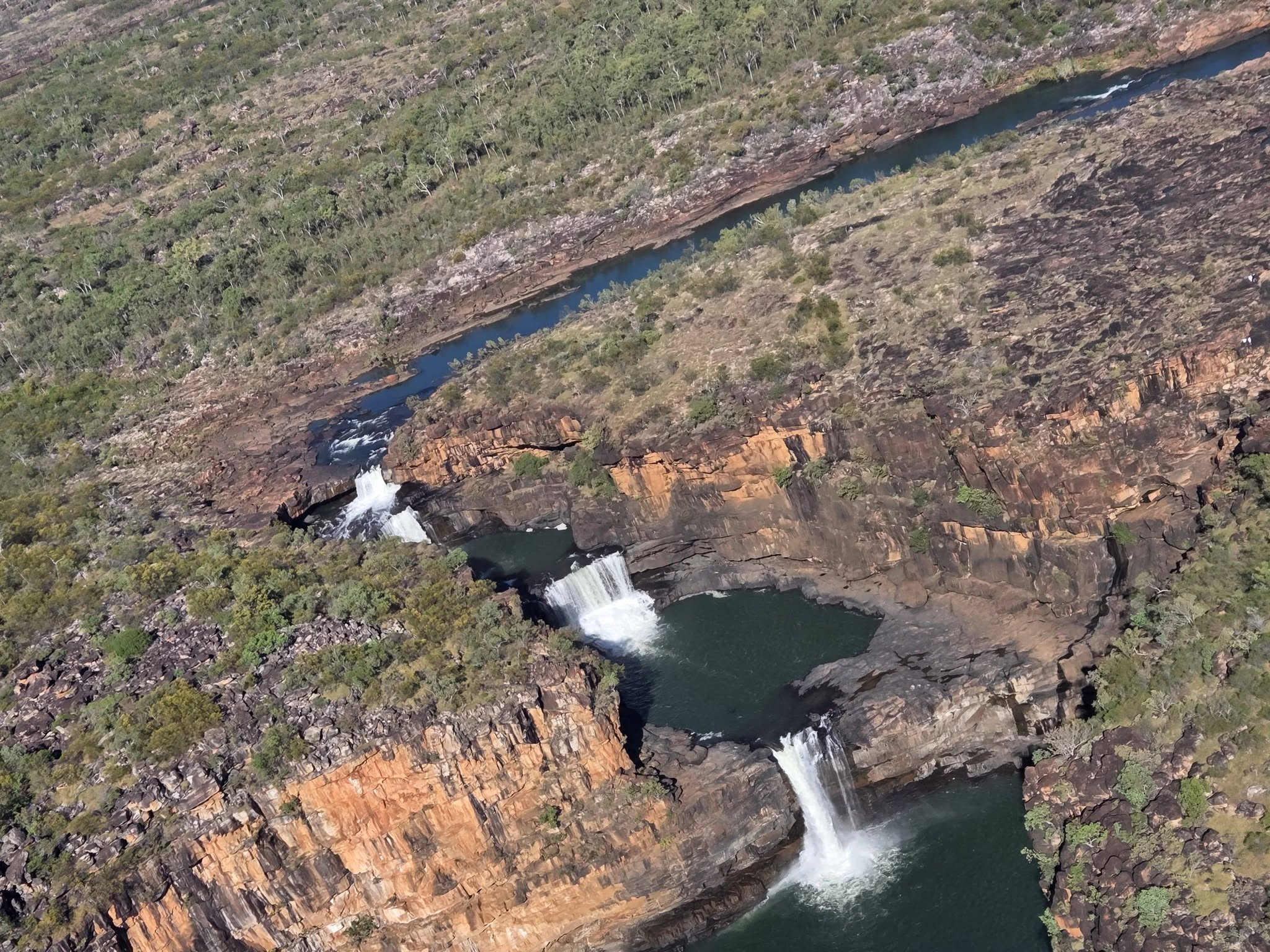
Above: Mitchell Falls, Australia. 12 June 2026.
Seeking the Kimberly
Seabourn Pursuit.
Image taken by Mwah (sic) from helo.
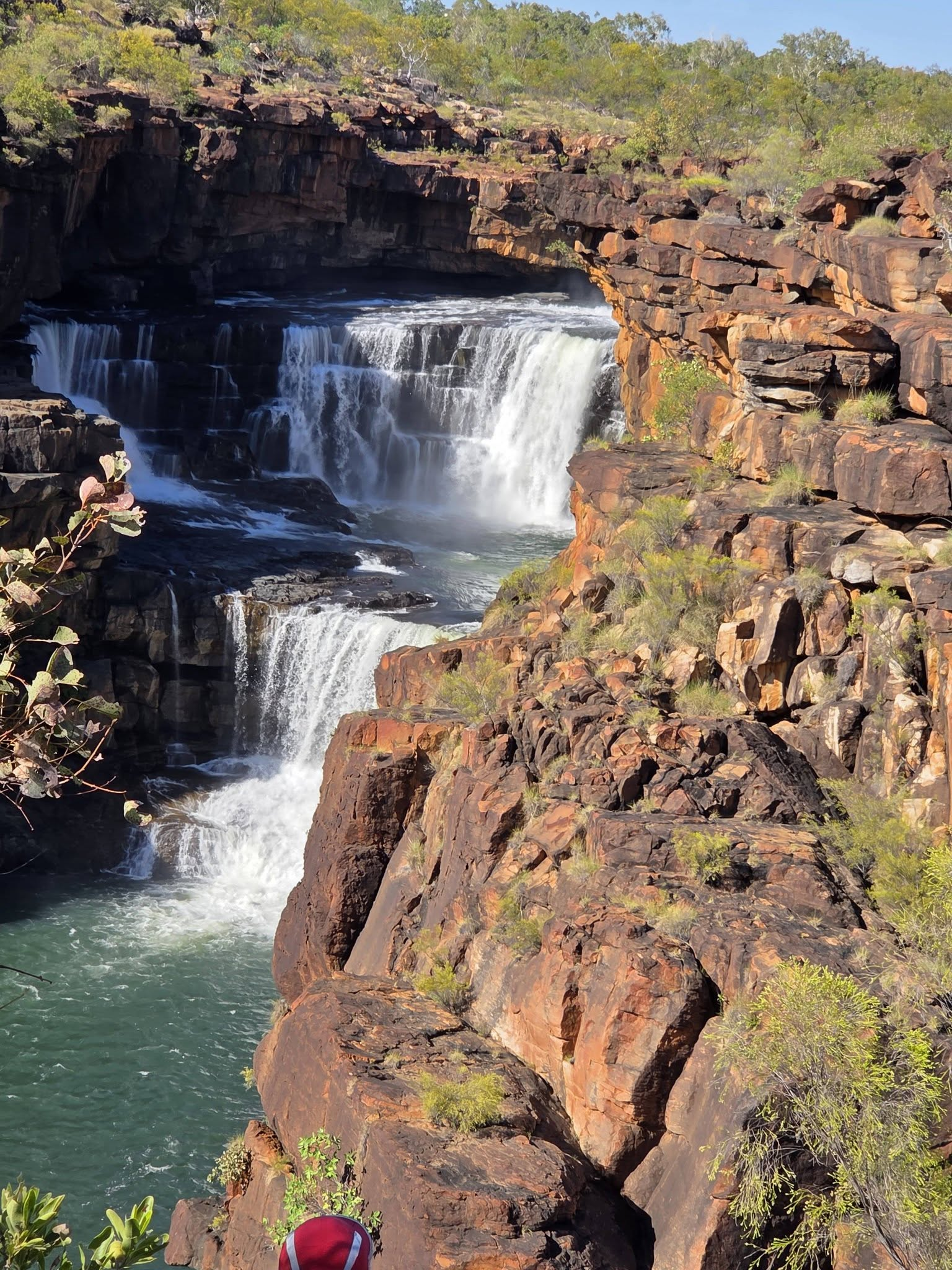
Above: Mitchell Falls, Australia. 12 June 2026.
Seeking the Kimberly
Seabourn Pursuit.
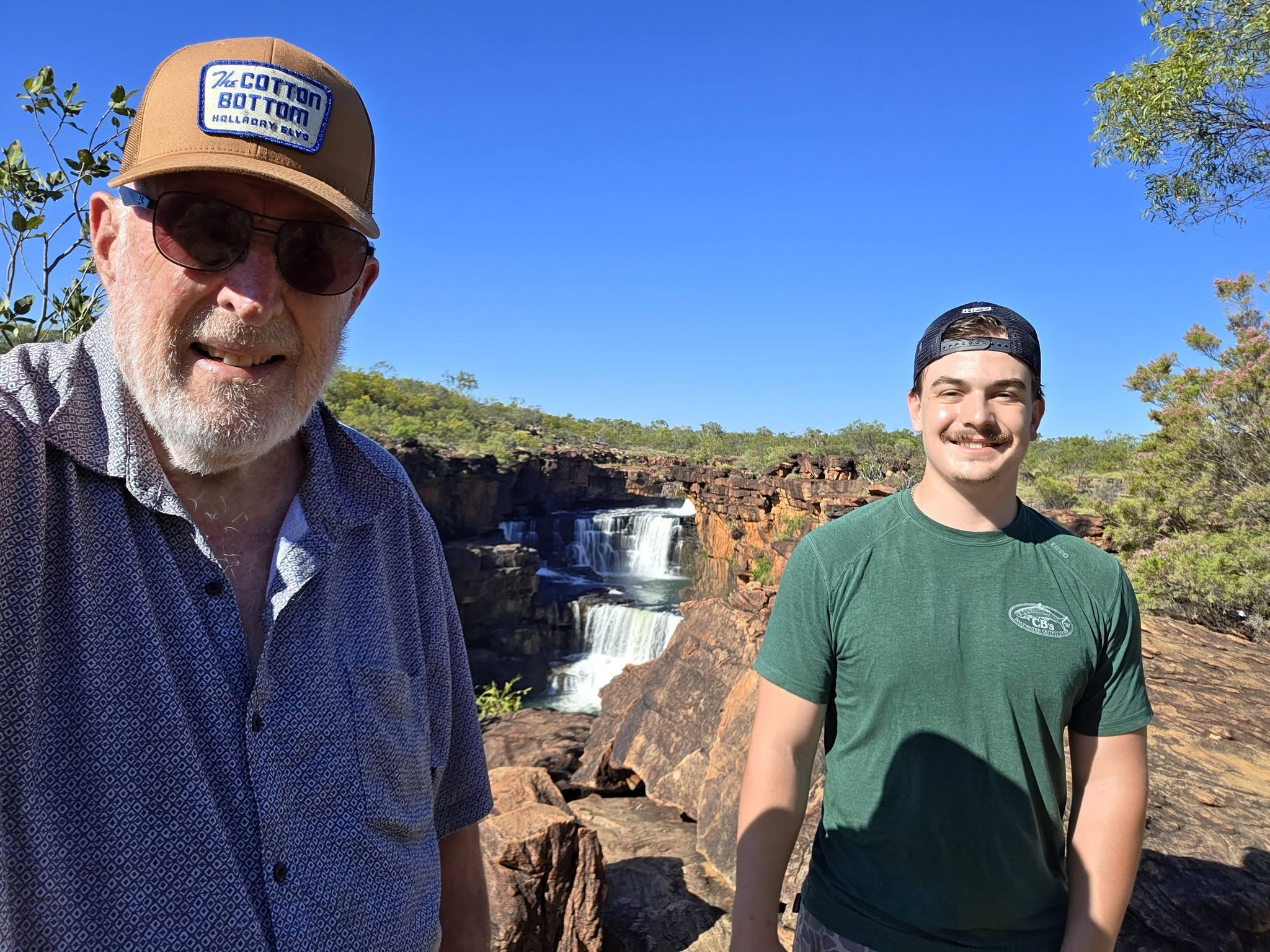
Above: Mitchell Falls, Australia. 12 June 2026.
Seeking the Kimberly
Seabourn Pursuit.
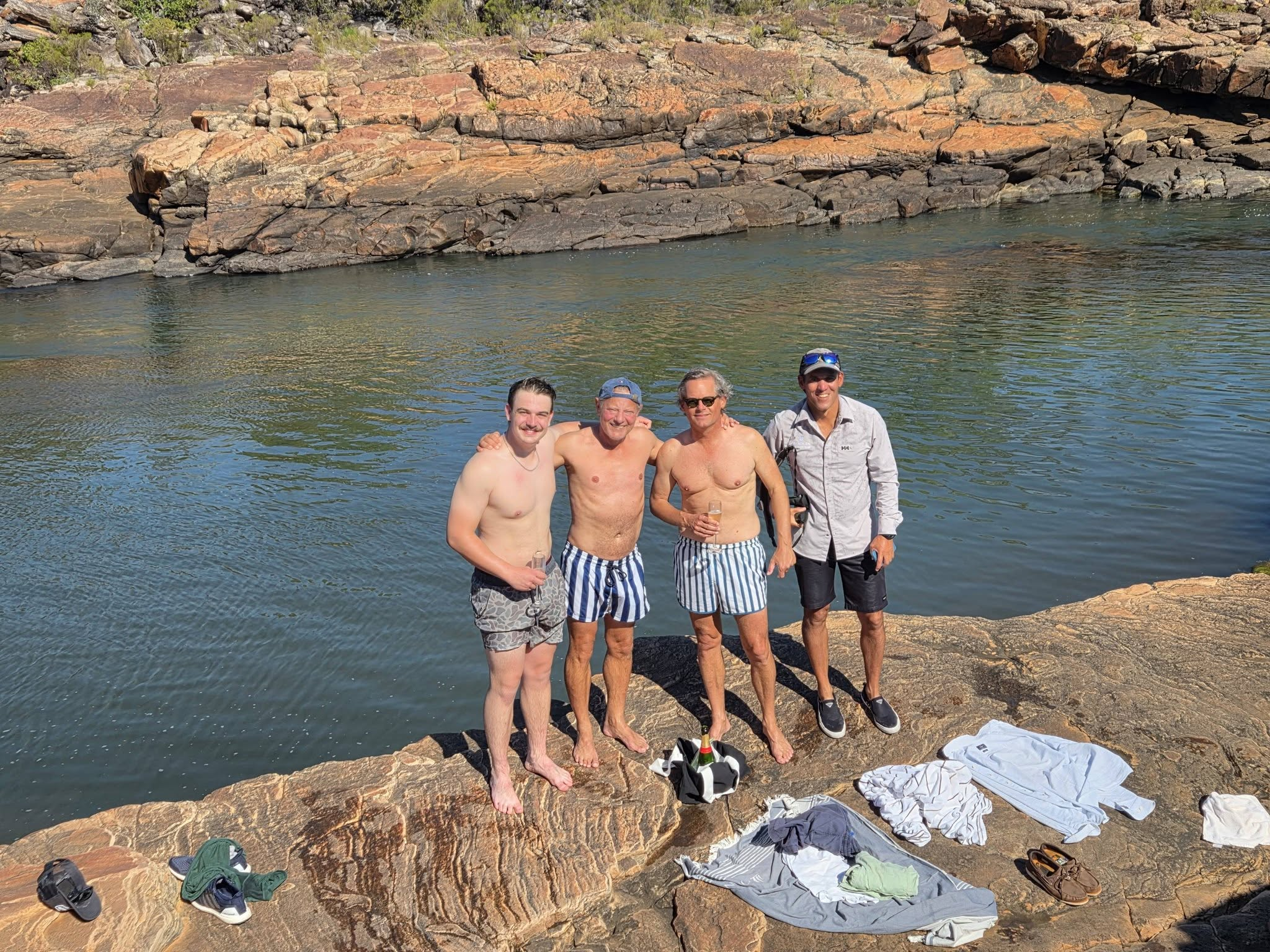
Above: Mitchell Falls, Australia. 12 June 2026.
Seeking the Kimberly
Seabourn Pursuit.
Four swimmers. Drums, two German guys and a Romanian member of the adventure staff. No crocs above the falls... apparently. Mwah (sic) captured the image from a ledge above. The water here was deep enough to be over the swimmers' heads.
Above: Swift Bay, Australia. 12 June 2026
Seeking The Kimberly.
Seabourn Pursuit.
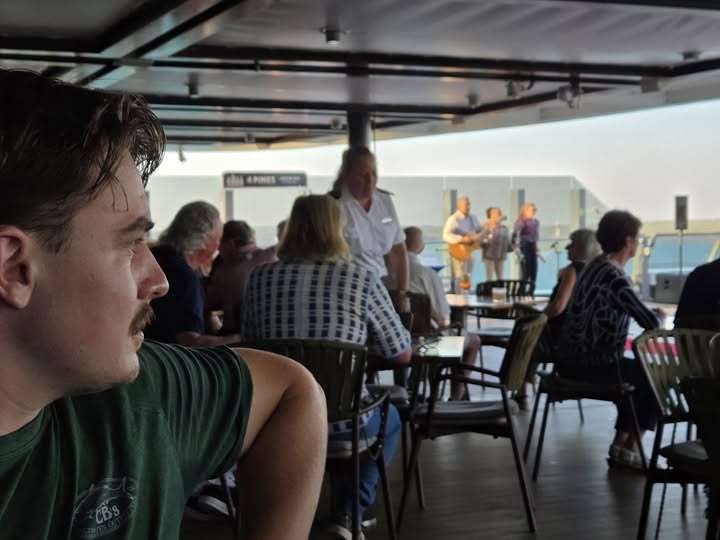
Caviar Do.
Hard to ignore the incongruity of a caviar cocktail event in one of the most remote, inaccessible parts of the world. Seabourn is up to the mark.
Above: Swift Bay, Australia. 12 June 2026
Seeking The Kimberly.
Seabourn Pursuit.
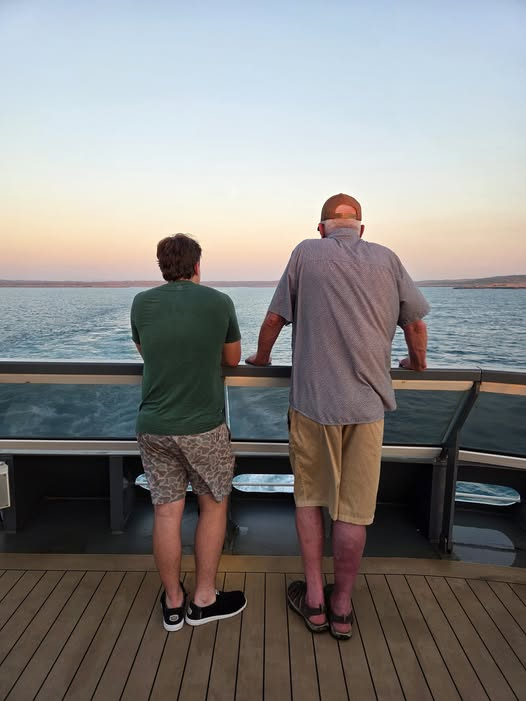
Grandson and Grandpa contemplate The Kimberly.
Above: Swift Bay, Australia. 12 June 2026
Seeking The Kimberly.
Seabourn Pursuit.
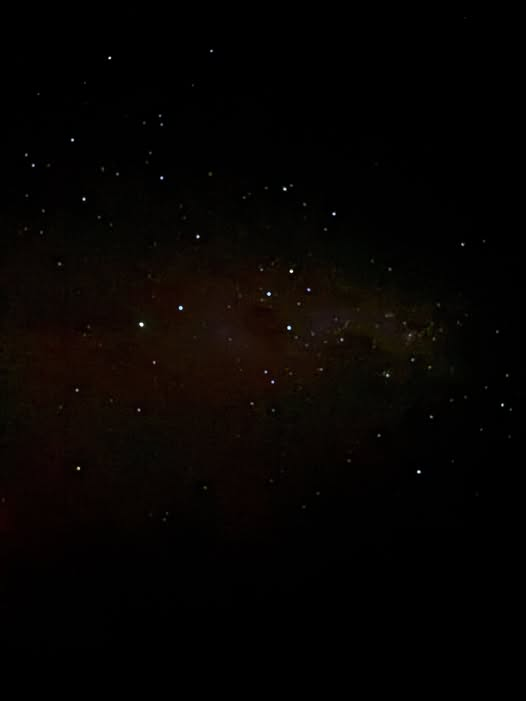
Night Sky Southern Hemisphere.
Image: The Two Pointers and The Southern Cross.
Trolling the female night sky lecturer, I asked her where the North Star was. Some surrounding guys gave the expected laugh, but she took my question very seriously and told me firmly that I would not see the North Star in the Southern sky. That being said, she gave a very good presentation of the Southern Hemisphere night sky. There is a formula to determine due south by drawing lines between and betwixt The Two Pointers and the Southern Cross. We also saw Jupiter and Saturn in close alignment. Saw the Big Dipper which is visible in both the northern and southern hemispheres.
Addendum:
I love the view from your room on the boat!!
Elayne,
Bountiful, UT
Margaret and Steve.
Unas maravillosas fotografías lindos lugares. En verdad que bonita es la naturaleza creado por Dios 🙏.
Cuídense mucho.
Adrien,
Peurto Vallarta, Mexico
Above: Swift Bay, Kimberly, Australia. 12 June 2026
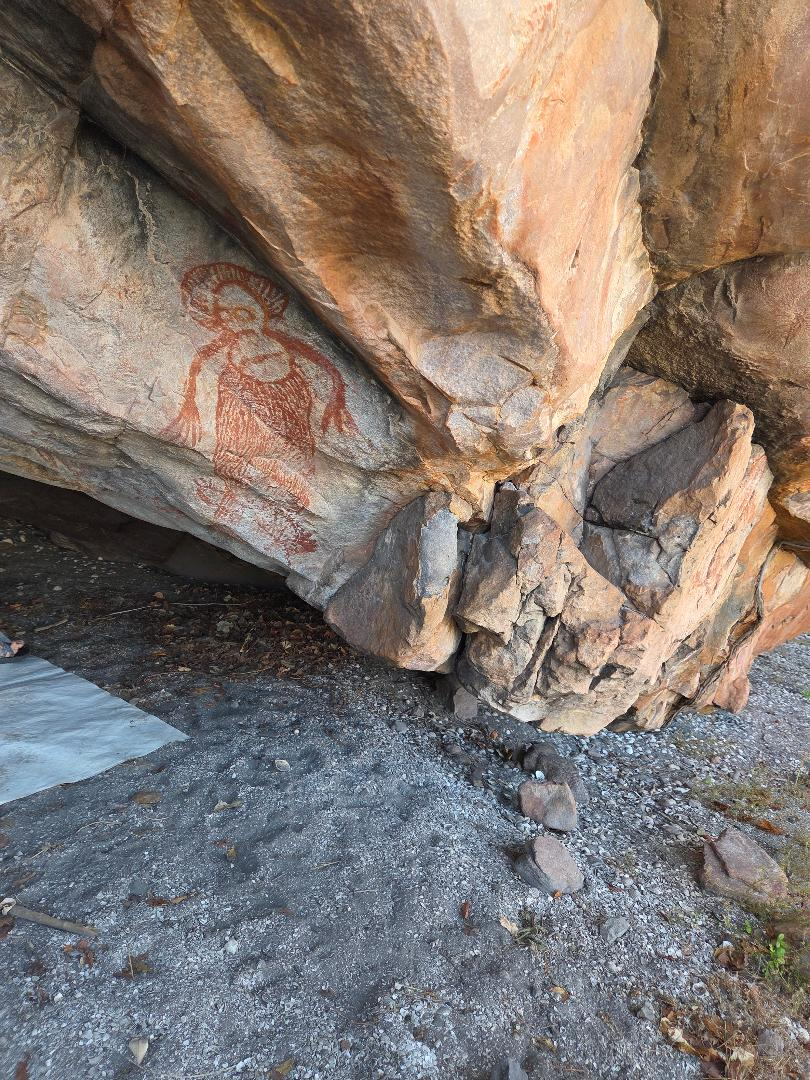
Wandjima Rock Art. 4000 years old. 4X old as Anasazi or Fremont rock art in Utah. The age of the hardened, iron infused, red sandstone layers along the coast of the Kimberly is 1.8 billion years old. Utah Navajo sandstone, by contrast, is only 200 million years old.
We were told by Seabourn adventure staff that the "Traditional Owners" did not want pics of their art circulated on social media.
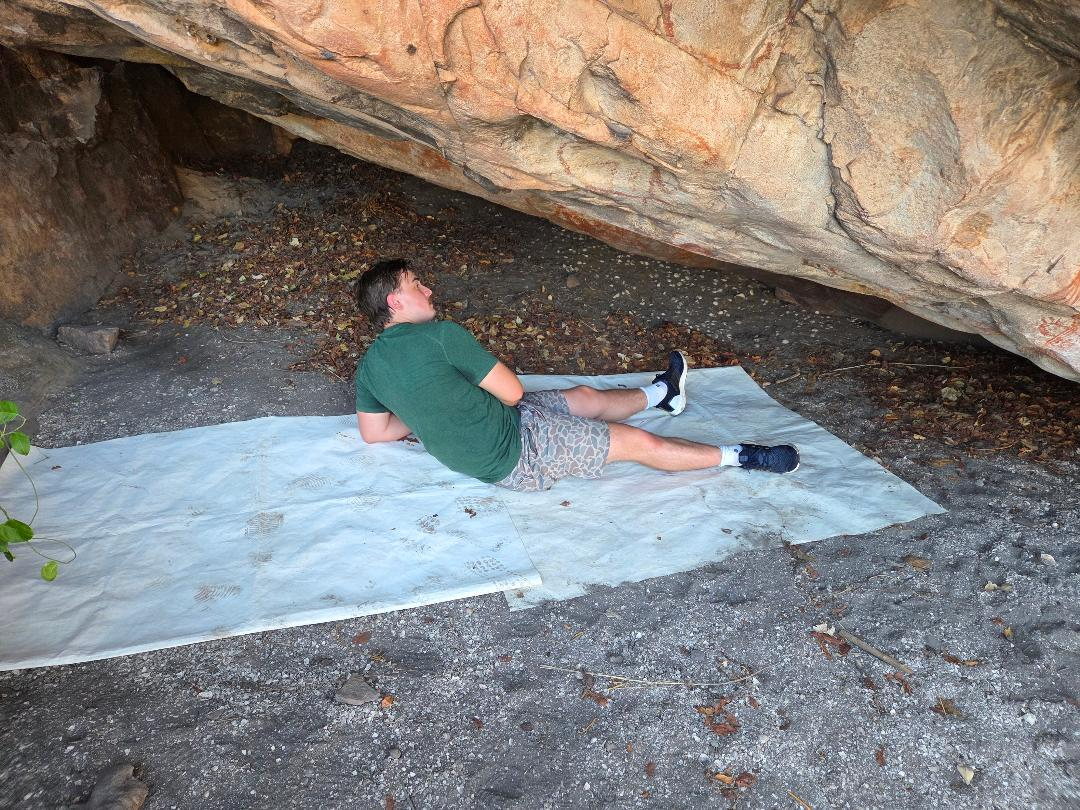
Above: Swift Bay, Kimberly, Australia. 12 June 2026.
Drums inspecting Wajima rock art.
Above: Swift Bay, Australia. 12 June 2026
Seeking The Kimberly.
Seabourn Pursuit.
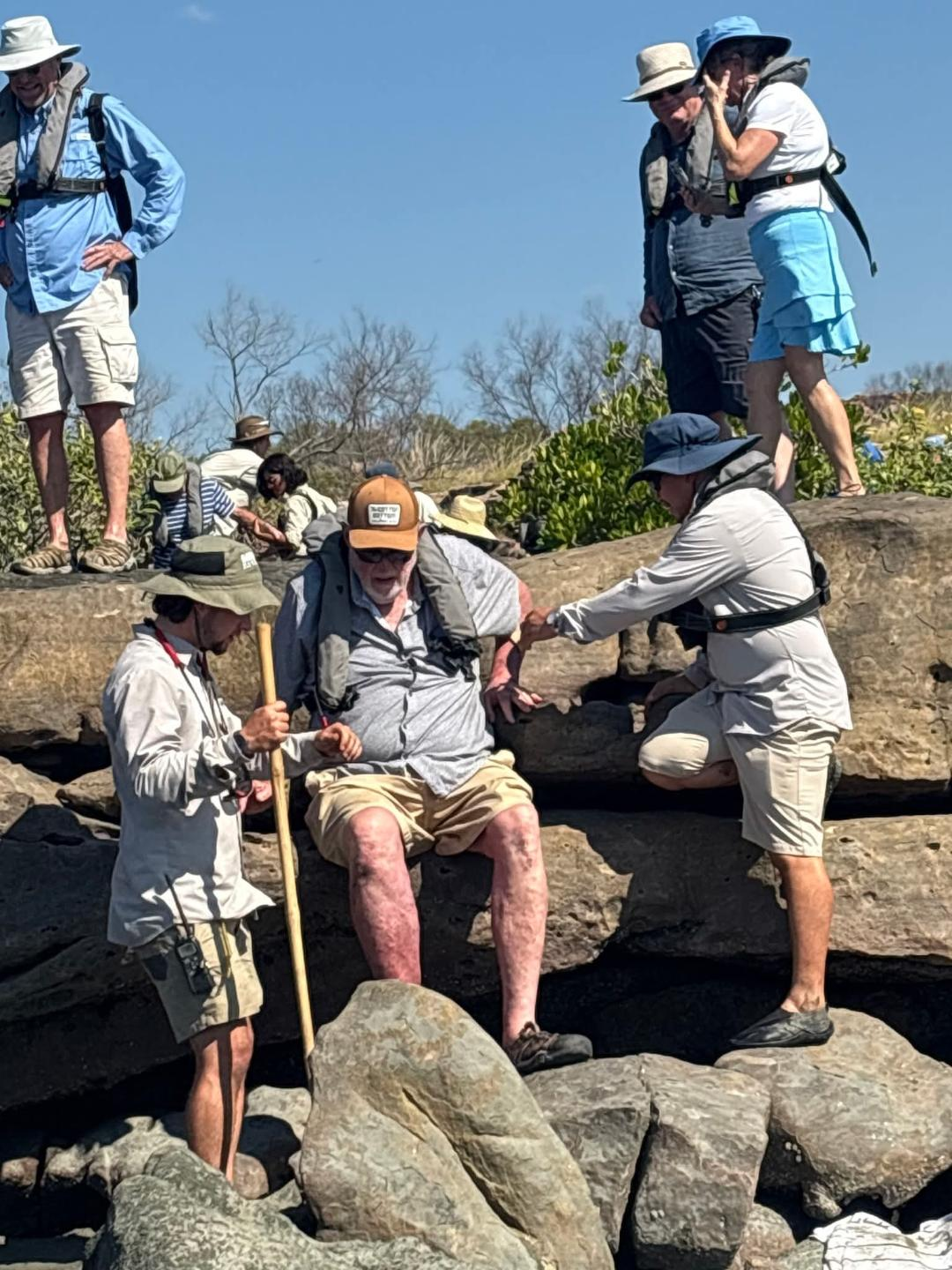
Takin' care of Bishop on rock ledge descent to zodiac. Post visit to some Wandjima art overhangs.
The seeming arduousness of descent down the rocks in the image occurred due to the need of the operators to reposition the zodiacs due to lowering tides. The way up, two hundred yards away, was not so bad. Kudos to the adventure staff for looking after The Bishop as he descends down the rocks to the beach.
Above: Hunter River, Kimberly, Australia. 13 June 2026.
Seeking the Kimberly.
Seabourn Pursuit.
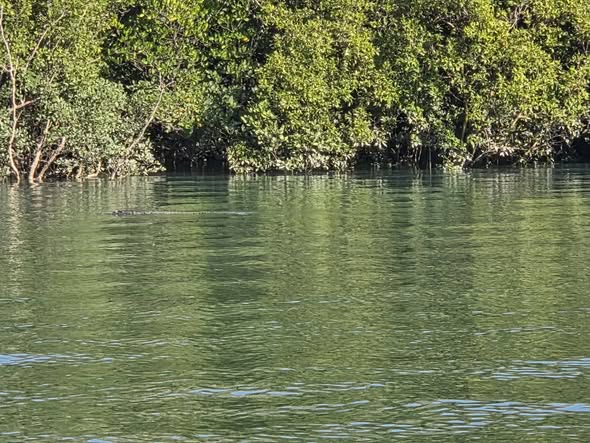
Croc. I tried not to smile as I didn't want to incur the croc's wrath. These are not recreational waters for swimming, waterskiing, snorkeling etc.
AM Zodiac excursion we stayed in the boat. The idea was to observe dense mangrove communities, birds and crocs in Porosus Creek. Purportedly this area has one of the highest concentrations of crocs anywhere in the world.
Above: Hunter River, Kimberly, Australia.
Seeking the Kimberly.
Seabourn Pursuit.
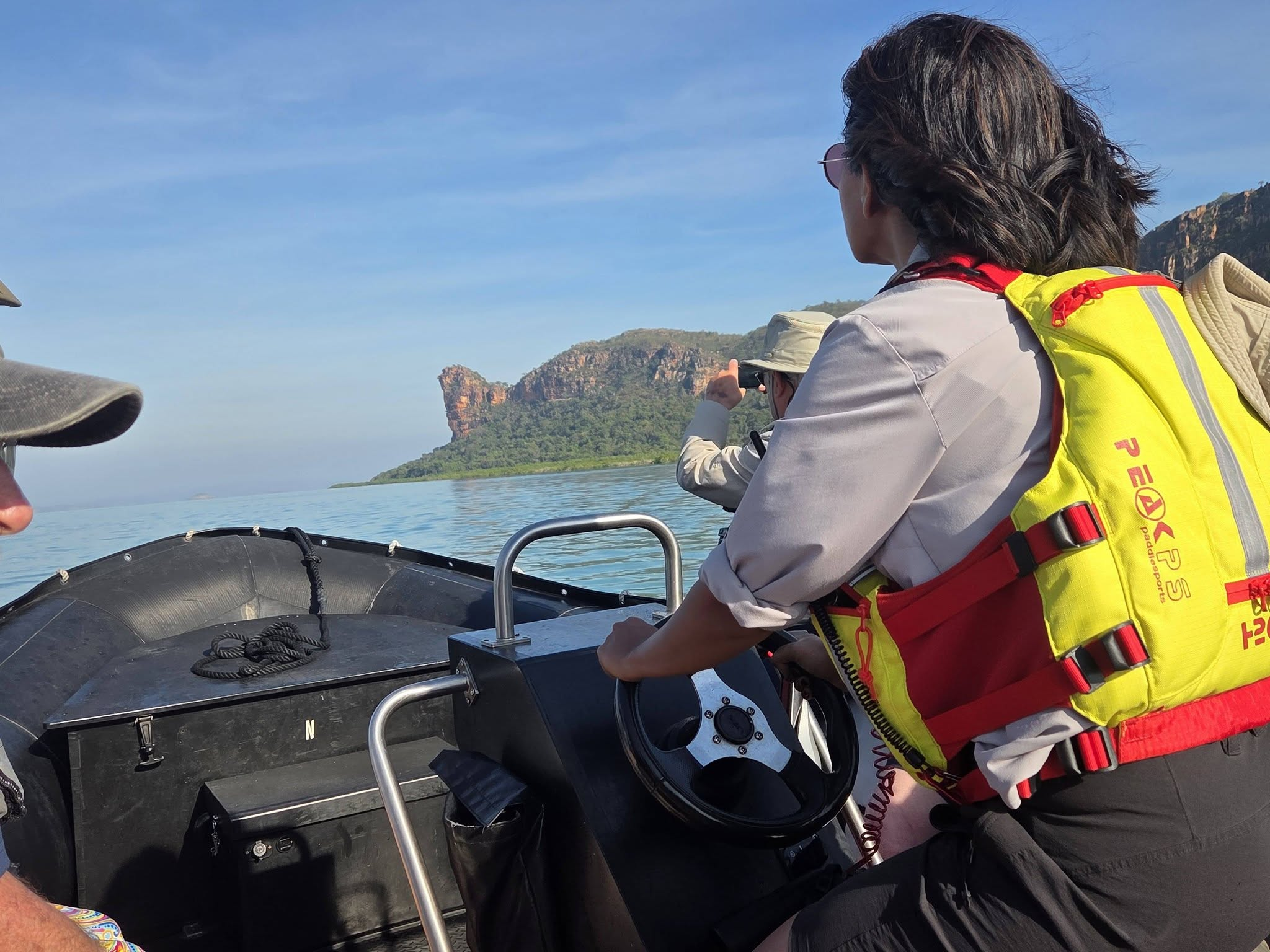
Booking it in the zodiac.
Rock outcropping is Indian Head, a large, distinctive sandstone headland at the mouth of the Hunter River. The rock outcropping is named as it strikingly resembles the chiseled profile of a Native American (Indian) chief.
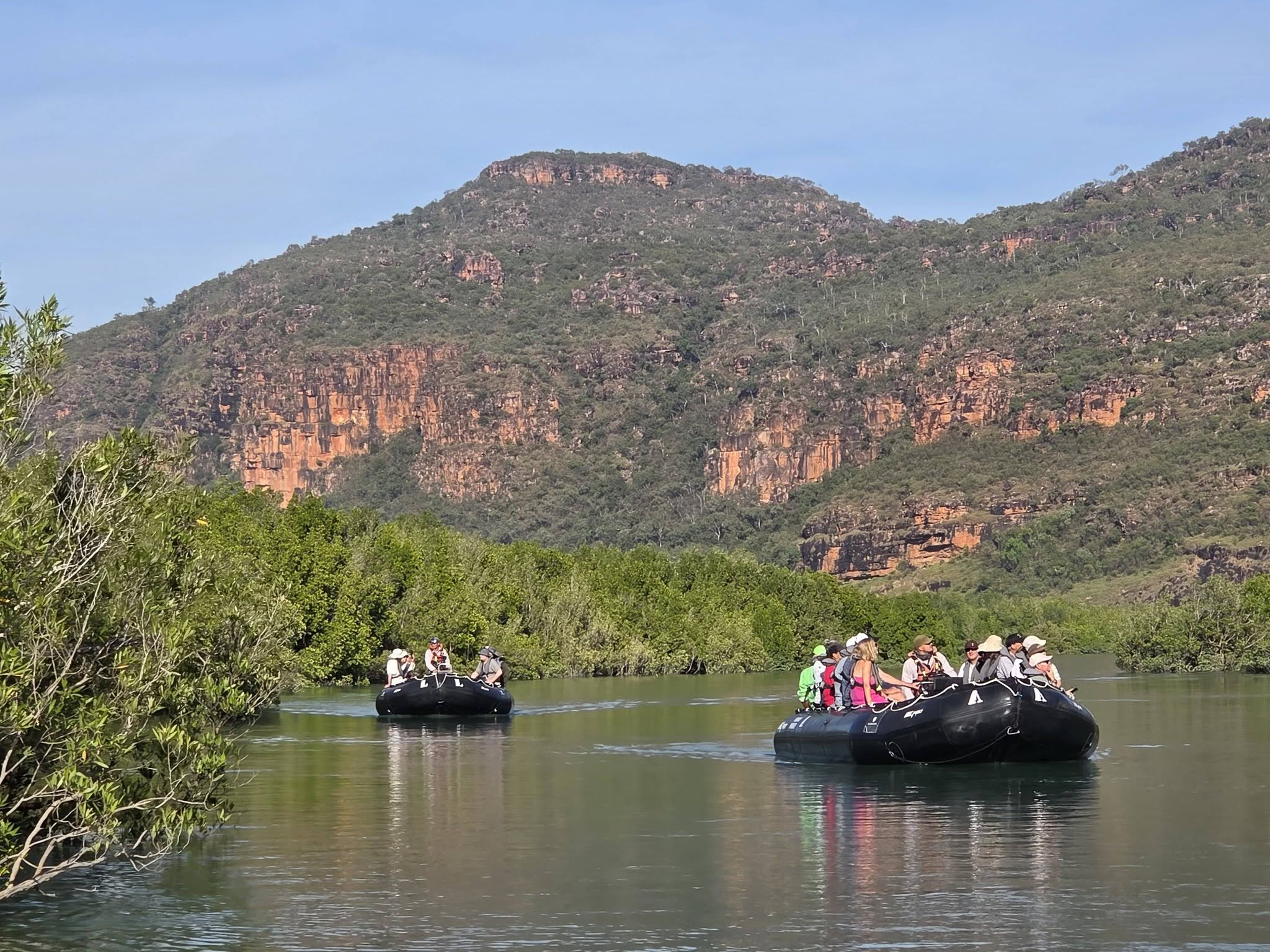
Above: Hunter River/Porosus Creek. 13 June 2026.
Seeking the Kimberly
Seabourn Pursuit
Zodiacs with mangroves (left) and red rock cliffs (rear).
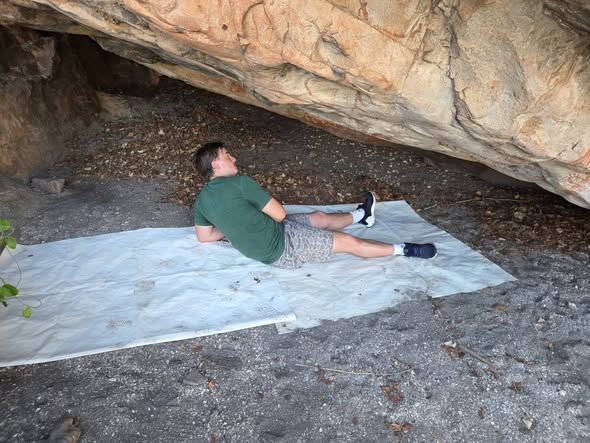
Above: Hunter River, Kimberly, Australia. 13 June 2026.
Seeking the Kimberly.
Seabourn Pursuit.
Wandjina aboriginal rock art. 4000 years old. Wandjina are cloud and rain spirits. They are credited with shaping the landscape bringing rain and fertility and establishing laws and customs during the Dreaming. Some of the paintings are living cultural sites. Traditional Owners (Oz term for aborigines) ritually repaint and maintain them to keep them fresh ensuring the spirits remain active and the country is cared for. This makes it one of the world's oldest continuous sacred art traditions.
The Dreaming (also called Dreamtime) is a foundational concept in Australian Aboriginal cultures. It refers to the spiritual worldview, creation stories, laws, and ongoing connection to Country (land, waters, and skies) that define identity, morality, and existence for First Nations peoples.
Tour goers were allowed to take images of rock art but were told by the adventure staff not to circulate them on social media. Here are the key reasons for this caution per Grok:
Key Reasons for Caution (Especially in the Kimberley)
- Sacred and Living Nature: Sites like Wandjina paintings are not just "art" but embodiments of ancestral beings with ongoing spiritual power. Unauthorized or widespread sharing can be seen as disrespectful or breaching cultural protocols. Some images or sites have gender-restricted knowledge.
- Protection from Damage: Social media posts can encourage unguided visitation, selfies, touching, or overcrowding, leading to physical harm. Rangers in places like Carnarvon National Park monitor social media for illegal selfies and issue fines.
- Cultural Authority: Only authorized Traditional Owners traditionally interact with (e.g., repaint) certain images. Leah Umbagai of the Mowanjum Aboriginal Art & Culture Centre has publicly asked visitors to stop taking and sharing photos without proper understanding of protocols.
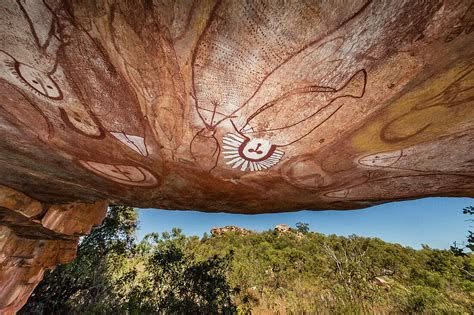
Above: Hunter River, Kimberly, Australia. 13 June 2026.
Seeking the Kimberly.
Seabourn Pursuit.
File image of location for image preceding this one.
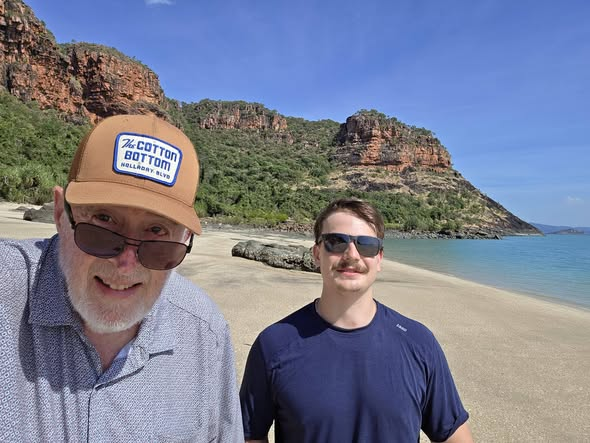
Above: Hunter River, Kimberly, Australia. 13 June 2026.
Seeking the Kimberly.
Seabourn Pursuit.
On the beach.
Above: Hunter River, Kimberly, Australia. 13 June 2026.
Seeking the Kimberly.
Seabourn Pursuit
Croc. In the know zodiac driver detoured to see this croc on way back to the Seabourn Pursuit. Image is a zoom in from our zodiac.
Above: Hunter River (pulling away at dusk). Kimberly, Australia.
Seeking The Kimberly
Seabourn Pursuit.
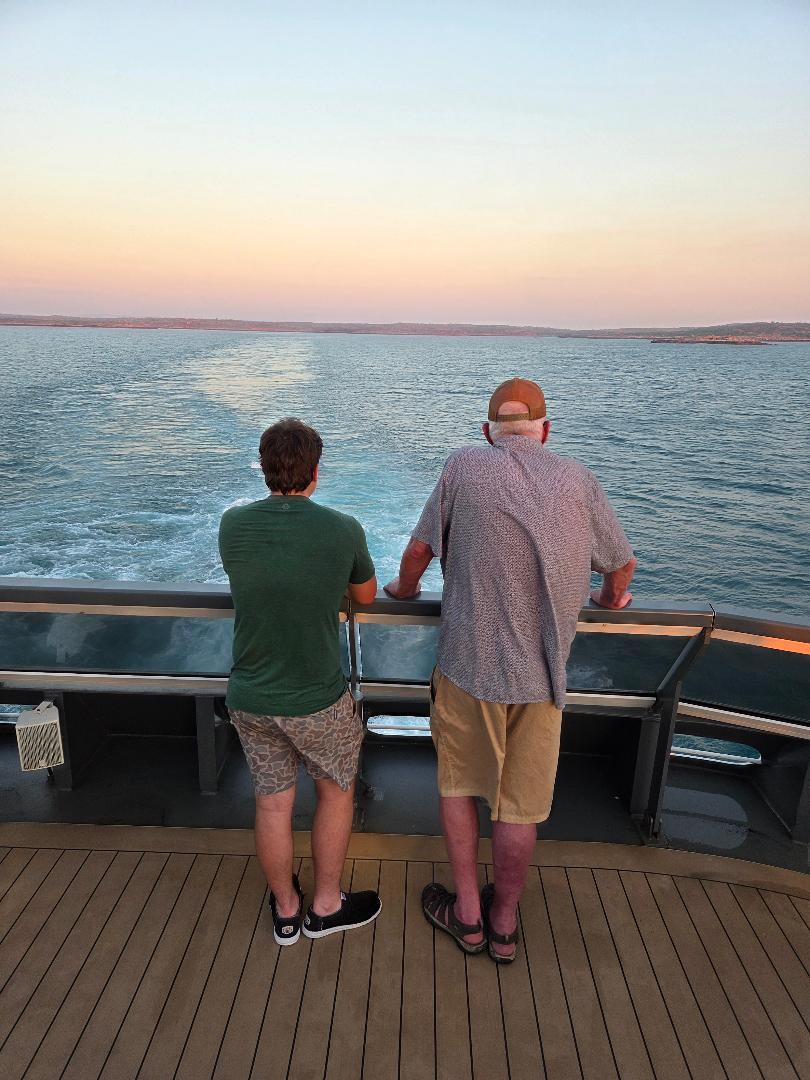
Grandson and Grandpa pondering having seen terrain and waterways and 4000-year-old rock art seen by few people in the world. Anasazi and Fremont people rock art in Utah is 1000 years old.
Drums has been a great travel companion. He relates well to other cruise goers and staff on the boat. Always cheerful, earnest and curious.
Above: Freshwater Cove. Kimberly, Australia. 14 June 2026.
Seeking The Kimberly.
Seabourn Pursuit
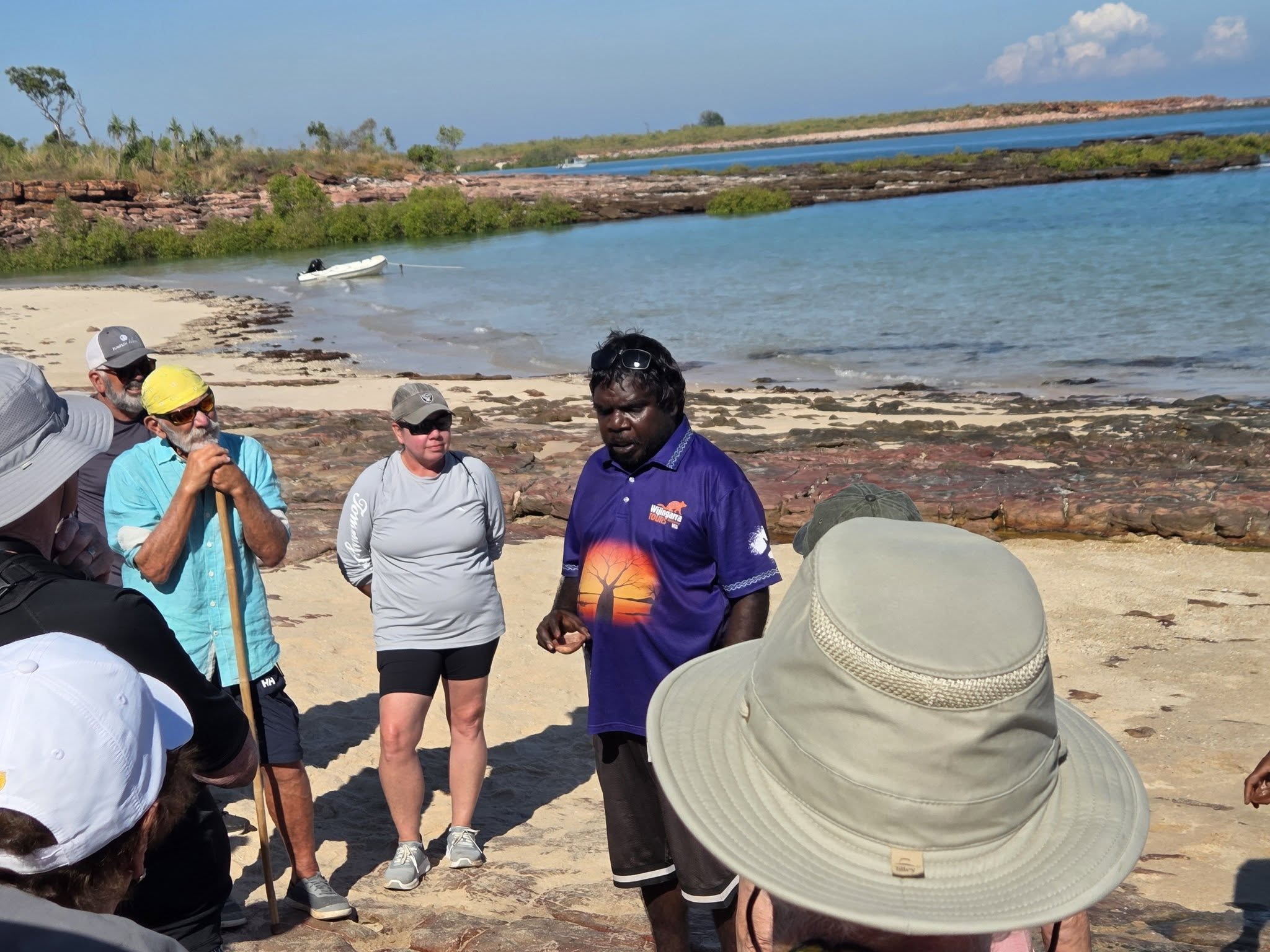
Image: Cruise goers receive introduction to rock art from local. Couple at left are travelling together. He is from Maui and she is from Las Vegas.
Freshwater Cove (also known as Wijingarra Bard Bard or Wiggingarra Butt Butt) is a remote, pristine natural cove on the Kimberley coast of Western Australia, located on the mainland adjacent to Montgomery Reef in Worrorra (Wunambal Gaambera) country.
Key Features
- Permanent freshwater spring: The cove is named for reliable freshwater that flows from the ground and a small waterfall/swimming hole a short walk upstream — a vital resource in the arid Kimberley landscape.
- Stunning scenery with red cliffs, white-sand beaches, turquoise waters, and dramatic tidal influences.
- Cultural significance: Traditional homeland of the Worrorra and Wunambal Gaambera peoples. Visitors often receive a Welcome to Country, learn about rock art, and experience Indigenous-guided tours.
- Rich in biodiversity and a popular stop for Kimberley expedition cruises, scenic flights, and eco-tourism. Activities include beach walks, swimming (with caution for marine life), fishing, and exploring ancient rock art.
It is part of the remote and spectacular northwest Kimberley wilderness, often visited in combination with Montgomery Reef.
Above: Freshwater Cove. Kimberly, Australia. 14 June 2026.
Seeking The Kimberly.
Seabourn Pursuit.
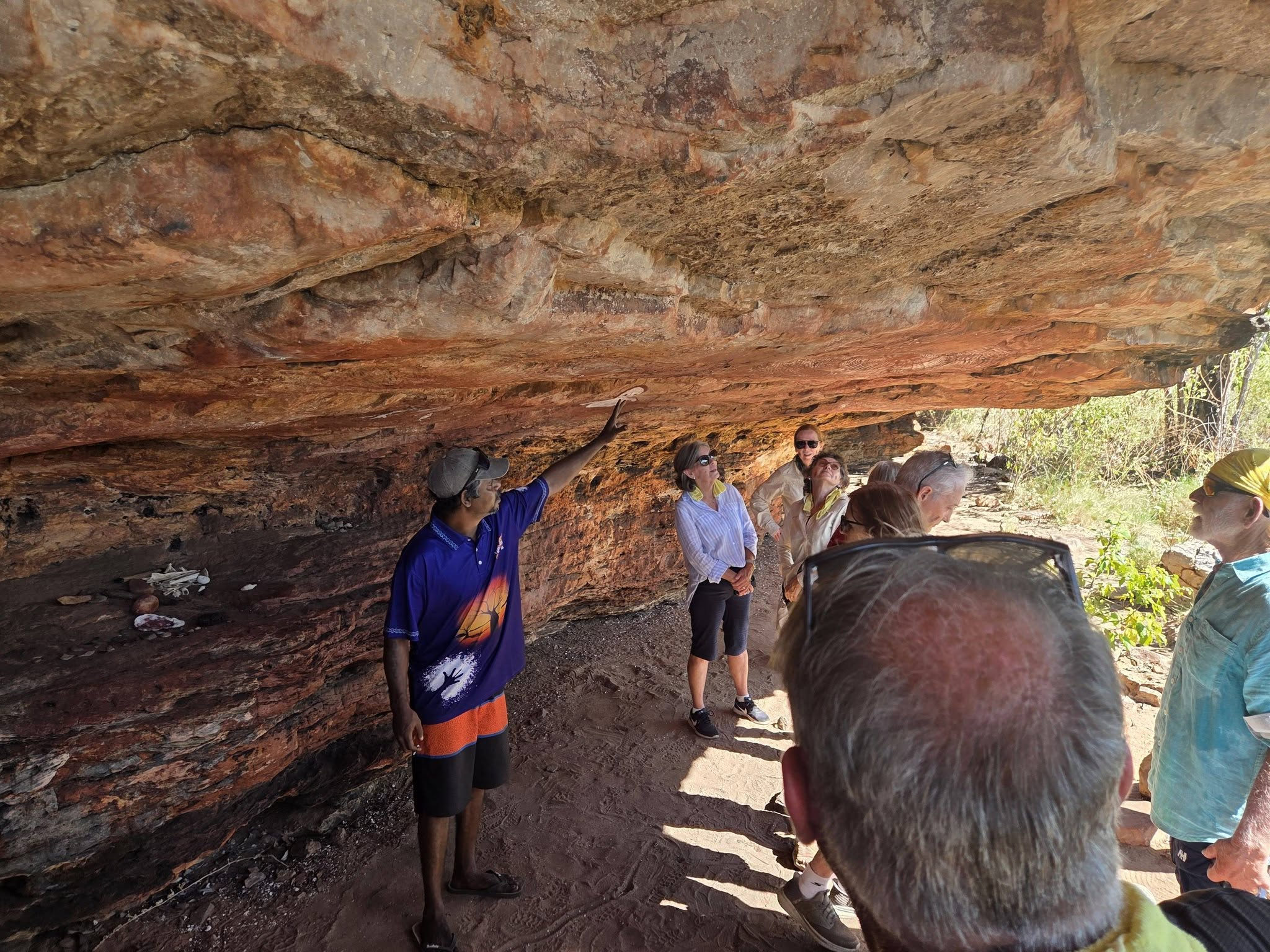
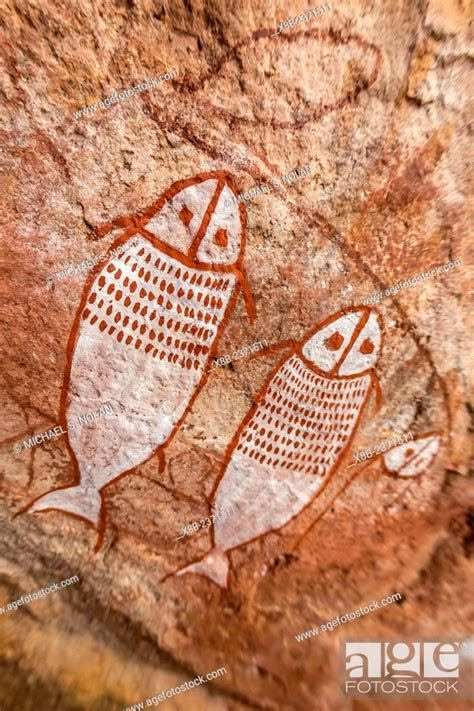
Image: Viewing Wanjina rock art. Four thousand years old.
Above: Freshwater Cove. Kimberly, Australia. 14 June 2026.
Seeking The Kimberly.
Seabourn Pursuit.
Wanjina rock art, Freshwater Cove, file image. Current Traditional Landowners sometimes update the ancient art with new "paint." And, why not? They don't see it as some valuable archeological find, but rather religious iconography to be kept current, just as Christians would remodel or otherwise update a church property.
Above: Freshwater Cove. Kimberly, Australia. 14 June 2026.
Seeking The Kimberly.
Seabourn Pursuit.
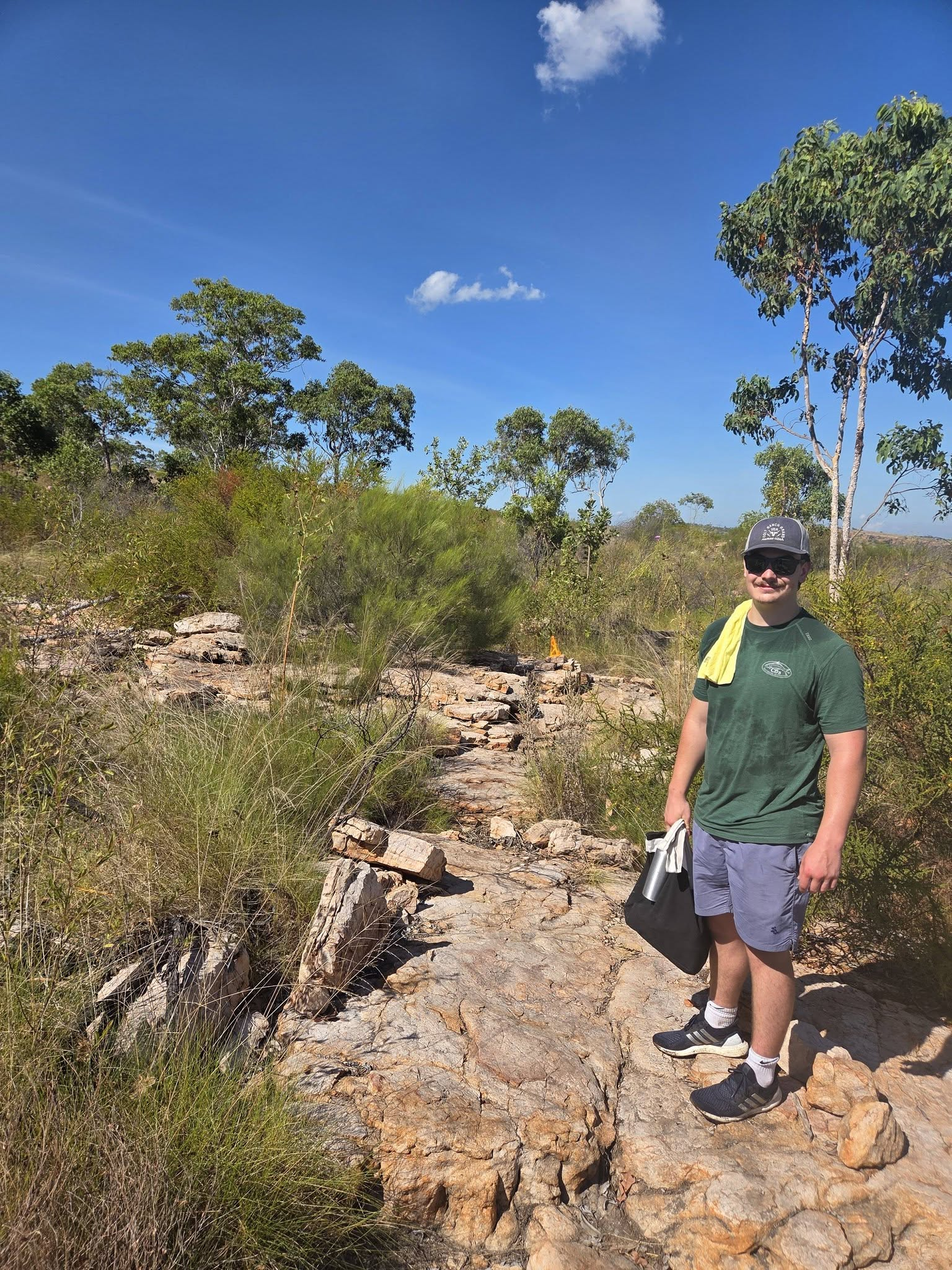
Image. Route to and from zodiac dismount to rock art was about one mile. The trail at times was difficult requiring climbing up and down boulders with gaps betwixt and between. The adventure staff of the Seabourn Pursuit showed images of the trail prior to the hike and said that assistance along the way would not be available. I decided to go, but several other eighty somethings passed. There were some tricky spots on the trail, but I managed to accomplish it. Drums was nearby to provide me with tips on where to step.
Above: Freshwater Cove. Kimberly, Australia. 14 June 2026.
Seeking The Kimberly.
Seabourn Pursuit.
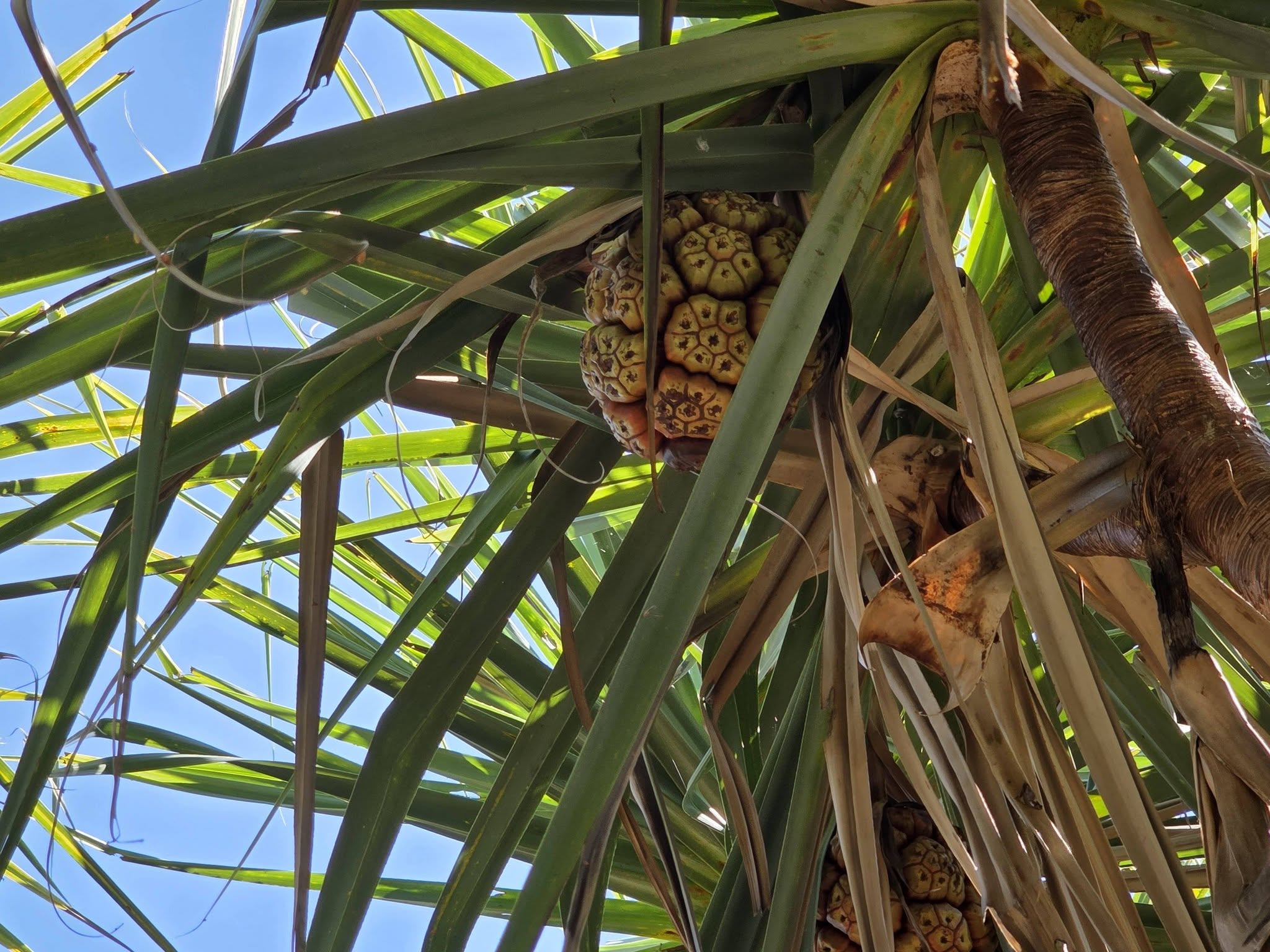
Screw Pine. Fruit is inedible.
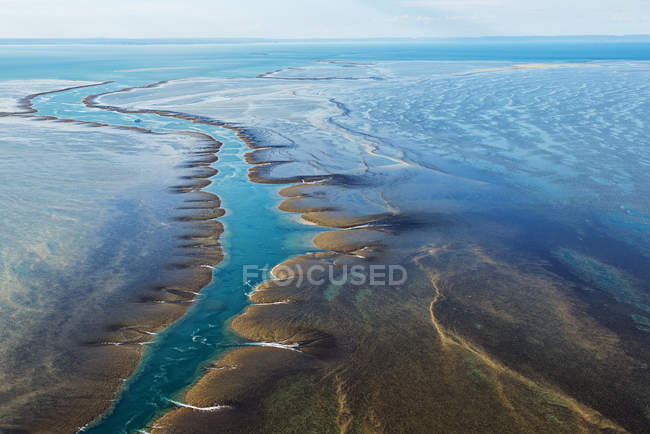
Above: Freshwater Cove. Kimberly, Australia. 14 June 2026.
Seeking The Kimberly.
Seabourn Pursuit.
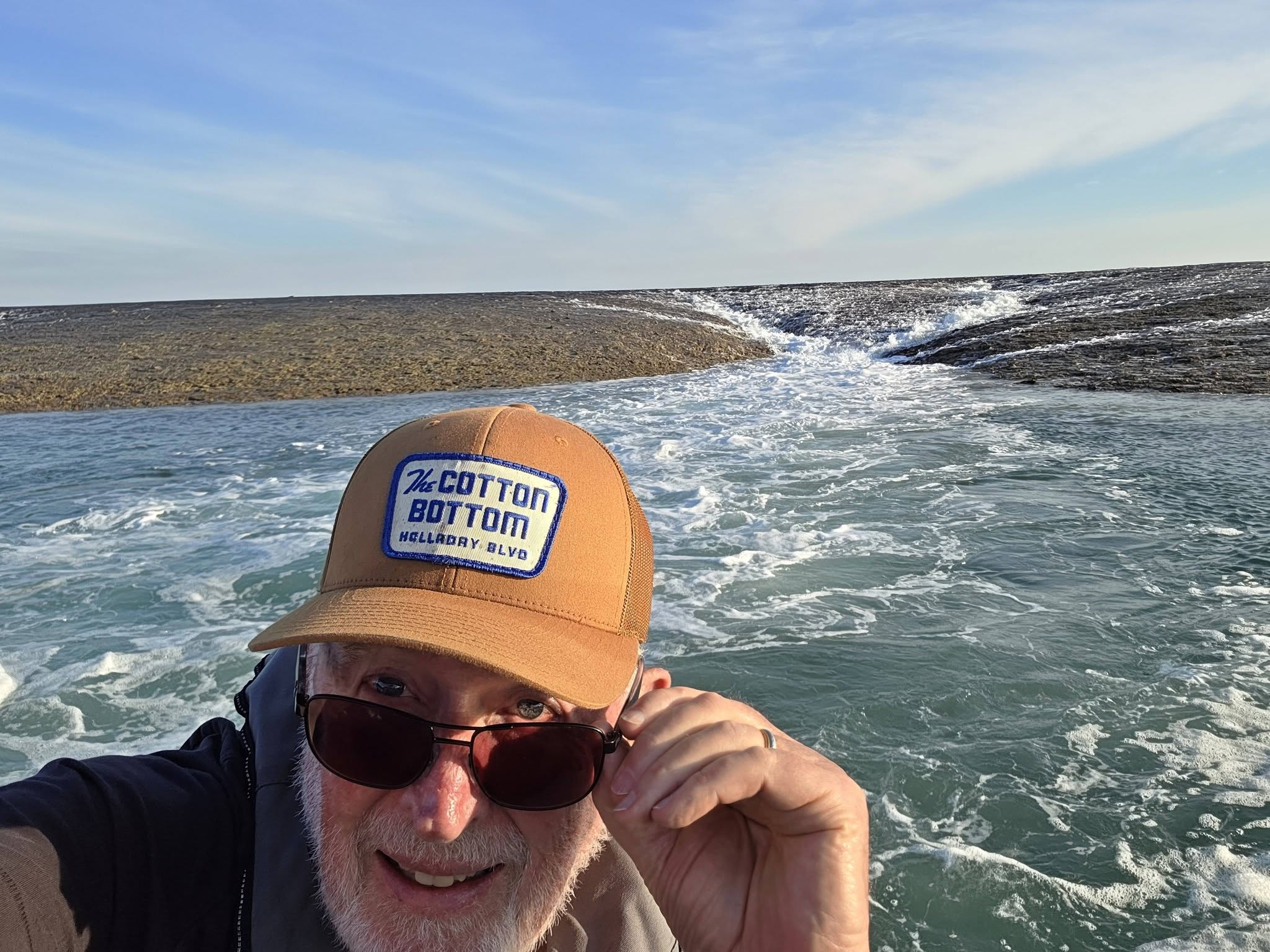
Montgomery Reef. What an amazing, one-of-a-kind sight! Top image shows water running off the reef at low tide. Lower file shot shows multiple points where water runs off the reef. This could be Oz's "Grand Canyon," yet it is accessible only to the few.
Montgomery Reef (also known as Yowjab or Yawajaba) is a vast inshore reef system off the Kimberley coast of Western Australia, located at the southwestern end of Camden Sound, surrounding Montgomery Island, and about 15–20 km offshore.
It covers around 400 km² (roughly 80 km long) and is recognized as the world's largest inshore reef.
Key Features
- Extreme tides (up to 10+ meters) cause the reef to dramatically emerge at low tide, rising up to 4 meters above the water and creating cascading waterfalls, channels, lagoons, and exposed flats. At high tide, it is largely submerged and invisible from the surface.
- It is an ancient geological feature (formed ~1.8 billion years ago from sandstone/dolomite) topped with rhodoliths (coralline algae), corals, and marine life, rather than a typical coral reef.
- Rich biodiversity: Home to turtles, dugongs, estuarine crocodiles, diverse fish, birds, and resilient corals. It lies within Lalang-garram Marine Park (a sanctuary zone).
- Culturally significant to the Dambimangari (Dambeemangarddee) people, featuring in their creation stories.
It is a major highlight of Kimberley cruises and scenic flights, often described as one of Australia's greatest natural wonders (praised by David Attenborough).
Addendum:
Steve
Thank you for sending those great photos. The closest I have come to that part of Australia is either Ayres Rock or Perth.
While growing up I did spend time in the middle of Nowhere. I spent summers on a sheep station which was 10 miles from the nearest town. I also visited my uncle's sheep station. They were 12 miles from their closest neighbor, 43 miles from the nearest store which was standalone, and 86 miles from the nearest store. That town was a 3 hour drive on a single lane dirt road. So when my aunt and uncle went to town they drove over on Saturday and returned on Sunday.
You mentioned that the swimmers were at a river with no crocodiles. While at the Victoria falls in Africa, I saw a sign 15 feet from where the river massively cascades over the ledge to become the waterfall. The sign stated " swimming is dangerous because of crocodiles ".
Have fun
The POPE
Eufala, Alabama
Dear Steve,
Thanks for sharing these photos.
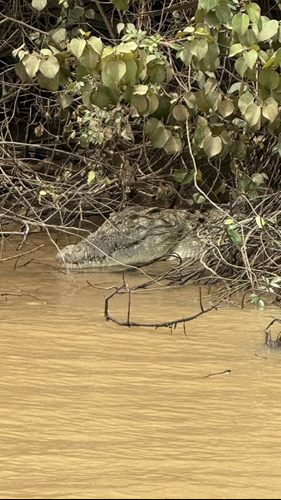
Reminds me of similar habitats in India in Sundarbans (Bengal) and Bhittarkanika in Orissa which are known for their mangrove habitats and the Salt Water Crocodiles also known as Estuarine Crocodiles.
Sharing a photo taken from my I-phone from a boat when I visited Bhittarkanika in Orissa. They are pretty big. You just see the head.
Mohan,
Gurgaon, Haryana
I looked up my previous question: Universal Cultural Meaning = not satisfied with this, the question is WHY? “In the image of God?”
Above the images are of fish in Australia and bison in Spain. Interesting, perhaps reflecting availability of each.
Cave drawings in Spain and Australia use the same red pigment—red ochre (iron oxide or hematite)—simply because it is one of the most abundant, durable, and easily accessible natural minerals on Earth. Early humans and Neanderthals did not communicate across continents; rather, they independently discovered and utilized the same natural resources. [1, 2, 3, 4, 5]
The shared use of this pigment is tied to a few key factors:
· Global Abundance: Iron oxides are found worldwide. Both continents had ready access to natural clay and rock rich in hematite, which yields a vibrant, lasting red color when ground into powder. [1, 2, 3, 4]
· Superior Durability: Unlike plant or animal-based dyes, earth pigments do not fade easily in the elements. They are non-reactive, heat-resistant, and physically stain rock surfaces, ensuring longevity. [1, 2, 3, 4, 5]
· Universal Cultural Meaning: The color red naturally evokes blood and fire, making it deeply symbolic for creation, spirituality, or marking territory among human populations worldwide. [1, 2, 3, 4, 5]
While the pigment itself is chemically identical due to geology, the art styles, ages, and exact methods of binding the paint (e.g., using plant sap, fat, or saliva as a medium) vary widely depending on the specific culture and era. [1, 2, 3, 4, 5]
If you're interested, I can provide details on:
· How these ancient artists prepared and applied their paints
· The specific age differences between Spanish and Australian rock art sites
Once again, good pics.
I also climbed Ayers Rock. On the way down, a Japanese man slid down because he did not want to walk as he was afraid of falling.
What a sight
We went to another a group rocks called the Devil Rocks. They are very scenic
Joe,
Gosford, NSW
TIMDT and Mwah (sic) climbed Ayers Rock circa 1992 and while up there a Japanese tourist fell to his death. We were last on the rock. Noone was up there but us. No rangers. Then a chopper flew overhead. We made our way off the rock and were told about the tourist death by the ranger at the bottom. We had taken the Ghan railway trip from Adelaide to get to Ayers Rock.
Very beautiful Steve.
Thanks
Joe,
Gosford, NSW
Steve,
Did you ever go to caves in Spain?
I did. “The earliest paintings were applied during the Upper Paleolithic, around 36,000 years ago.”
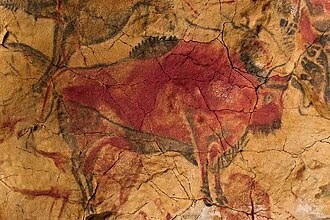
Interesting they used the same color and dated approximately the same time.
Why that pigment? Did the technology travel across the seas?
Dick
I have not seen the rock art in Spain.
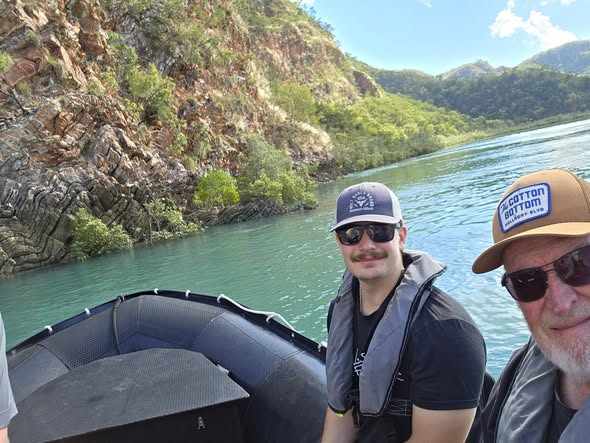
Above: Cyclone Creek, Kimberley, Australia. 15 June 2026.
Seeking The Kimberly.
Seabourn Pursuit
Borrowing heavily from Grok:
Cyclone Creek is a scenic inlet or creek in Talbot Bay, within the remote Buccaneer Archipelago on the Kimberley coast of Western Australia. It is a popular destination for small-boat or Zodiac excursions from expedition cruises, often combined with visits to the nearby Horizontal Falls.
Key Features
- Geology: The area showcases dramatic ancient sandstone formations, folded and buckled rock layers (some ~1.7 billion years old), and cobble conglomerates. These result from massive tectonic collisions when the Kimberley craton joined the rest of Australia. The rocks appear "scrunched like paper," with towering orange cliffs, near-vertical strata, and striking folds visible along the waterway.
- Landscape and Wildlife: Narrow channels wind between rugged cliffs, mangroves, and ancient river plain features. Visitors often spot saltwater crocodiles, Short-eared Rock-wallabies, and diverse birdlife. The extreme tidal range (up to 10–13 metres) influences the area, similar to the Horizontal Falls.
- Access: It is reached mainly by cruise ships or adventure tours (e.g., from Broome or Darwin routes). Zodiac cruises explore its serene upper reaches after thrilling rides through the Horizontal Falls' tidal rapids.
The name "Cyclone Creek" does not refer to a specific cyclone event but likely evokes the powerful natural forces (tides, storms) that shape the Kimberley coast. The region experiences frequent tropical cyclones during the wet season (November–April), which can bring heavy rain and flooding, though Cyclone Creek itself is primarily a tourism highlight for its pristine wilderness and geology.
In short, it offers a quintessential Kimberley experience: remote, geologically spectacular, and accessible only by sea in one of Australia's most untouched coastal wilderness areas.
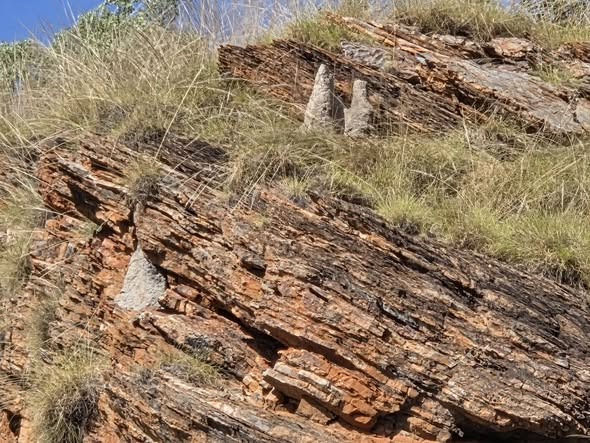
Above: Cyclone Creek, Kimberley, Australia. 15 June 2026.
Seeking The Kimberly.
Seabourn Pursuit
Termite nests amongst the really old rocks.
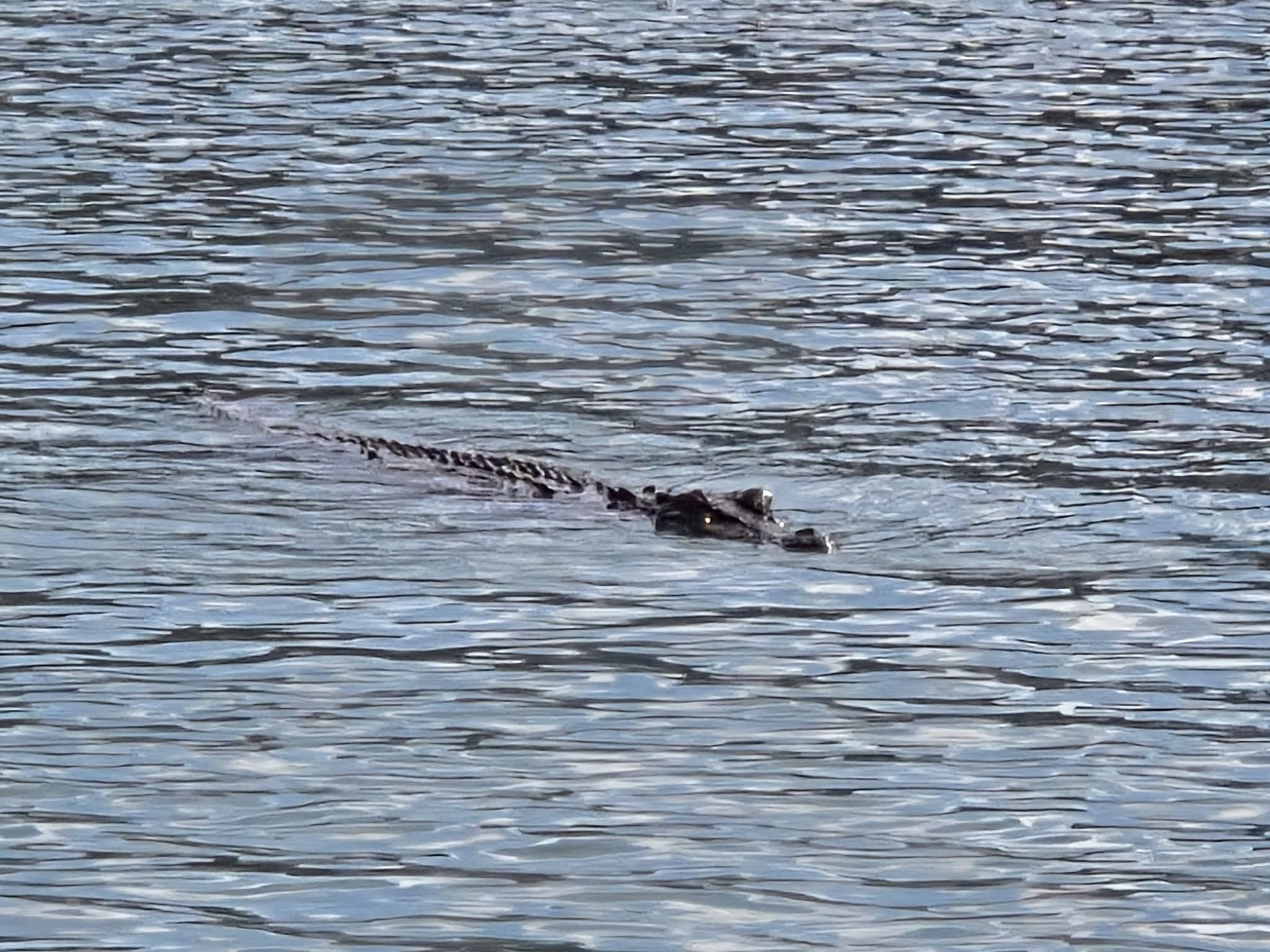
Above: Cyclone Creek, Kimberley, Australia. 15 June 2026.
Seeking The Kimberly.
Seabourn Pursuit
Croc.
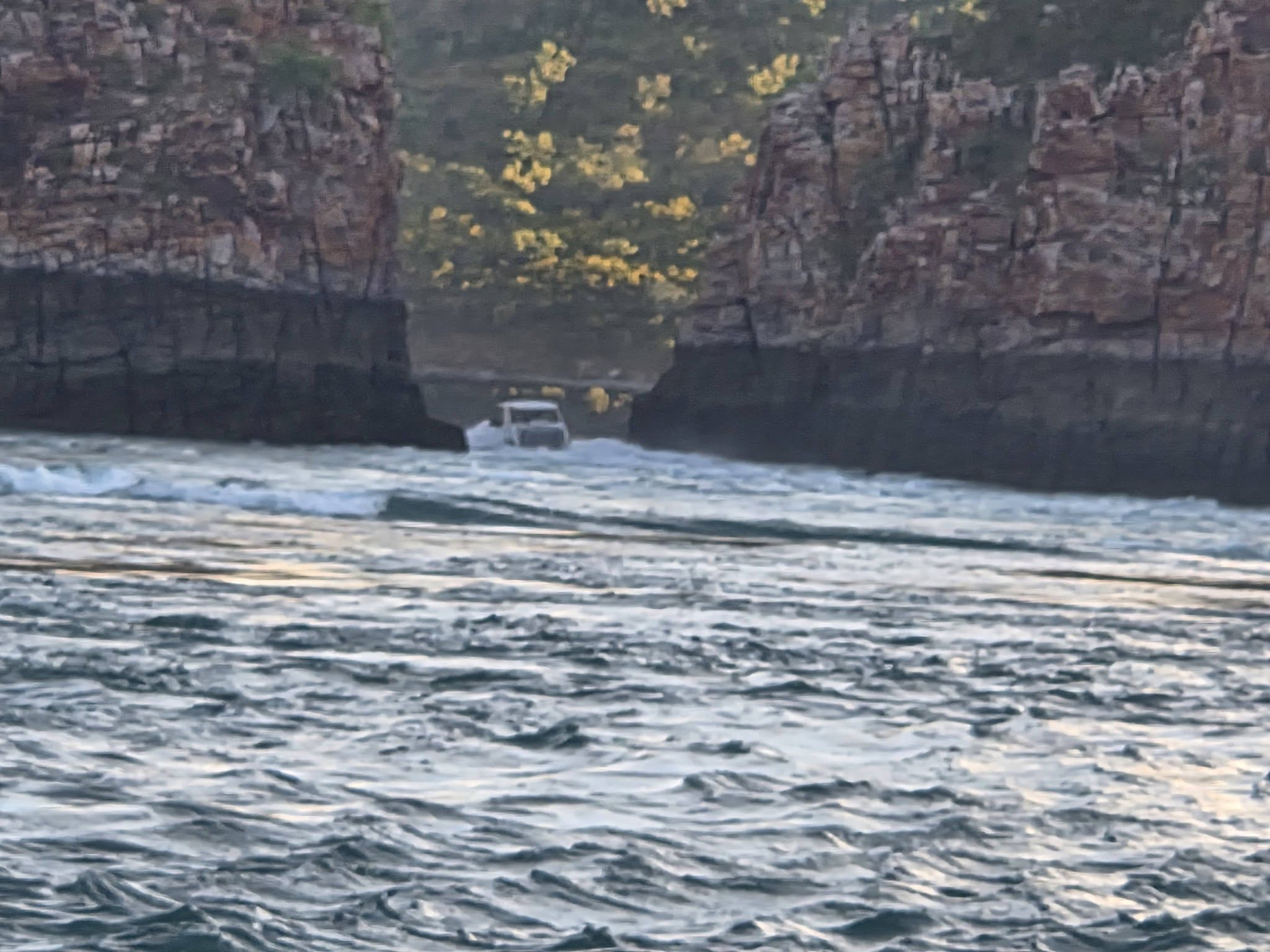
Above: Horizontal Falls, Kimberley, Australia. 15 June 2026.
Seeking The Kimberly.
Seabourn Pursuit
Tourist boat with four hundred horsepower propulsion pushes through the gap against the rushing tidal outflow. Our measly one hundred horsepower zodiacs were prohibited from making the attempt.
Geology of the Red Rock Cliffs at Talbot Bay and Horizontal Falls, Kimberley, Australia
The red rock cliffs at Talbot Bay and the Horizontal Falls (Garaanngaddim) in the Buccaneer Archipelago showcase some of the Kimberley’s most dramatic Precambrian geology. These nearly vertical, iron-stained sandstone formations result from ancient sedimentation, intense folding, long-term erosion, and modern tidal forces.
Rock Formations and Age
The cliffs belong to the Kimberley Basin, with key resistant quartz sandstones date to the Paleoproterozoic (~1.84–1.80 billion years ago).
The striking red-orange hues come from iron oxide (hematite) staining through prolonged weathering and oxidation of iron-bearing minerals.
Structural Geology and Cliff Formation
Intense folding ~540 million years ago (during the King Leopold Orogeny or later events) tilted originally near-horizontal layers to near-vertical or highly contorted orientations, creating synclines and anticlines. Erosion of weaker layers left resistant sandstone ridges as steep cliffs (150–200 m high) rising from the sea.
This produces the classic ria coastline with plunging cliffs, narrow gorges, and embayments.
Horizontal Falls Phenomenon
Massive tidal ranges (up to 10+ m) drive billions of litres of water through two narrow gorges (~300 m apart) in the McLarty Range:
- Wider outer gap: Pentecost Sandstone.
- Narrower inner gap: Warton Sandstone.
Water builds up on one side and rushes through, creating a “horizontal waterfall” effect that reverses with the tide. The gorges act as natural funnels amplified by the rugged bathymetry.
Talbot Bay’s geology highlights ~2 billion years of Earth history in a compact, visually spectacular setting. The combination of ancient folded sandstones, iron-red staining, and extreme tides creates one of Australia’s iconic natural wonders, also holding deep cultural importance for Traditional Owners.This compact, folded landscape exemplifies how tectonics, erosion, and ocean dynamics sculpt one of the world’s most striking coastlines.
Due to safety concerns (including a 2022 boat incident) and cultural considerations from Traditional Owners (Dambimangari people), boat tours traversing directly through the falls are being phased out. Larger cruise operators may cease by the end of the 2026 season, with the main local day-tour operator able to continue until the end of 2028. Viewing from the air and alternative experiences will remain available.
In summary, the Horizontal Falls offer a quintessential Kimberley highlight: a powerful, ever-changing interplay of extreme tides and ancient geology in one of Australia's most pristine and inaccessible wilderness areas. It's a bucket-list destination best experienced as part of a cruise or fly-in adventure.
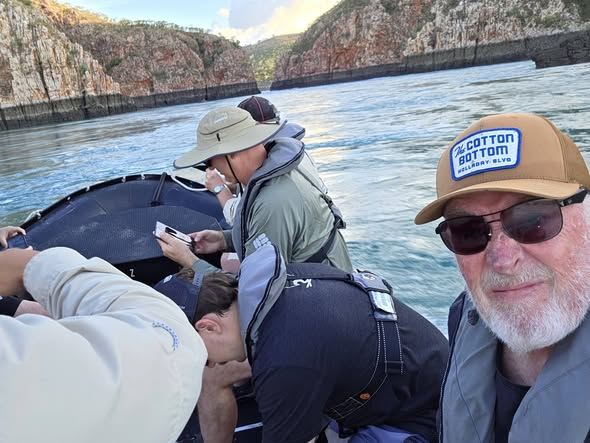
Above: Horizontal Falls, Kimberley, Australia. 15 June 2026.
Seeking The Kimberly.
Seabourn Pursuit
Our zodiac was able to make it "this close" to the falls cliff gap. We were holding on tight. The rushing tidal outflow is rougher than it looks in the image.
Two amazing, unique in the world, geological phenomena two days in a row! Yesterday, Mongomery Reef, and today, Horizontal Falls.
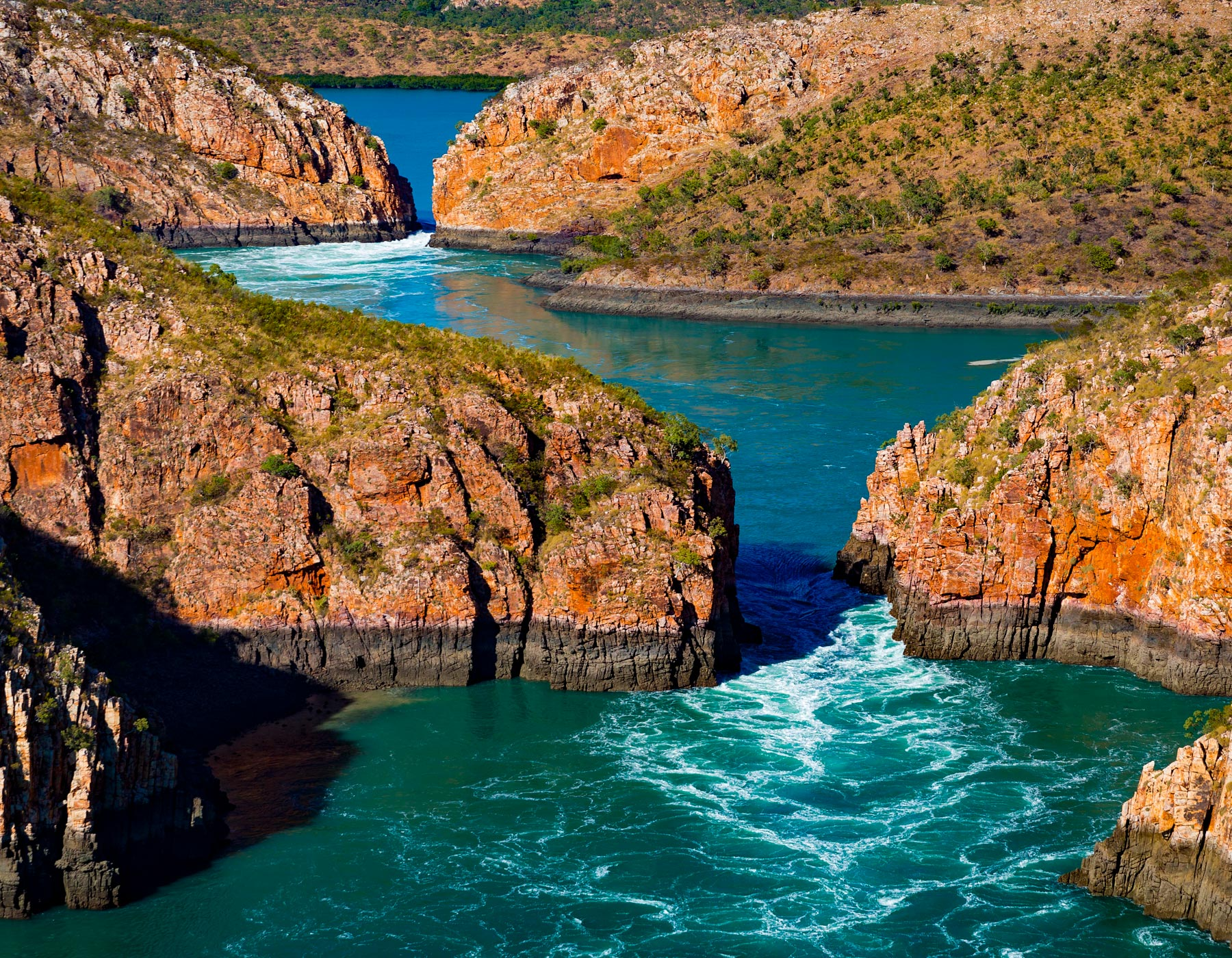
Above: Horizontal Falls, Kimberley, Australia. 15 June 2026.
Seeking The Kimberly.
Seabourn Pursuit
File image.
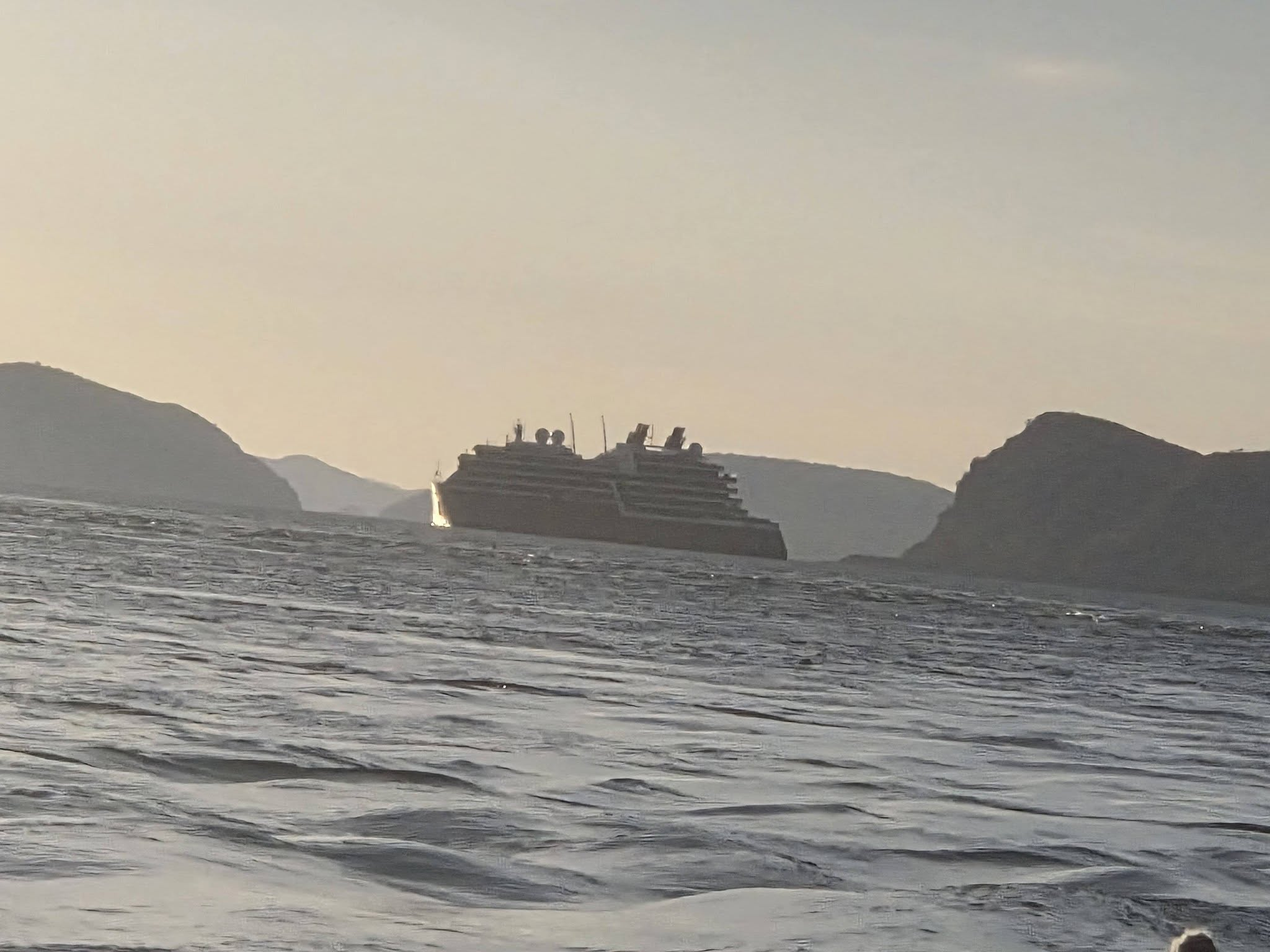
Above: Horizontal Falls, Kimberley, Australia. 15 June 2026.
Seeking The Kimberly.
Seabourn Pursuit,
The Seabourn Pursuit seen against the sun as we return from Horizontal Falls in our zodiac.
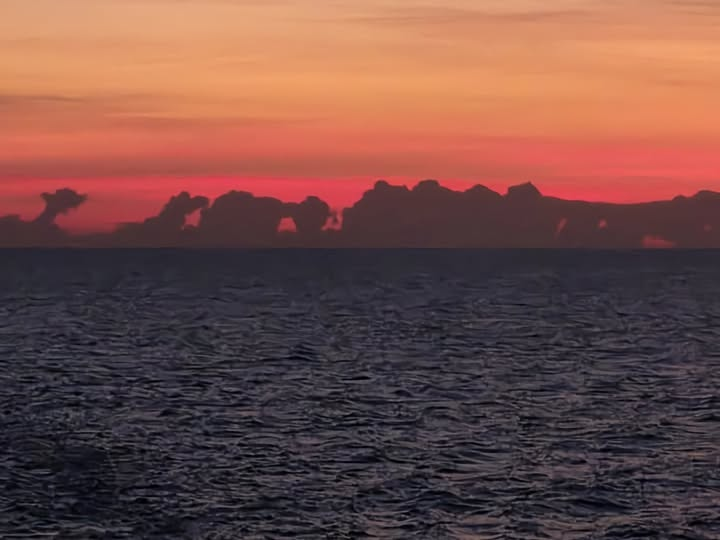
Above: Lacepede Islands. 16 June 2026.
Seeking The Kimberley
Seabourn Pursuit.
The cruise offered a succession of spectacular sunrises and sunsets. Each morning, I made a point of being among the first to breakfast at the Colonnade. I would claim a table on the outer deck, fill my plate at the buffet, and settle in to watch the sky slowly brighten as I ate.
Drums, though he would have preferred to linger in bed, always joined me within fifteen minutes. He never had to—I never asked—but he showed up faithfully, a quiet testament to his desire to be a good companion.
The above pictured dawn left me momentarily speechless. As the sky paled into morning, I stared at what looked like distant mountains rising on the horizon. Were they real, or merely clouds shaped by the light?
Breakfast itself was a comforting constant: scrambled eggs, crisp Canadian bacon, hash browns, baked beans, a grilled half-tomato, sourdough toast with butter and strawberry jam, plus coffee, orange juice, and water. A proper British breakfast, the kind that makes you wonder why genuine Canadian bacon is so hard to find back home in the supermarkets.
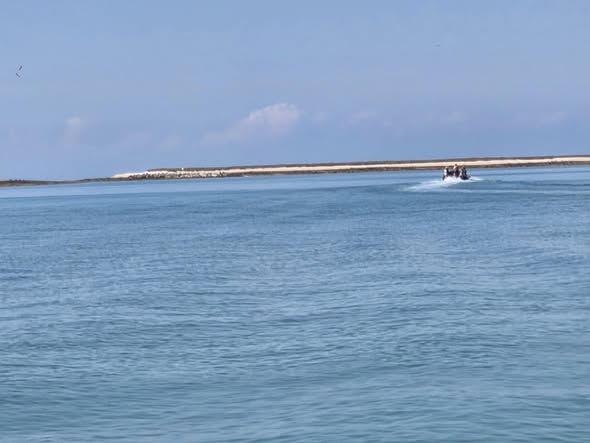
Above: Lacepede Islands. Kimberley, Australia. 16 June 2026.
Seeking The Kimberley
Seabourn Pursuit.
Grok. Designated an A-class Nature Reserve in 1970 and managed by Western Australia’s Department of Biodiversity, Conservation and Attractions, the islands are a vital breeding site. Rats were eradicated in 1986, boosting populations. They form an Important Bird Area (IBA) with one of the world’s largest brown booby colonies (up to 18,000 pairs) and significant roseate terns (up to 20,000). Other breeders include masked boobies, lesser frigatebirds, terns, noddies, oystercatchers, and more. They are also one of WA’s most important green turtle rookeries, with flatback turtles present. Surrounding waters host dolphins, manta rays, dugongs, crocodiles, and migrating humpback whales.
On this (pictured, my image) excursion we saw a large ray swimming under the zodiac, occasional turtles bobbing to the surface, and a sky full of frigate birds chasing terns to steal their food.
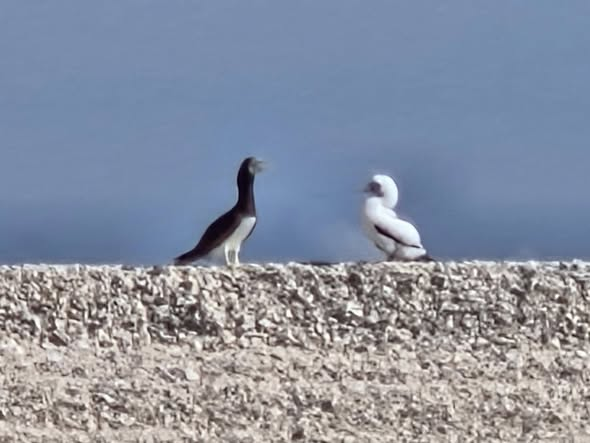
Above: Lacepede Islands. 16 June 2026.
Seeking The Kimberley
Seabourn Pursuit.
Brown Booby Mom and chick.
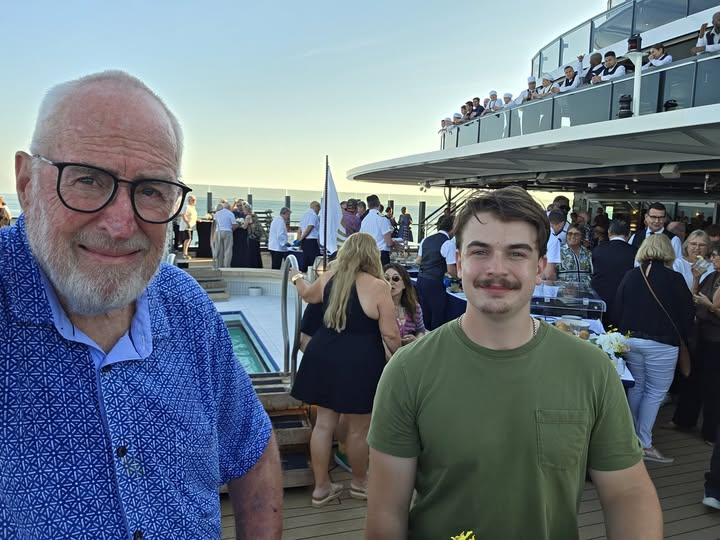
Above: Lacepede Islands. 16 June 2026.
Seeking The Kimberley
Seabourn Pursuit.
On the final night of the cruise, the Colonnade Deck pulsed with the deck party’s easy rhythm. With only two hundred passengers aboard, the relatively intimate group made casual acquaintances feel natural. One woman in a sleek black dress, from Las Vegas, approached us on the very first day. Noticing Drums, she paused and said warmly, “He looks exactly like my son.” Uncannily, her son had just graduated from the University of Utah. She pulled out her phone, showed us his photo, and asked if she could take a selfie of herself and Drums... to which request Drums graciously acquiesced.
Cruise guests were assigned a color code on their ID cards to designate their Zodiac landing groups. There were six colors in total; ours was blue. The smaller size of the blue group made it easy to form acquaintances, most notably an affable, well-traveled farming couple in their eighties from northern New South Wales. Peter and Sue. We also connected with another couple from the same region who lived in a retirement community. He was a retired Australian Army officer with thirty-five years of service; she, his second wife, was gentle and sweet, though her husband quietly confided that she was in the early stages of Alzheimer’s. Michael and Susan.
A day or two earlier, we helicoptered to Mitchell Falls with a stylish pair from Geneva—he a French commodities trader in his fifties, she a British interior designer. Later, Drums swam at the falls with two dapper Germans in their forties. We ran into them often aboard the ship afterward. They were seasoned Seabourn regulars who claimed to make money while cruising. I suspected they were social media influencers of a certain flamboyant lifestyle; they were always impeccably turned out. Like Drums and me, they wore jackets to dinner every night—where perhaps only ten percent of the men did the same. I can't be more praiseworthy of Drums' easygoing, authentic, confident and engaging manner in relating to all of these newfound acquaintances.
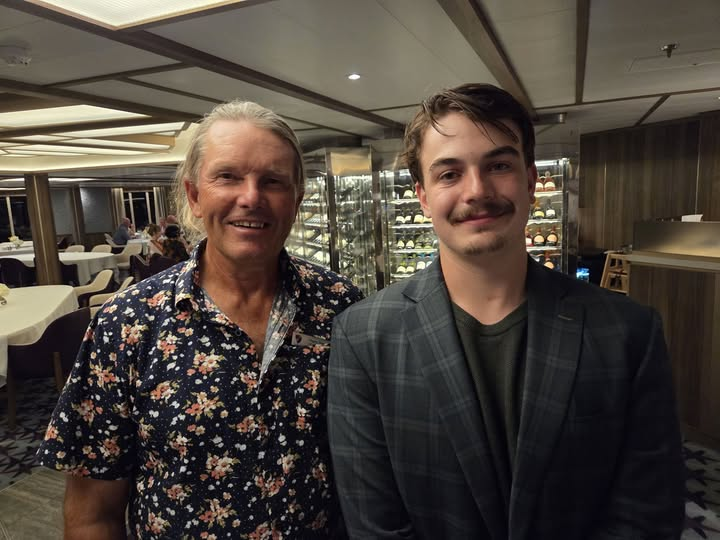
Above: Lacepede Islands. 16 June 2026.
Seeking The Kimberley
Seabourn Pursuit.
Image: Dinner host Greg from Seabourn adventure staff and Drums.
This was Greg’s final cruise with Seabourn. After thirteen years with the line, he was returning to his native South Africa to launch a dirt-bike touring business. He also hoped to lead an initiative equipping anti-poaching law enforcement teams with motorcycles for faster response in the bush.
Greg spoke candidly about the very real threats facing South African white farmers. Many were now adopting advanced technology—drones and Anduril-like systems—to help protect their land and families.
We were also invited to join cruise staff for two other dinners. One evening we dined with the ship’s South African HR officer; another night we sat with two young bridge officers, one Croatian and the other Romanian.
From the HR officer we learned that disciplinary issues arose at least once a month, usually resulting in a crew member being confined to quarters until the next port. I was particularly impressed by the two bridge officers. Both were married with young children and followed a demanding schedule: four months at sea followed by two months at home with their families. Each aspired to command his own ship one day.
Addendum:
Thanks for your notes on yours and Phin’s trip…welcome back.
'Cake,
Park City, UT
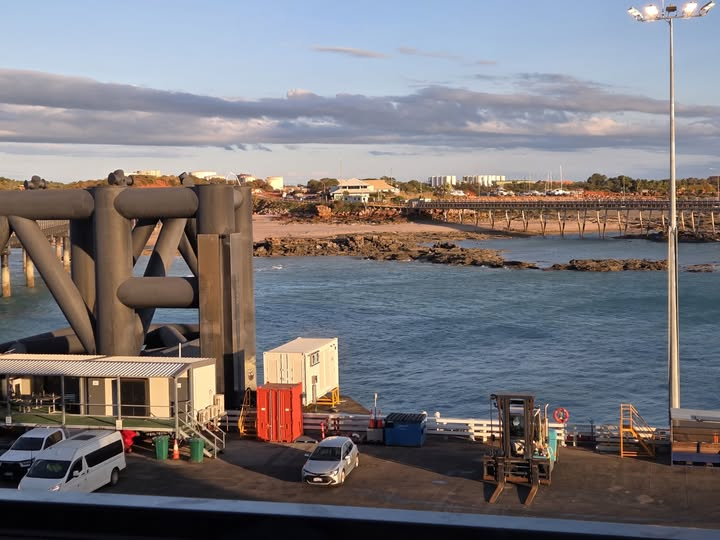
Above: Broome Port. Broome, Australia, 17 June 2026.
Seeking The Kimberley
Seabourn Pursuit.
Image is my first view of Broome as I pulled back the curtains of our suite. Ten days earlier, our cruise had begun in Darwin. Now we had reached Broome, the end of the line. We would spend the full day and evening here before flying to Sydney tomorrow on a four-and-a-half-hour flight.
Grok: Broome, Western Australia, is a vibrant tropical town and the largest in the Kimberley region, known as the "pearling capital of the world" and gateway to one of Earth's great wilderness areas. Nestled on a peninsula where red pindan soil meets the turquoise Indian Ocean, Broome blends rich multicultural history with stunning natural beauty. Founded in the 1880s as a pearling port, it drew divers and workers from Japan, China, Malaysia, Indonesia, Europe, and Aboriginal communities, creating a unique cultural mix that still defines the town today.
Me: During World War II, Broome became a haven for European refugees fleeing the Japanese invasion of the Dutch East Indies—present-day Indonesia. In March 1942, the town was attacked by Japanese Zero fighters. Fifteen PBY Catalina amphibious aircraft were destroyed on the water, and nearly one hundred lives were lost.
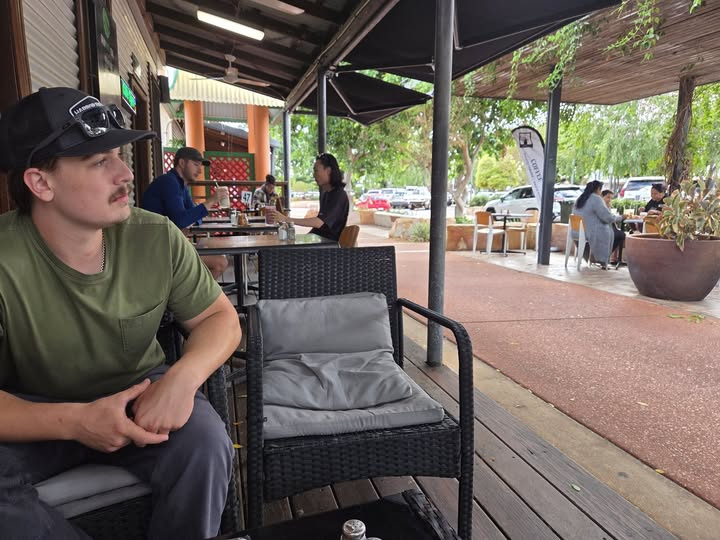
Above: Green Mango Cafe, Broome, Australia, 17 June 2026.
Seeking The Kimberley.
Seabourn Pursuit.
The quaint town is a five-minute walk from our hotel, The Mangrove. We stopped for coffee and a croissant here to get our bearings precedent to a walk around town.
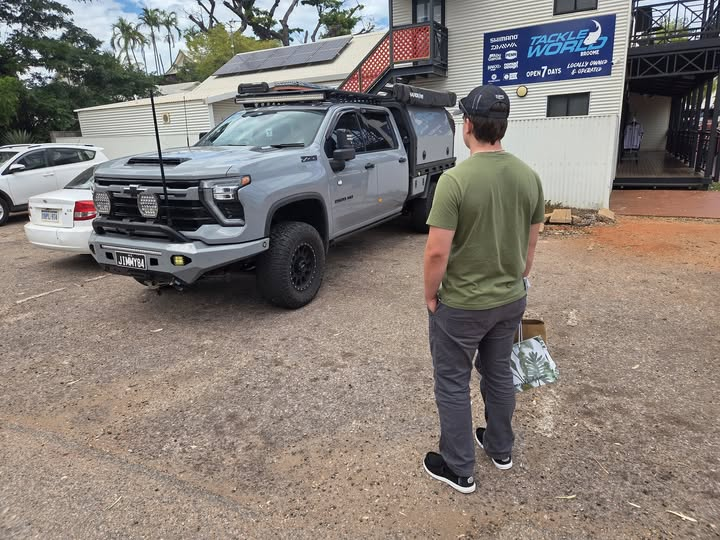
Above: Broome, Australia, 17 June 2026.
Seeking The Kimberley
Seabourn Pursuit.
Image: Tricked out for off-road, Chevy 250 truck.
In Broome—one of the most remote places on Earth—it seemed that half the vehicles are modified for rugged back-country and off-road travel.
We approached a forty-something couple with two adolescent children as they climbed out of their tricked-out adventure RV. They were from Melbourne and had taken a year off to circumnavigate the Australian continent (Highway 1, "The Big Lap"), a journey spanning nine thousand miles.
Australians are renowned travelers. When I worked there in the 1970s, it was not uncommon for even senior executives to take a full year off to explore the world. By American standards, such a move would have put their careers at serious risk, but Australians clearly operated with different priorities.
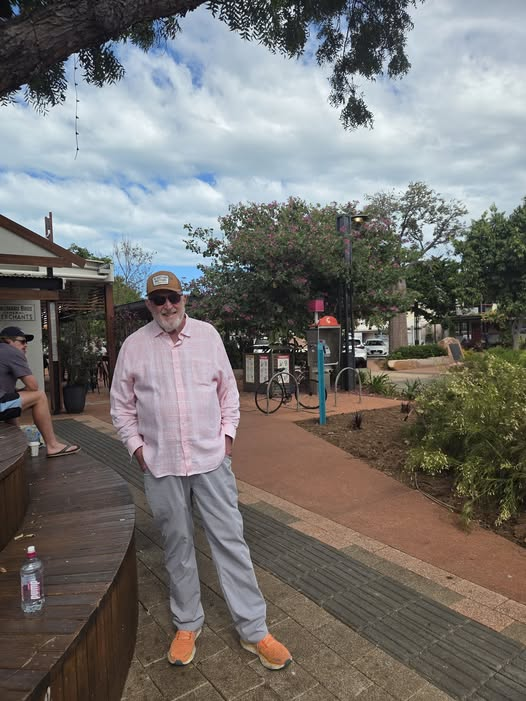
Above: Broome, Australia, 17 June 2026.
Seeking The Kimberley
Seabourn Pursuit.
Me in my new Broome purchased Tommy Bahama shirt.
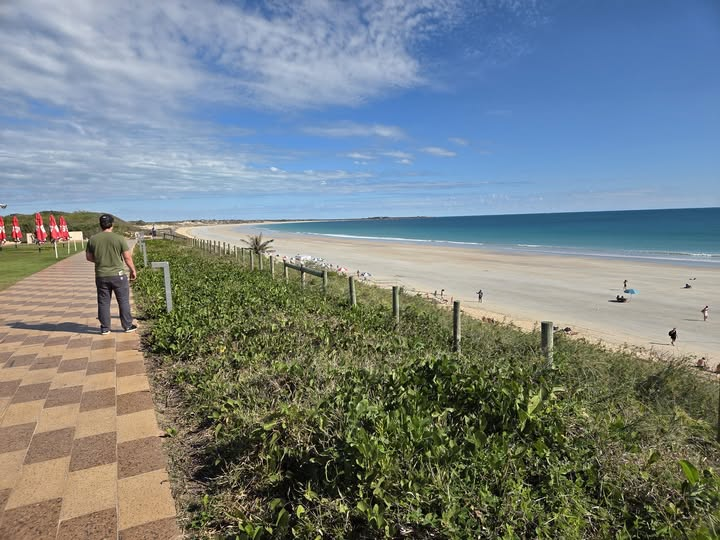
Above: Cabel Beach. Broome, Australia, 17 June 2026.
Seeking The Kimberley
Seabourn Pursuit.
After a walk around downtown, we took a city bus to Cable Beach.
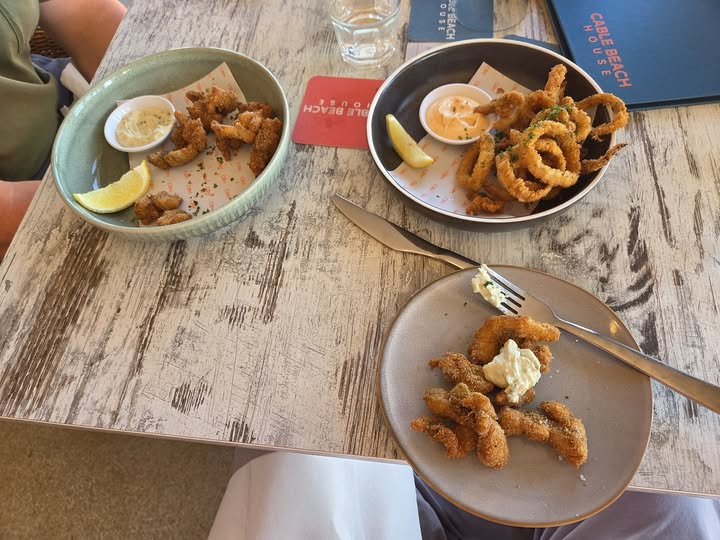
Above: Cable Beach House. Broome, Australia. 17 June 2026.
Seeking the Kimberly.
Seabourn Pursuit.
Calamari and deep-fried Barramundi.
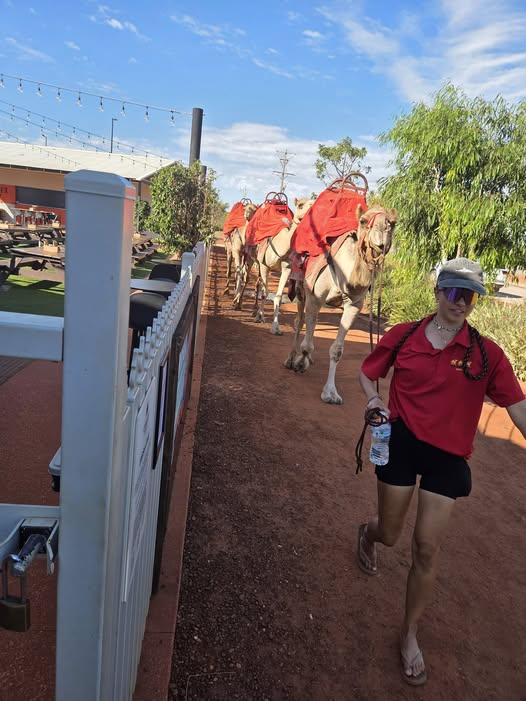
Above: Cable Beach. Broome, Australia, 17 June 2026.
Seeing The Kimberley
Seabourn Pursuit.
Camels. Pictured here, a camel ride tourist concession.
Grok: Camels in Australia are feral descendants of animals deliberately imported by European settlers in the 19th century. Australia’s arid interior (the Outback/Red Centre) proved extremely challenging for horses, which struggled with heat, lack of water, and rough terrain. Camels—tough, long-distance desert travelers that can go weeks without drinking—were the ideal solution for exploration, transport, and supply lines.
By the early 20th century (especially after the 1920s–1930s), motor vehicles and railways made camels obsolete. Many were released or escaped into the wild. With no natural predators, a suitable desert climate, and long lifespans (up to 50 years), their numbers exploded.
Today, Australia has the world’s largest feral camel population—estimates range from several hundred thousand to over a million—spread across ~37–40% of the mainland, especially central deserts. They are now considered a pest, competing with livestock and native animals for resources, damaging infrastructure (especially during droughts when they seek water), and impacting ecosystems.
Control efforts include culling, mustering for meat/export, and other management programs. The camels remain a striking reminder of Australia’s colonial history and the unintended consequences of introduced species.
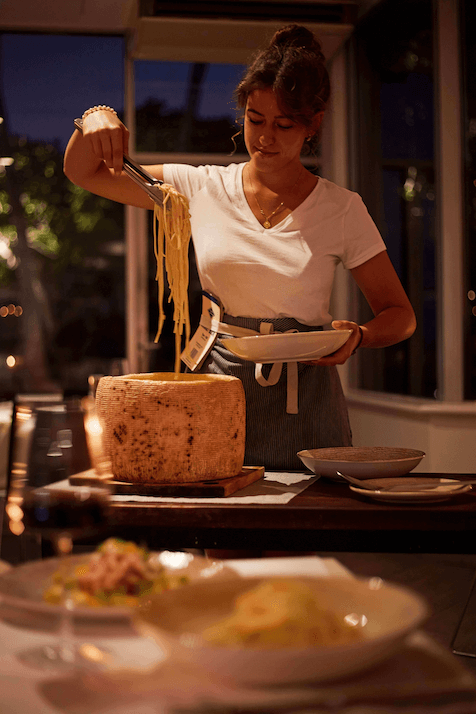
Above: Johnny Sausage Restaurant, Mangrove Hotel. Broome, Australia. 17 June 2026.
Seeing The Kimberley
Seabourn Pursuit.
The restaurant morphs into an excellent Italian restaurant for dinner. The Italian chef came over to say hello while we were eating.
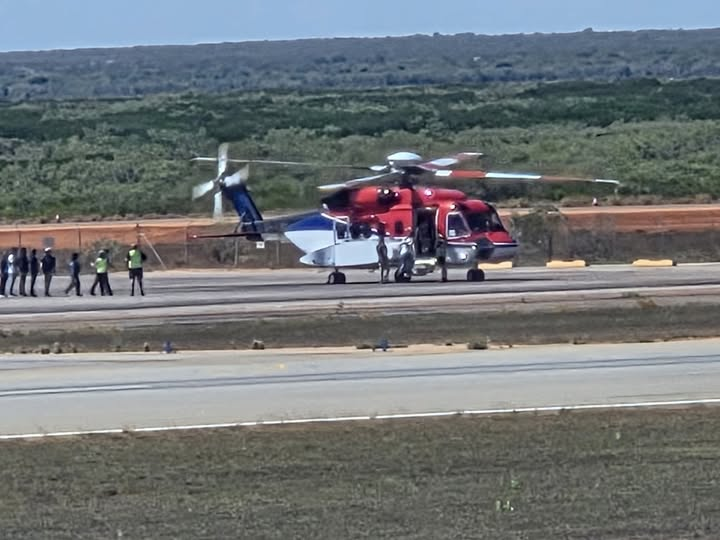
Above: Broome Airport. Broome, Australia, 18 June 2026.
Seeing The Kimberley
Seabourn Pursuit.
Tourists board chopper for excursion into The Kimberly... possible even to see the fantastic sites we saw in the last two days: Horizontal Falls and Montgomery Reef.
A note on shipboard lectures:
On "at sea" days and interspersed between zodiac excursions were excellent shipboard lectures by adventure staff on crocodiles, mangroves, birds, geology and more.
Addendum
Hi Steve - I thoroughly enjoyed following you and “Drums” on this trip. I’m sure it was an amazing experience for both of you. I hope to be a grandfather someday and look forward to sharing a similar experience. My daughter is getting married in September so maybe that is not too far away.
You’ve also inspired me to consider incorporating a cruise into my travel plans. I’ve purposely avoided them for years, only taking one Alaska cruise 25 years ago. The Seabourn line looks to be much smaller than those large, floating skyscrapers. I’d be interested in your thoughts on this.
See you soon!
Boston,
Park City, UT
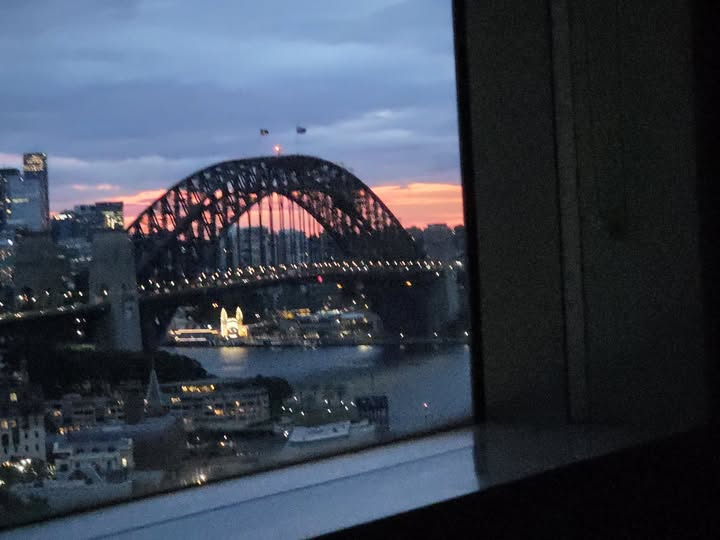
Above: Marriott Hotel. Sydney, Australia. 19 June 2026.
Seeking The Kimberley.
Image: Sydney Harbor Bridge. Image captured from hotel window at dawn.
For five years, from 1974 to 1979, I commuted across the Sydney Harbour Bridge twice a day. We lived in two different northern suburbs during that time: St Ives (1974–75) and Mosman (1976–79).
I’m embarrassed to admit that my most vivid early memory of that drive is a classic “prang” (the delightful Australian term for a crash). Heading north in my flashy yellow Toyota Celica GT, I rear-ended the car in front of me. Mercifully, no one was hurt, but I managed to bring all northbound traffic on the bridge to a standstill for a good twenty minutes. Nothing says “welcome to Sydney” quite like holding up an entire city while exchanging insurance details.
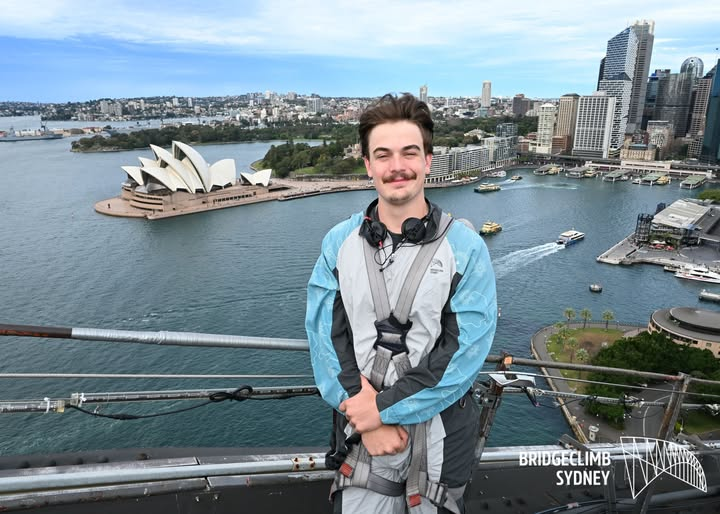
Above: Sydney, Australia. 19 June 2026.
Seeking The Kimberley.
Image: Drums stands atop the Sydney Harbour Bridge after completing the climb.
(Sydney Harbour Bridge Climb)
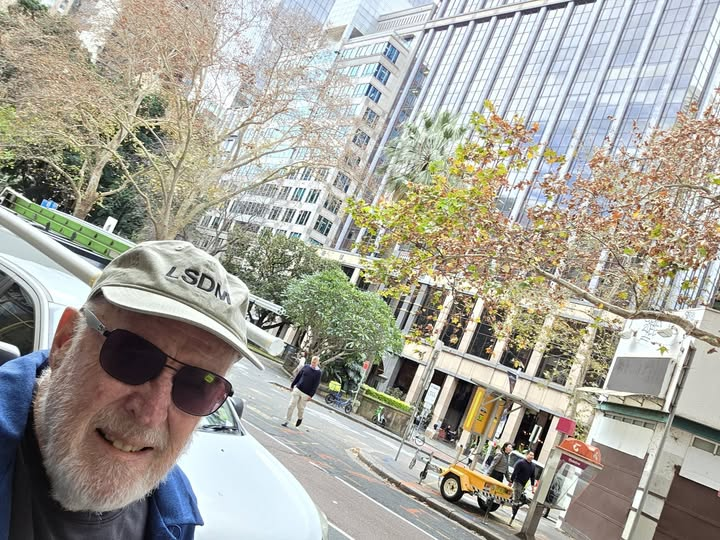
Above: Sydney, Australia. 19 June 2026.
Seeking The Kimberley.
Image: 19 June 2026. 54 to 60 Carrington Street.
While my grandson Drums was climbing the Sydney Harbour Bridge, I strolled over to the site of the building where I had worked for five years, from 1974 to 1979. The image shows the location of what was once the IAC House, later known as Citicorp House, at 54–60 Carrington Street in Sydney, Australia. That building was demolished in 2020 to make way for the Brookfield Place development pictured today.
As I sat in a café in the new complex, savoring a coffee, a flood of memories from my time there—when the building housed work on one of Citi’s then most important business turnaround challenges—came rushing back. One in particular could have derailed my career on my very first day. I walked into the 11th-floor restroom, noticed there were no urinals, and thought to myself, These Aussies are a bit backward. Only as I was leaving did I see the “Women” sign on the door. Thank goodness, no one witnessed my embarrassing faux pas.
Just down the street at 14 Carrington Street (to the left in the image) stood the famous Menzies Hotel, which was demolished in 2014 to make way for a new office complex. Another vivid memory surfaced: I would occasionally join my colleague Jack Brennan (may he rest in peace) for breakfast there. Jack paid $11 a day for breakfast—an eye-popping sum to me at the time (roughly $35 in today’s money). He also once spent $3,000 on a set of false teeth, which struck me as equally astonishing. Single and in his mid-forties, Jack later left Citi to become a Catholic priest.
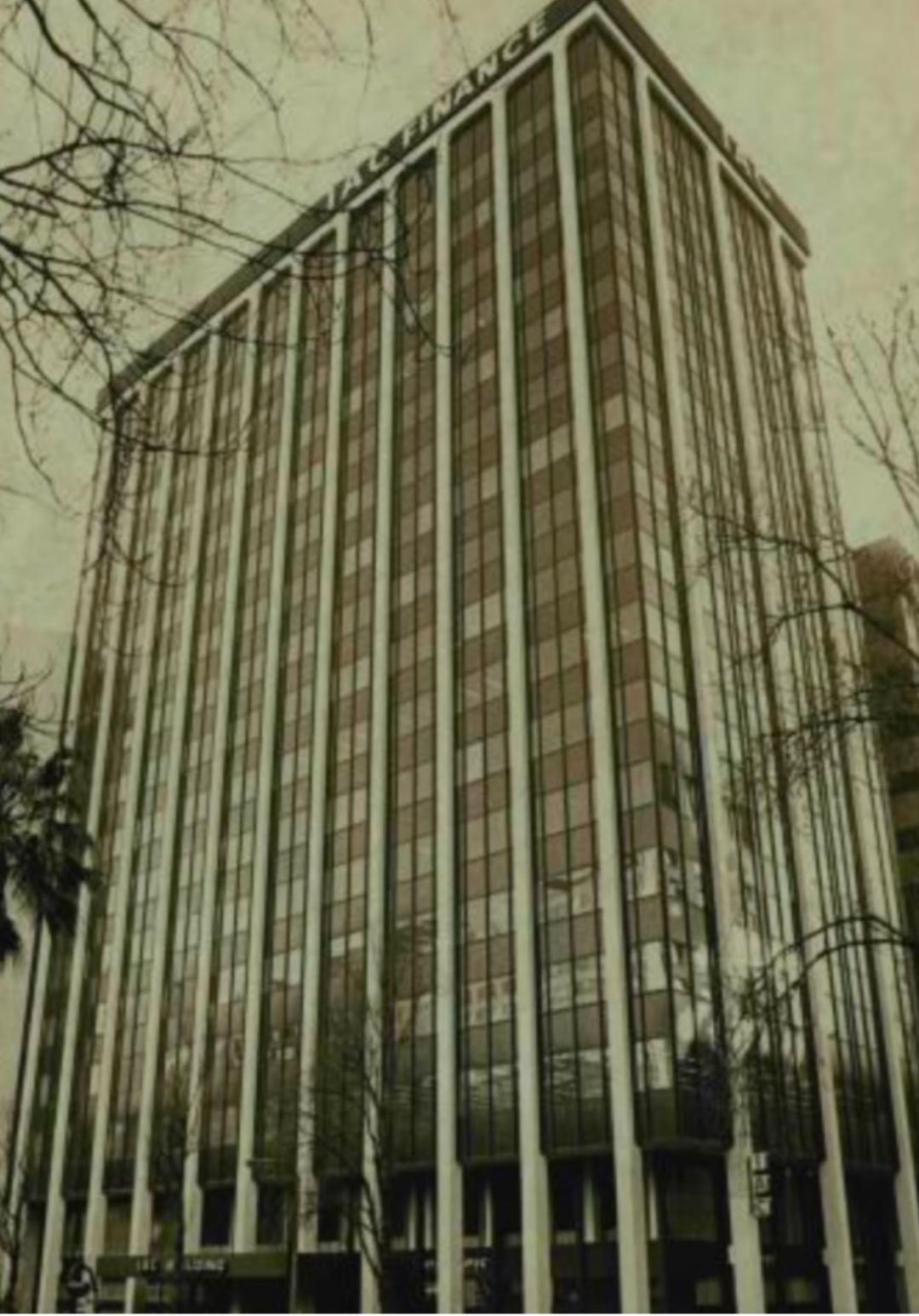
Above: Sydney, Australia. 19 June 2026.
Seeking The Kimberley.
Image: 54 to 60 Carrington Street. IAC House. Image from 1974.
Hat tip: Corporate Property, CEO IAC/Citicorp Australia, 1974 to 1976.
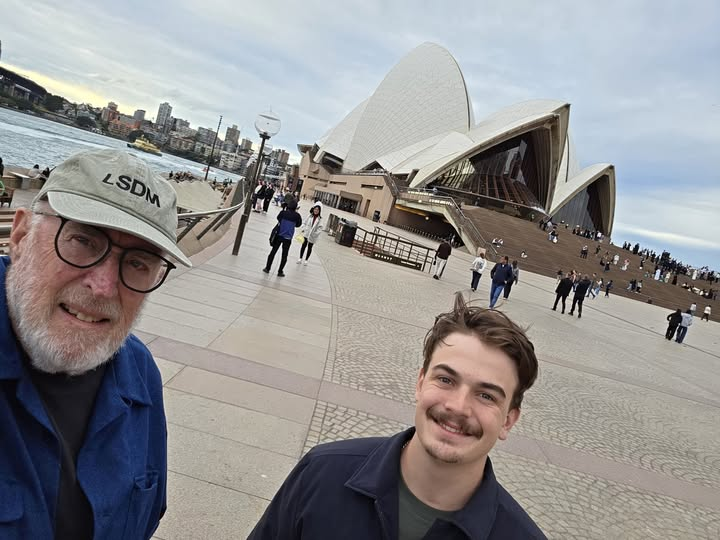
Above: Sydney, Australia. 19 June 2026.
Seeking The Kimberley.
Image: Sydney Opera House
Being at the Sydney Opera House with Drums today brought back a vivid memory from 1976. That year, I co-directed a 350-voice choir at the first Area Conference of The Church of Jesus Christ of Latter-day Saints in Australia, held on February 29—a fitting leap-year date. The conference formed part of a larger Pacific Area tour led by Church President Spencer W. Kimball, accompanied by other General Authorities, including Elders Bruce R. McConkie and Loren C. Dunn. It was a landmark event for the Church in Australia and the region.
The choir opened with “Come, Come, Ye Saints” and later performed “Prepare Ye the Way of the Lord.” I had the privilege of directing the first of those two numbers. Approximately 3,500 Latter-day Saints filled the Opera House and the adjacent Town Hall, where overflow attendees watched via closed-circuit television. Members had come from Sydney, surrounding areas, and other parts of Australia.
After the session, I met President Kimball—the first time I had met an LDS Church prophet. Although I stood well over a foot taller than he did, I felt small in his presence. With a warm smile and in his characteristically raspy voice, he congratulated me on how well the choir had performed.
Today, I recall how President Kimball—along with one of his predecessors, David O. McKay, and his successor, Ezra Taft Benson—spoke with powerful conviction against the evils of communism, an ideology aggressively promoted by the Soviet Union at the time. Modern Church leaders tend to address the topic less forcefully, even as communism (or related ideologies) appears to pose an internal threat comparable to the external one it represented in the 1970s.
How was I chosen to help lead the choir at the Sydney Opera House? As director of the Normanhurst Ward choir in the Sydney Stake, I had led our group to victory in the stake choir contest—an impressive feat, since the Gosford Ward had long dominated the competition. One of the singers in my choir was Lucy McKay, then in her mid-80s, who had sung in a choir under the direction of my grandfather William Weldon Taylor when he served as a missionary in Sydney in the 1930s. Evidently, someone took note of our success, and I was invited to co-direct the large regional conference choir.
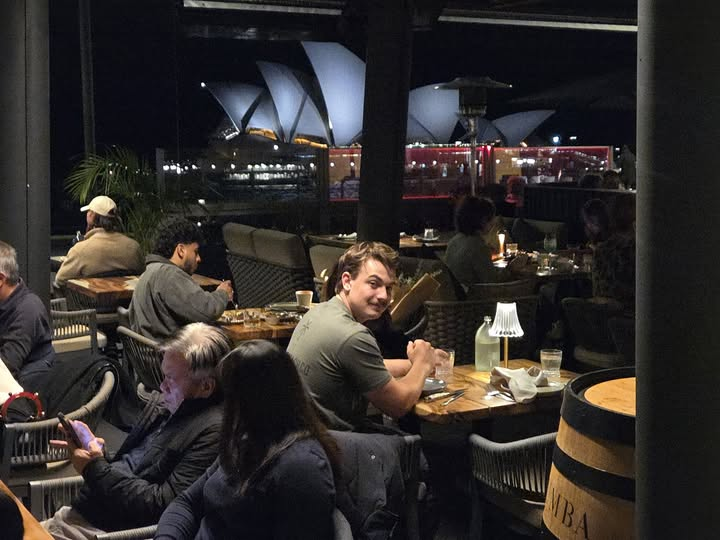
Above: Sydney, Australia. 19 June 2026.
Seeking The Kimberley.
6 Head Restaurant. Eating OZ beef at a positively fabulous steakhouse recommended by the Marriott Hotel concierge.
Addendum:
Steve –
Just a quick personal note regarding your continuing Picto Diaries.
As always, I greatly enjoy “travelling” with you. I’ll never get to most of the places you have visited and continue to visit, but I learn a fair bit about the world from your photographs and observations. I really appreciate these, especially the historical context that you give to places. I’m really enjoying your travels in Australia as the geology is really interesting there.
I also enjoy your interactions with your family. Drums and Mynduveroan have the sort of grandparents that all kids should have. You are totally encouraging to them in their every activity, and you are including them in your life to a great extent. And you’re taking them along on your most interesting adventures. Every kid should have the opportunities that they have.
Best wishes for a great rest of your trip and summer,
DeLorean,
Elkhart, Indiana
Steve,
Great cruise.
Jane and I spent a holiday in Broome in 1978.
Unheard of in those days (no tourists).
We flew from Sydney to Brisbane, then at least half a dozen stops more on the old MMA ("Mickey Mouse Airlines"). They lost our luggage for more than a week, so we bought shorts, t-shirts and thongs at Fongs, the general store in town.
We stayed at the Continental Hotel (the only one).
Aboriginals had to drink outside, and the door from the public bar to the lounge had a sign:
"Gentlemen must wear singlets and thongs in the Lounge Bar."
We rented a little Citroën Mahari and spent glorious days on Ninety Mile Beach without another human being in sight.
Those were the days....
Corporate Property,
Seattle, WA
Steve,
'The north-west is refuge for the largest population of humpback whales on the planet, estimated to be over 29,000 strong! Migrating from their Antarctic feeding grounds to the warm waters of the Kimberley to breed every winter, these waters provide a haven for a species that was once hunted to near extinction, as well as a host of other extraordinary diverse marine life.'
Did you see any whales or other sea creatures?
Joe,
Gosford, NSW
No whales. Turtles, rays, and crocs.
Good evening …
I love reading your travel-logs!!
And I am SO PROUD of my former piano student!! What a wonderful opportunity to be able to take a memorable cruise with you, his grandfather.
Loved the picture of the sunrise, the falls, and several photos of birds.
Warm wishes,
Music In the Mountains,
Racine, WI
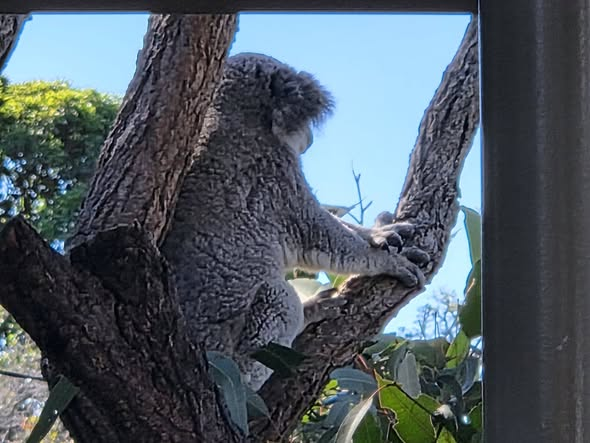
Above: Taranga Zoo. Sydney, Australia. 20 June 2026.
Seeking the Kimberly
Image: Koala.
Obligatory while in Sydney. Go to the Taranga Zoo and see all the indigenous OZ animals.
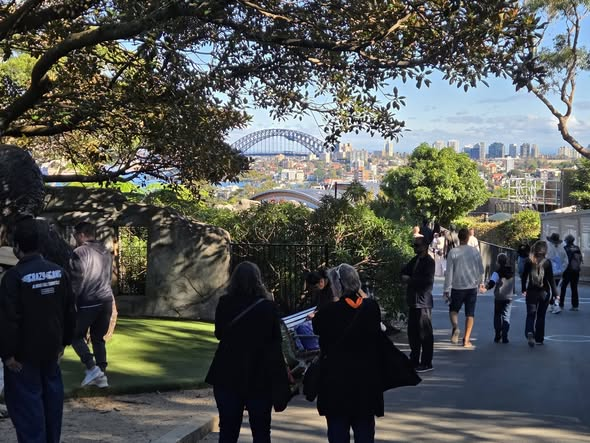
Above: Taranga Zoo. Sydney, Australia. 20 June 2026.
Seeking the Kimberly
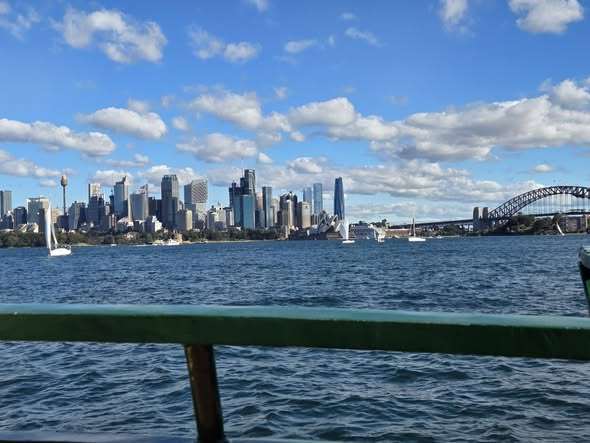
Above: Taranga Zoo. Sydney, Australia. 20 June 2026.
Seeking the Kimberly.
On ferry from Taranga Zoo to Circular Quay.
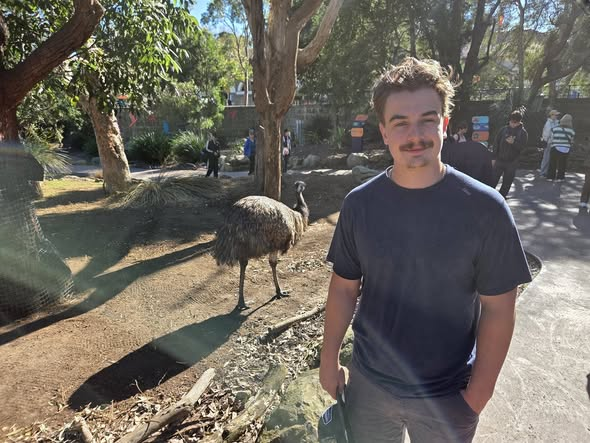
Above: Taranga Zoo. Sydney, Australia. 20 June 2026.
Seeking the Kimberly.
Emu.
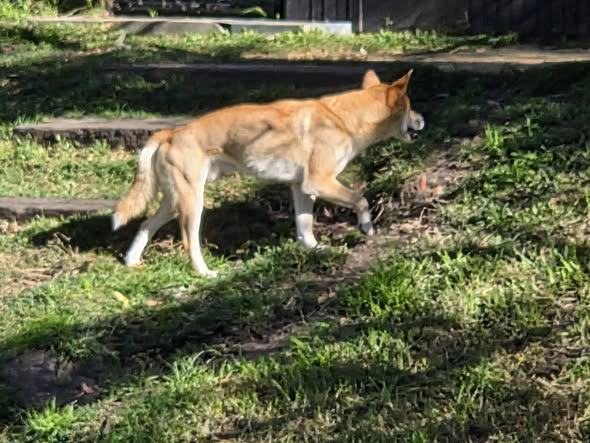
Above: Taranga Zoo. Sydney, Australia. 20 June 2026.
Seeking the Kimberly.
Dingo.
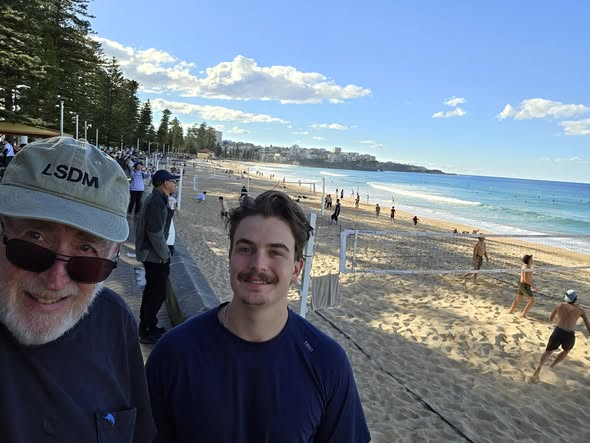
Above: Manly Beach, Sydney, Australia. 20 June 2026.
Seeking the Kimberley.
Old stomping grounds. North Shore. Not far from our Mosman home on Inkerman Street. The better-known Bondi Beach, site of a recent terrorist shooting, is on the south shore of Sydney Harbor.
Above: Mosman, NSW. Australia. 20 June 2026.
Seeking The Kimberly.
17 Inkerman Street.
We lived in the Inkerman Street house for all of three years, from 1976 to 1979—a little slice of Sydney life that still echoes with memories.
Here’s one of those memories:
Today, driving through the old Mosman neighborhood, a familiar intersection suddenly jogged a long-dormant memory, like a well-placed lob dropping just inside the baseline. We were in the 'hood of the Mosman Lawn Tennis Club, an unassuming green sanctuary where TIMDT first learned to play tennis. I didn't see the tennis club itself. I speculated that sometime in the last fifty years its value as residential property had pushed the membership to sell (See below Note).
Soon after moving into the Inkerman Street house, TIMDT marched into the Mosman Lawn Tennis Club unannounced, tennis racket in hand, and cheerfully asked, “How does a girl get a game around here?” A squadron of seventy-something Australian ladies—sharp-eyed veterans of both the court and life—clocked her American accent immediately. Instead of raising an eyebrow, they opened the gates wide, adopted her on the spot, and spent the next three years turning her into one of their own. TIMDT became one of them—steady, sly, and dangerously accurate. A tennis player forged not by power, but by patience, placement, and a deep respect for the geometry of the court.
Note: Here are the results of a Grok search on the Mosman Lawn Tennis Club, apparently still in existence, though I can't confirm it is at the same location as fifty years ago. (3) Grok / X
Note: Those large windows seen in my image of 17 Inkerman Street looked out over Middle Harbor setting a viewing standard that we have tried to replicate, sometimes successfully, sometimes not, in homes where we have lived since.
Note: The house at left in the image belonged to the Richard Davis's. Dick was a Qantas 747 pilot. His daughter, Penny and our oldest, FeeBee, then nine-year-olds, were best friends. I remember one of their ditties:
Jingle Bells, Batman smells, Robin laid an egg.
Wonder Woman lost her bosom flying TAA.
(TAA, a domestic Australian Airline, since defunct).
Above: Mosman, NSW. Australia. 20 June 2026.
Seeking The Kimberly
17 Inkerman Street.
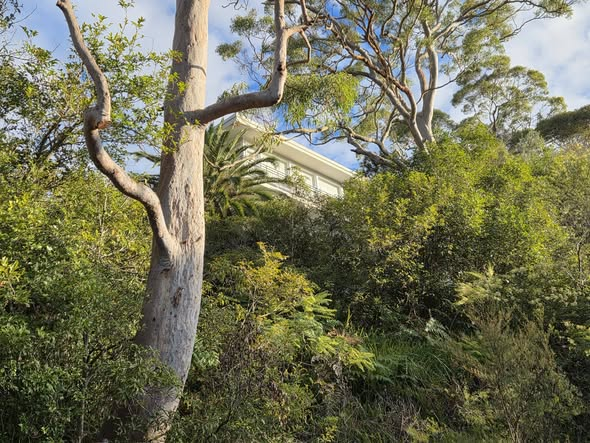
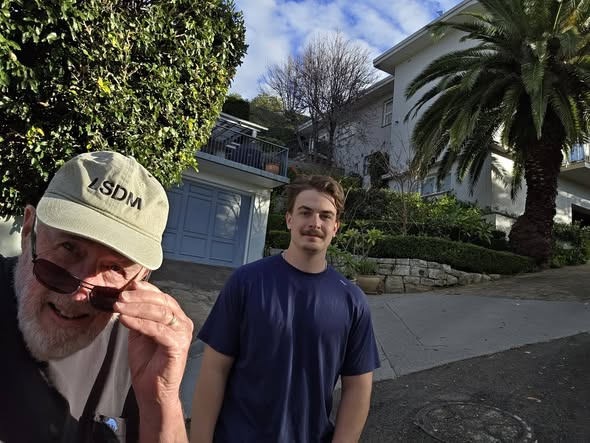
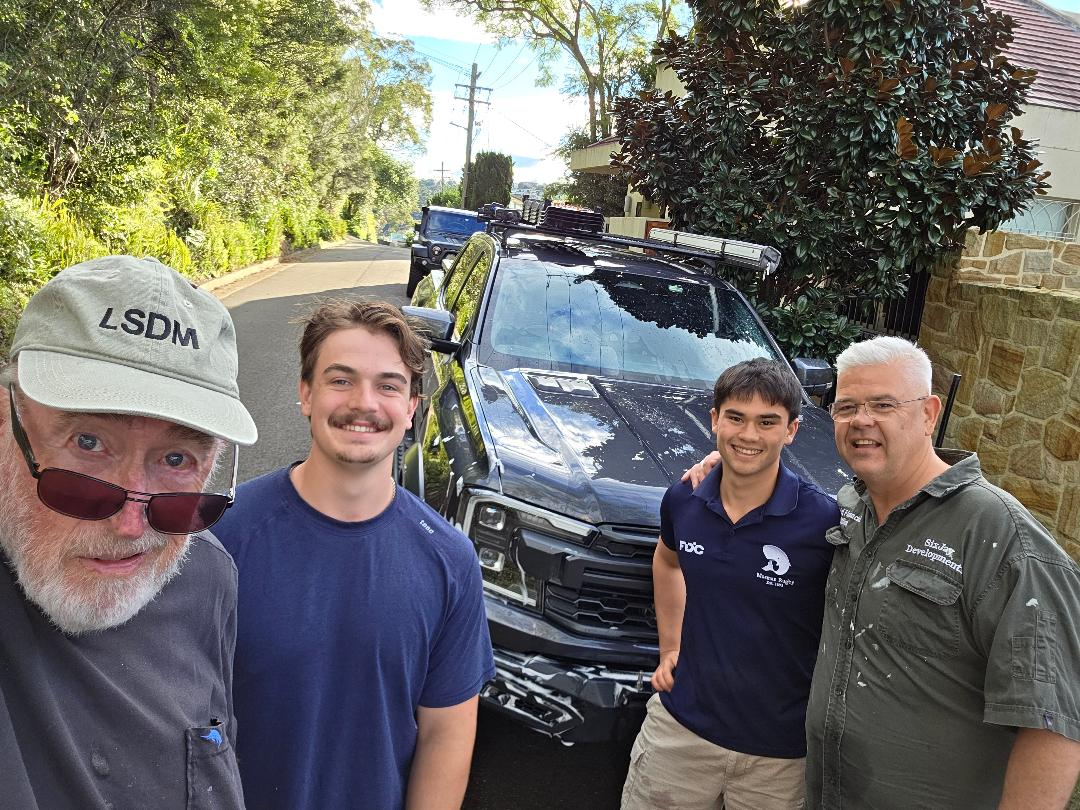
We had a delightful, serendipitous encounter on 20 June 2026 in Mosman, NSW, while hunting for our old house at 17 Inkerman Street where our family lived from 1976 to 1979.
Drums and I were wandering the street below Inkerman Street, craning our necks like hopeful spectators trying to catch a glimpse of our old house through the canopy of trees. That’s when we bumped into John Forrest and his son David. John is the principal of Six Jay Real Estate.
I mentioned to John that fifty years ago—back in the late 1970s—we were renters of the house perched just above where we stood. In those days, this lower slope was still untouched bushland; no houses had yet dared to claim the hillside. John smiled and pointed to his own handsome home to the right in the photo—built in 2020, nestled below our old place—with its private boat dock stretching out to the sparkling waters of Middle Harbor. A man who clearly knows how to drop anchor in the right spot.
As we approached, father and son were giving John’s formidable Ford Ranger Raptor a thorough bath. The truck was kitted out like a gladiator ready for battle—lifted, armored, with snorkel, and clearly no stranger to rough country. John had just returned from an off-road adventure in South Australia, the kind that leaves red dust in the wheel wells and stories in the glovebox.
John mentioned having lived a combined thirty years across Singapore, Chicago, and New York—cities that could make even the toughest Outback track feel like a Sunday drive. When he learned I was from Utah, his eyes lit up. He recounted closing a major deal years ago: the sale of 2,500 residential units in the American Midwest directly to the LDS Church. He’d negotiated with the Presiding Bishop himself—the man who essentially serves as the Church’s CEO of investments.
John chuckled as he told how the Presiding Bishop’s office had promptly run a thorough internet search on him and his firm “to make sure I was on the up and up.” Even global church financiers like their real estate partners properly vetted. Smart move—especially when dealing with a bloke whose truck looks ready to conquer both the Outback and Wall Street.
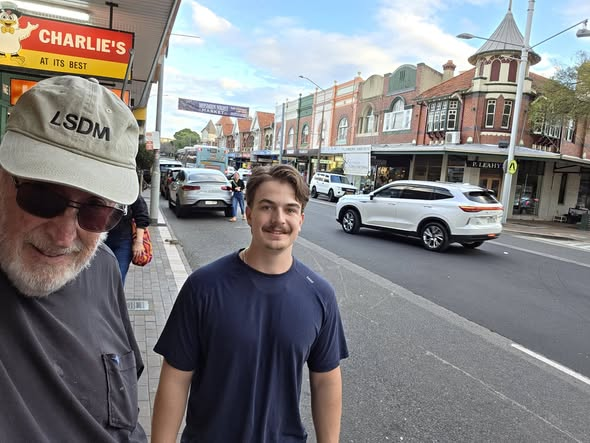
Above: Military Road, Mosman, NSW. Australia. 20 June 2026.
Seeking The Kimberly
Fifty years ago, Saturday mornings in Mosman often meant a leisurely stroll with TIMDT along the chic stretch of Military Road—window-shopping, people-watching, and soaking in the genteel rhythm of Sydney’s North Shore.
Half a century later, Drums and I found ourselves retracing those very footsteps, closing a graceful loop in time.
While browsing one of the bookstores, I was charmed by the young clerk behind the counter: a bright-eyed high school girl from Scottsdale, Arizona, staying for the northern hemisphere summer with her sister, the shop’s owner. She lit up like a desert sunrise the moment she heard our American accents.
When we mentioned we were from Utah, she let out a delighted shriek.
“Oh my gosh—not just Americans… but from my neighborhood!”
Then, with perfect comic timing and a theatrical hand to her heart, she added, “The US just beat Australia in the World Cup! Here I am, an American in Australia… I don’t know whether to cheer or apologize!”
We all laughed, three expats momentarily bridging the Pacific on a sunny Saturday afternoon in Mosman. Some things, it seems, never change—Military Road still sparkles, and a familiar accent can still turn an ordinary errand into a small, joyful reunion.
Addendum:
Thanks Steve
Joe,
Gosford, NSW
Steve,”
Your pictorial of Broome, OZ, has shown me what I missed when I was doing my “circumridifction”, counterclockwise, of OZ in the mid-1980s on a GS- starting and ending in Sydney. I decided that I didn’t want to spend the time on a diversion, though short, to a sideshow, and so, I continued on.
Thanks for filling in that blank.
Ahn-Rhee,
Larkspur, CA
Handsome grandson Steve! Where does he get it?
Tony,
Park City, UT
Ha ha.
Steve.
Thanks so much for the informative commentary and great pics. I hope to visit Australia someday! Among my ancestors are Brits who came from the poor houses and prisons of England to populate Australia. Born in England, Richard and Elizabeth Merchant and his 12 children joined with the Latter-day Saints in 1853 in New South Wales. Richard and Elizabeth and the six younger children boarded the Jennie Ford to sail for America in 1856. As the ship was leaving the harbor in Sydney, unbeknownst to Elizabeth, Richard jumped ship and swam to shore. Elizabeth and her six settled in Beaver, Utah, thanks to the elder who had baptized them in Australia and then supported them in Beaver. Elizabeth died in 1863 in Beaver, reportedly of a broken heart. In 2020, I met some of the Australian descendants of Richard and Elizabeth when they came to the U.S. on a genealogical tour. The eighth of the twelve children, Caroline Annie Merchant, is my second great grandmother. She married my second great grandfather, Thomas Henry Wilson, Sr., in Payson, UT, in 1859. She was 18, he was 29. They had ten children.
So, that’s my Australian connection! Thanks again.
Best,
Apple Store,
Salt Lake City, UT
This pic is of Caroline at the Chicago World’s Fair in 1893. The boy, unidentified, is likely a grandson.

Great post, Apple Store!
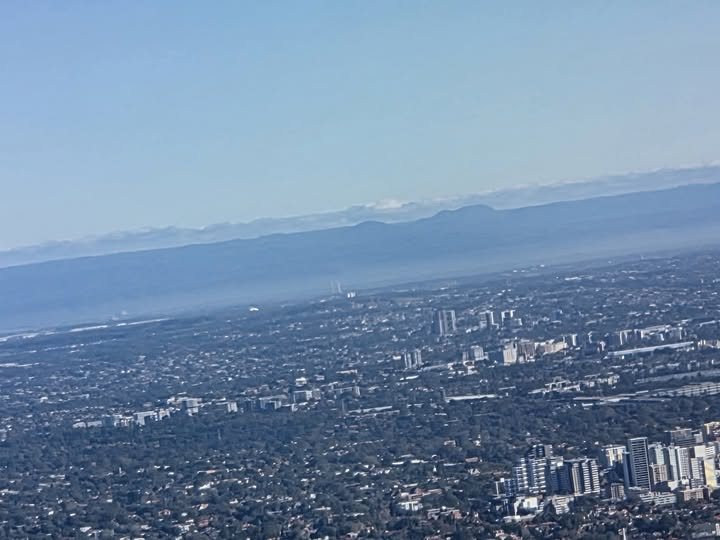
Three of the five taxi drivers we used during our Australian stay were of Pakistani origin. All were in their twenties, fluent in English and happy to converse about their immigration story. Our hired driver the previous day, Thomas, was a Ghanaian immigrant. He lit up when I mentioned that I had visited Sekondi, Ghana, in 2019. The exceptional concierge at the Sydney Marriott Hotel at Circular Quay, Mohammed, was a Malaysian immigrant. He went above and beyond, seamlessly arranging our meetup with Thomas and his immaculately polished Audi SUV, and securing reservations at two outstanding restaurants in Sydney's Rocks neighborhood. Most of the waitstaff at the Marriott's Sylvester’s Restaurant and Lounge, where we enjoyed breakfast twice, were also East Asian.
Authorities classified the Bondi Beach shooting as an antisemitic terrorist attack inspired by Islamic State (ISIS) ideology. Sajid was shot dead by police; Naveed was wounded, arrested, and charged with 15 murders plus terrorism offenses. The pair had legal firearms (Sajid held a license for six), conducted reconnaissance, received tactical training, and traveled to a region in the southern Philippines associated with extremism in November 2025. Sajid had no prior adverse record noted at immigration, but the son drew intelligence attention as early as 2019. This was not random crime or socioeconomic fallout—it was ideologically driven targeting of Jews during a religious festival.
The Bondi attackers fit a recurring profile: a first-generation immigrant from a Muslim background who built a life (fruit shop owner) yet whose household produced a jihadist son raised in Australia. This demonstrates transmission of ideology across generations despite decades in the country.
Effective policy would prioritize civic integration and value compatibility (assimilation) over open-ended diversity: stricter ideological screening where feasible, accelerated assimilation pressures, reduced chain migration from high-risk sources, and honest data collection on outcomes by origin/religion (avoiding politically correct gaps).
Geography and selection give Australia advantages Europe lacks, but complacency about "it can't happen here" or reflexive defense of multiculturalism as an unqualified good ignores evidence from this and prior incidents. Patterns in terrorism and subgroup crime warrant targeted scrutiny, not blanket denial.
Australia remains safer and more cohesive than many alternatives, but incidents like Bondi are warnings, not aberrations to be explained away.
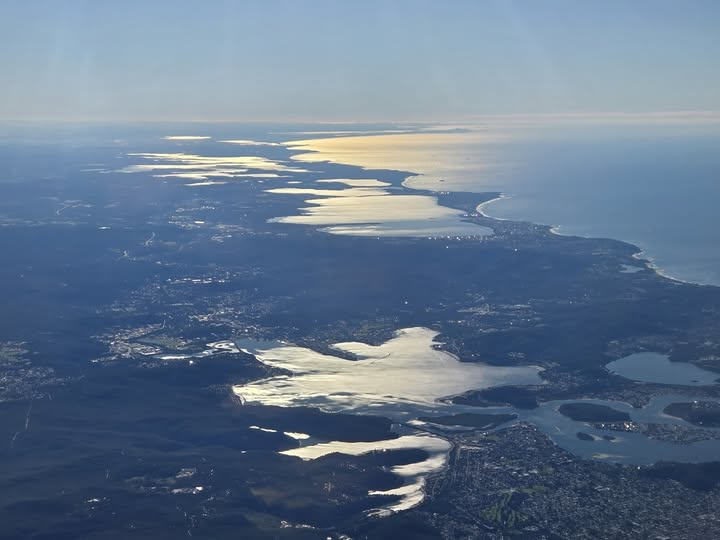
Australia’s “go hard, go early” elimination strategy stood in sharp contrast to the more mitigation-focused approaches taken in places like Sweden, the UK, and the United States. Given the growing body of evidence that even the U.S. mitigation strategy tended toward overkill, I found myself wondering what Australians were saying, in hindsight, about their own uncompromising approach.
Here's a Grok summary about OZ Covid-19 lessons learned in hindsight: OZ's experience offers several takeaways, echoed in official inquiries and analyses:
- Early, decisive action works for containment — "Go hard and go early" (border closures, lockdowns) saved lives when done before widespread community transmission. Slow or inconsistent responses elsewhere led to higher tolls.
- Elimination/zero-COVID is resource-intensive and hard to sustain long-term — It succeeded initially due to geography (island nation) and compliance but became untenable with more transmissible variants. Flexible, adaptable strategies are better than rigid ones.
- Balance health with broader impacts — Lockdowns and restrictions are blunt tools. Future responses need better consideration of mental health, education, economic costs, and equity. Measures should be time-limited and targeted where possible.
- Planning and structures matter — pre-pandemic plans were inadequate or ignored key tools (e.g., border closures). Clear governance, defined roles, and less reliance on informal networks would improve efficiency.
- Communication and public trust — Consistent messaging helped high compliance initially, but prolonged restrictions tested it. Transparent trade-offs (health vs. other harms) build better buy-in.
- Excess mortality as a key metric — Australia's low early excess deaths highlight benefits of suppression, but full-pandemic analysis shows indirect costs (e.g., delayed care) matter too. Comparing only confirmed COVID deaths understates total impact.
It's hard to imagine Americans accepting the draconian Covid protocols put in place by Australian authorities.
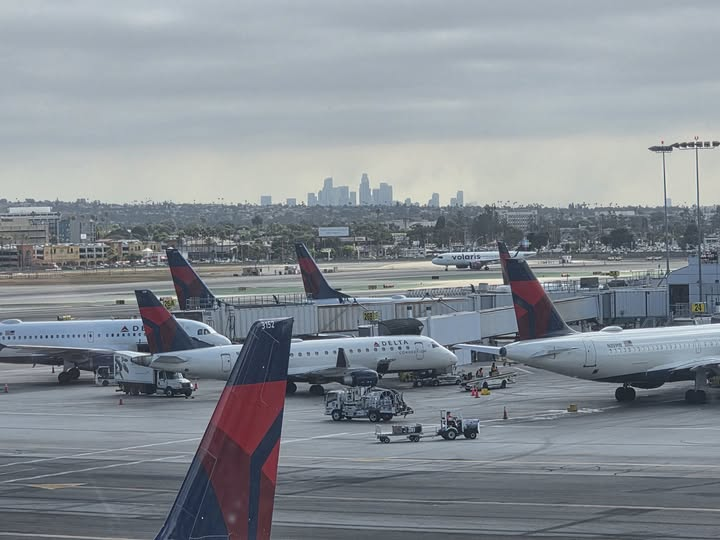
Mad Max: Fury Road. An adrenaline-fueled masterpiece set in a scorched, post-apocalyptic wasteland where water and gasoline are more precious than gold.Haunted drifter Max Rockatansky joins forces with the fierce Imperator Furiosa in a desperate, escape from the tyrannical warlord Immortan Joe. What follows is one of the greatest action spectacles ever filmed: a non-stop, visually stunning chase across the desert featuring jaw-dropping practical stunts, thunderous vehicles, and unforgettable characters. Epic, celebration of rebellion and human defiance. Charlize Theron (Furiosa) is good, but Tom Hardy (Max) gives an epic performance.
Attack ships on fire off the shoulder of Orion.
I watched C-beams glitter in the dark near the Tannhäuser Gate.
All those moments will be lost in time, like tears in rain.
Time to die."